🍃 Eastern teaberry / Wintergreen
Gaultheria procumbens · Ericaceae
🔍 Identify it without mistakes
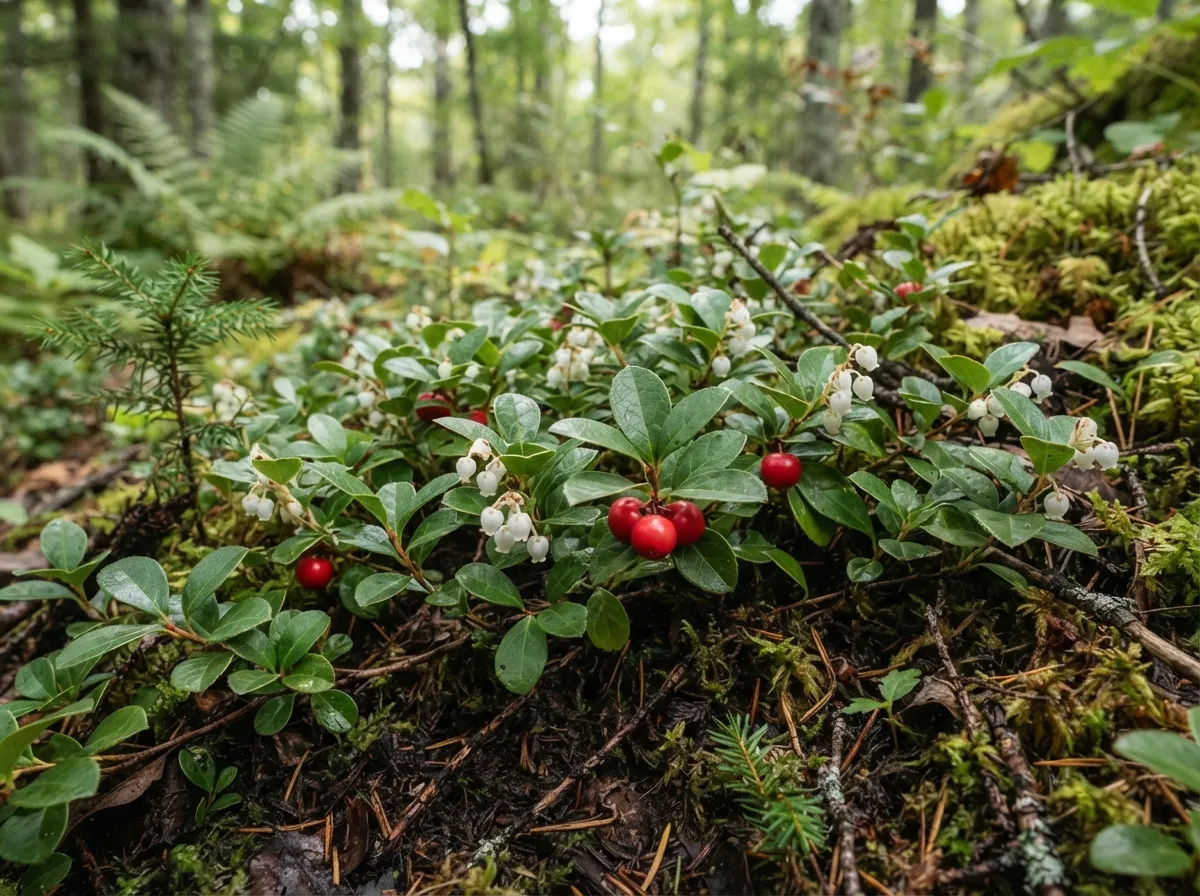
Small evergreen carpeting plant of acidic coniferous and hardwood understories. Creeping stems bear leathery, shiny oval leaves that release the famous minty wintergreen scent as soon as you crush them. Small, nodding white bell-shaped flowers grow in the leaf axils, followed by bright red berries that persist all winter under the snow.
- leathery, shiny oval leaves with a distinct minty scent when crushed
- low carpeting habit with woody creeping stems
- small nodding white bell-shaped flowers
- bright red berries persisting under the snow all winter
⚠️ Not to be confused with
To tell them apart: the distinct minty scent when crushing the leaves is the decisive test; visually, it might remind you of partridgeberry (Mitchella repens, harmless, opposite leaves and a berry marked with two dots/"two eyes"), but wintergreen has alternate leaves and no toxic plant shares its wintergreen smell
🍽️ Eating it
Preparation : crush fresh leaves to infuse a refreshing minty tea; eat the red berries raw directly from the plant—they're slightly mealy and represent one of the very few wild berries accessible in mid-winter under a thin layer of snow
💊 Healing with it
leaf infusion traditionally used for muscle and joint pain, headaches, and mild digestive trouble; the plant is the historical natural source of methyl salicylate, a topical pain reliever still used today in many commercial muscle balms
Level of evidence : limited studies — toxicological literature on methyl salicylate; documented North American traditional use
⚠️ methyl salicylate is chemically very close to aspirin and can cause severe salicylate poisoning at high doses, especially in children (a few milliliters of pure essential oil can be fatal to a child); occasional traditional use of leaf infusion is considered safe, but concentrated essential oil must never be ingested; avoid if you are allergic to aspirin
🪓 Other bushcraft uses
- essential oil historically distilled in large quantities for the pharmaceutical and food industries (flavoring and pain reliever), now largely replaced by synthetic methyl salicylate
- wintergreen-flavored chewing gum and candies, an iconic North American flavor
Sources (3)
No entry replaces a certain identification in the field, or medical advice. When in doubt: don't eat it. If ingestion is suspected: poison control or 112/911.