💛 Scotch broom
Cytisus scoparius · Fabaceae
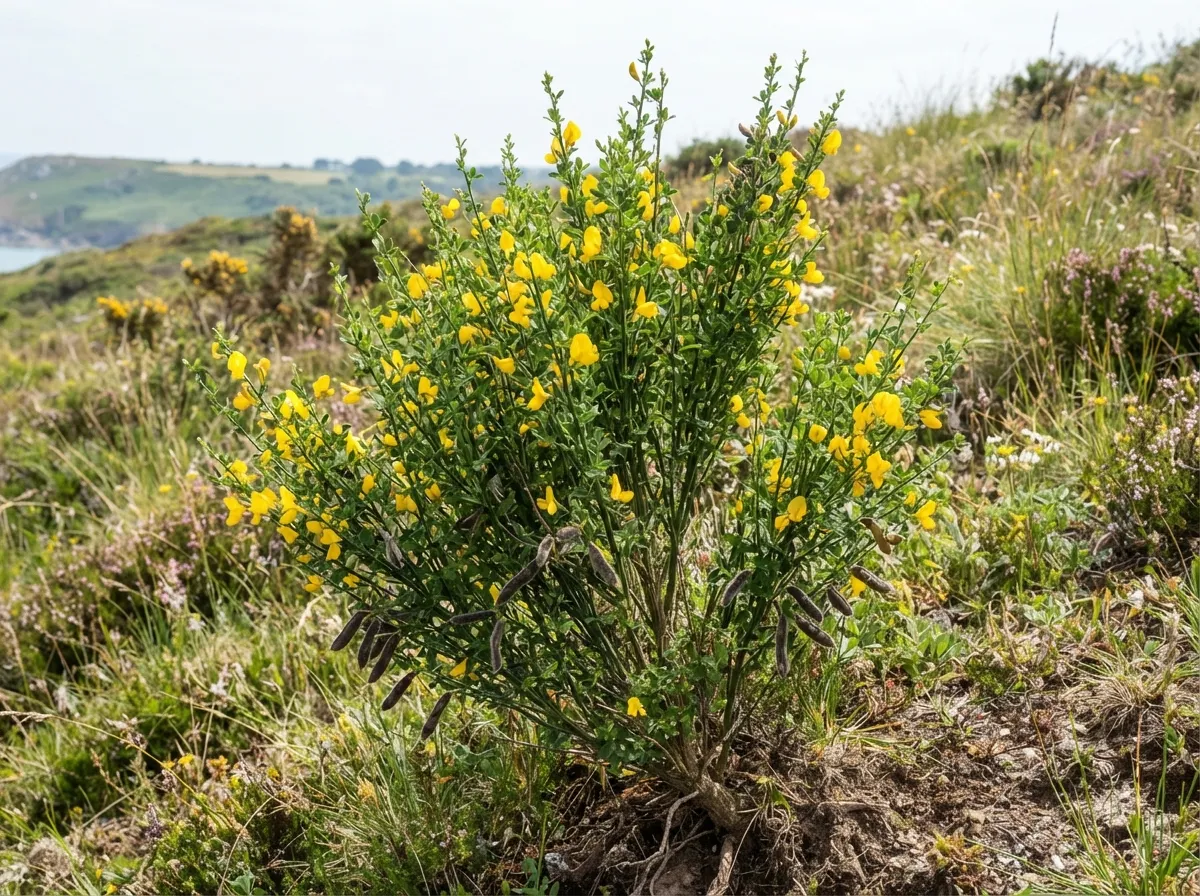
🔍 Identify it without mistakes
A highly branched shrub with green, angular, and flexible twigs (historically used to make brooms, hence its name), which covers itself in spring with an explosion of bright yellow flowers typical of the Fabaceae family. Despite this engaging appearance and its long history of artisanal wood use, the ENTIRE plant — especially the seeds — is toxic due to its alkaloids.
- numerous green, angular (5-sided), very flexible twigs that remain photosynthetic even without leaves
- small leaves, trifoliolate at the bottom of twigs, simple or absent at the top
- bright yellow flowers typical of Fabaceae (butterfly shape), solitary or in pairs, very numerous in spring
- flat black pods, exploding at maturity in summer with an audible crackling sound to disperse seeds
- dense bushy shrub, often in colonies on acidic heaths and wasteland
⚠️ Not to be confused with
To tell them apart: gorse pricks sharply to the touch (twigs transformed into spines), Scotch broom has flexible and smooth twigs, never prickly
💊 Healing with it
historically used at very low doses as a cardiotonic and diuretic, but this use is now abandoned in mainstream herbal medicine in favor of safer treatments
Level of evidence : traditional use — Vegetox ENVT — Monographie Genêt à balais
⚠️ TOXIC: contains sparteine (heart rhythm disorders) and cytisine (acts on the same nervous receptors as nicotine); poisoning causes mydriasis, excitation, dizziness, hypersalivation, bradycardia, and in severe cases, convulsions and coma; children are particularly at risk by mistaking the seeds for green peas; never consume without strict medical supervision
🪓 Other bushcraft uses
- twigs traditionally bound into bundles to make rustic brooms (hence the species name "scoparius", the sweeper), a use that gave it its French vernacular name
- the cytisine it contains is the active ingredient in a smoking cessation drug marketed in Eastern Europe, industrially extracted from a related broom species
No entry replaces a certain identification in the field, or medical advice. When in doubt: don't eat it. If ingestion is suspected: poison control or 112/911.