🌲 Common Juniper
Juniperus communis · Cupressaceae
🔍 Identify it without mistakes
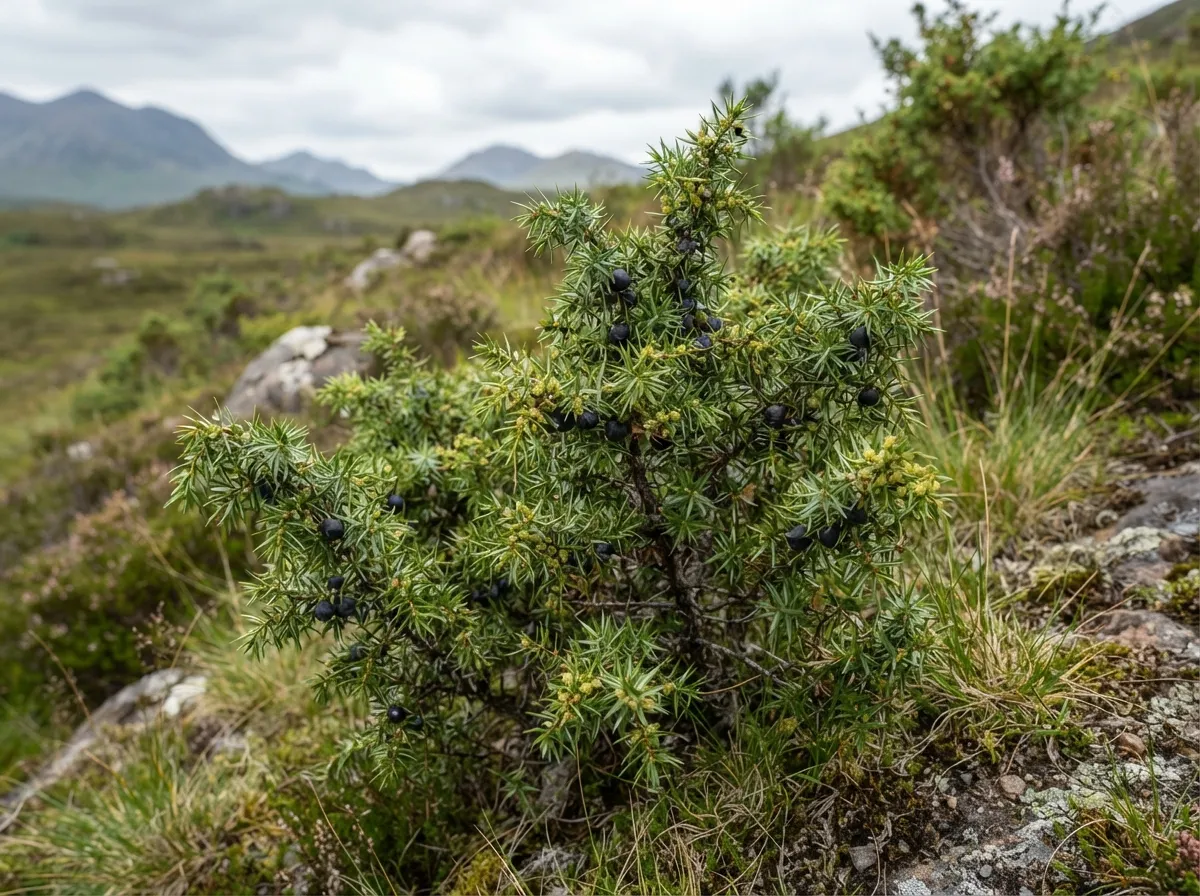
Bushy shrub or small tree depending on altitude, with sharp prickly needles arranged in whorls of 3, marked with a characteristic white band on the upper surface. Fruits are small round blue-black to purplish berries covered with a waxy bloom, taking two to three years to fully ripen on the same plant (so you will find green and black berries simultaneously).
- sharp prickly needles in whorls of 3, white band on top
- round blue-black waxy berries, coexisting at different stages of maturity on the same plant
- characteristic resinous smell when crushed
- low bushy habit at high altitude, more tree-like in plains
- separate male and female plants (dioecious), only female plants bear berries
⚠️ Not to be confused with
To tell them apart: yew berries are bright red fleshy open arils, never blue-black nor powdery waxy, and its needles are flat, arranged in 2 rows, and not prickly in whorls of 3
To tell them apart: savin juniper has scale-like leaves pressed against the twig (like a cypress) rather than free prickly needles in whorls of 3, and an unpleasant odor when crushed, unlike the pleasant resinous scent of common juniper
🍽️ Eating it
Preparation : ripe berries used dried as a spice (sauerkraut, game, marinades) or to flavor spirits (gin gets its name directly from juniper, 'jenever' in Dutch), never consumed raw in large quantities
approx, dried berry, spice and dietary supplement compilations
💊 Healing with it
berries traditionally used as a digestive aid (helps digest fatty meals) and mild diuretic; long-established culinary and medicinal use
Level of evidence : tradition (recognized by EMA/HMPC for traditional digestive use) — EMA/HMPC, community monograph Juniperi pseudo-fructus
⚠️ not recommended in case of kidney inflammation (the essential oil is kidney-irritating in high doses) as well as during pregnancy; never confuse with savin juniper, whose essential oil is toxic and abortifacient; safe for culinary use in normal amounts
🪓 Other bushcraft uses
- wood traditionally used for smoking meats and fish (juniper smoking, Scandinavian and Alpine tradition)
- branches burned for disinfectant fumigation in barns and rural homes before the modern era
- direct origin of the name and flavor of gin
Sources (3)
No entry replaces a certain identification in the field, or medical advice. When in doubt: don't eat it. If ingestion is suspected: poison control or 112/911.