⚠️ Meadow vetchling
Lathyrus pratensis · Fabaceae
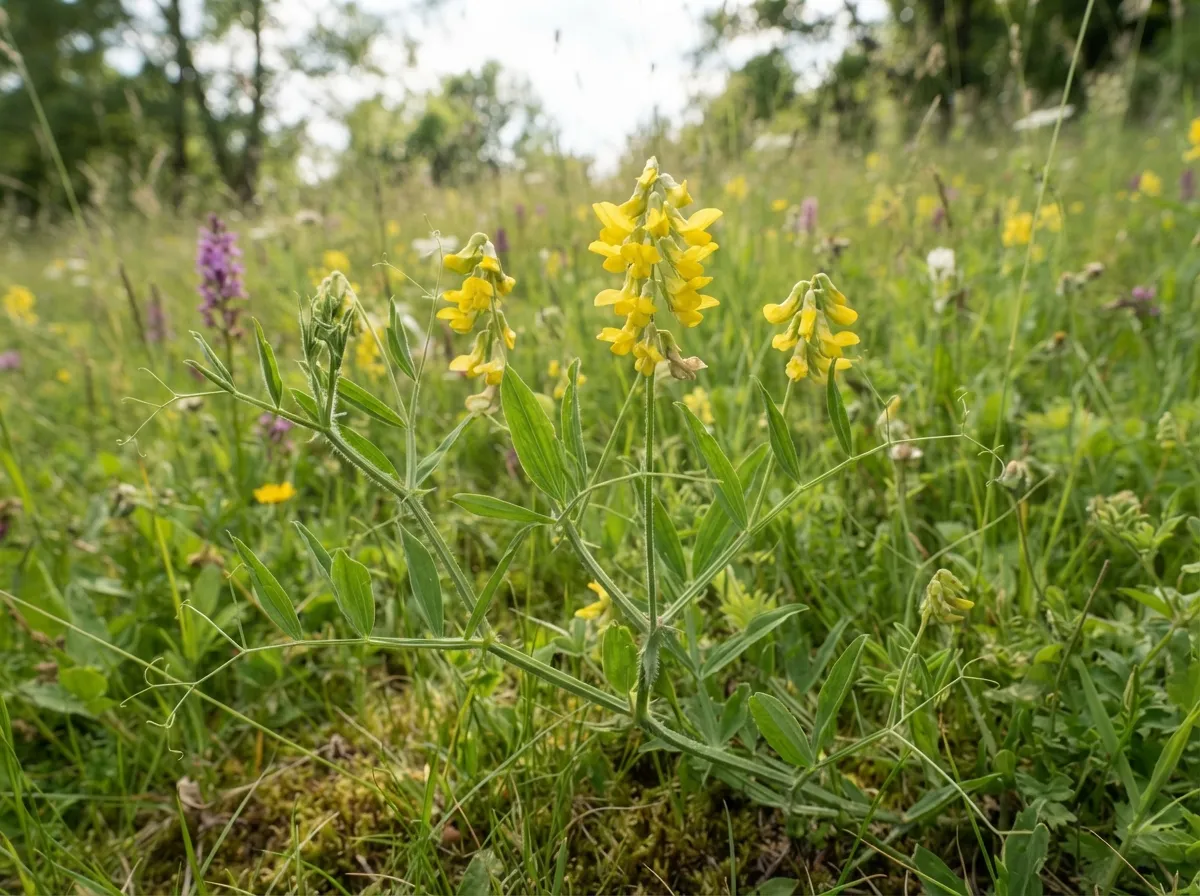
🔍 Identify it without mistakes
A climbing meadow legume, close relative of the vetch, but reduced to a single pair of narrow leaflets per leaf (instead of several pairs like in true vetches), ending in a simple tendril. Bright yellow flowers in small clusters of 3-10, unlike the pink-purple flowers of common vetches. It is the seed of the Lathyrus genus, when consumed in large quantities and repeatedly (historical famine conditions), that carries the risk of lathyrism — not the fresh plant during occasional foraging.
- leaves reduced to ONE SINGLE pair of narrow lanceolate leaflets, ending in a tendril
- bright yellow flowers (unlike the pink-purple of true vetches), in loose clusters of 3-10
- angled winged stem, climbing via tendrils
- flattened, dark brown to black pods when mature
- grows in mats in meadows, often intertwined with grasses
⚠️ Not to be confused with
To tell them apart: meadow vetchling has a single pair of leaflets per leaf and yellow flowers; common vetch has several pairs of leaflets and pink-purple flowers
🪓 Other bushcraft uses
- the genus Lathyrus was historically cultivated in the form of grass pea (Lathyrus sativus) as a emergency crop during food shortages, precisely because it withstands drought when other crops fail — it is this exact resilience that exposed entire populations to lathyrism during prolonged famines
Sources (3)
No entry replaces a certain identification in the field, or medical advice. When in doubt: don't eat it. If ingestion is suspected: poison control or 112/911.