🍄 Chanterelle
Cantharellus cibarius · Cantharellaceae
🔍 Identify it without mistakes
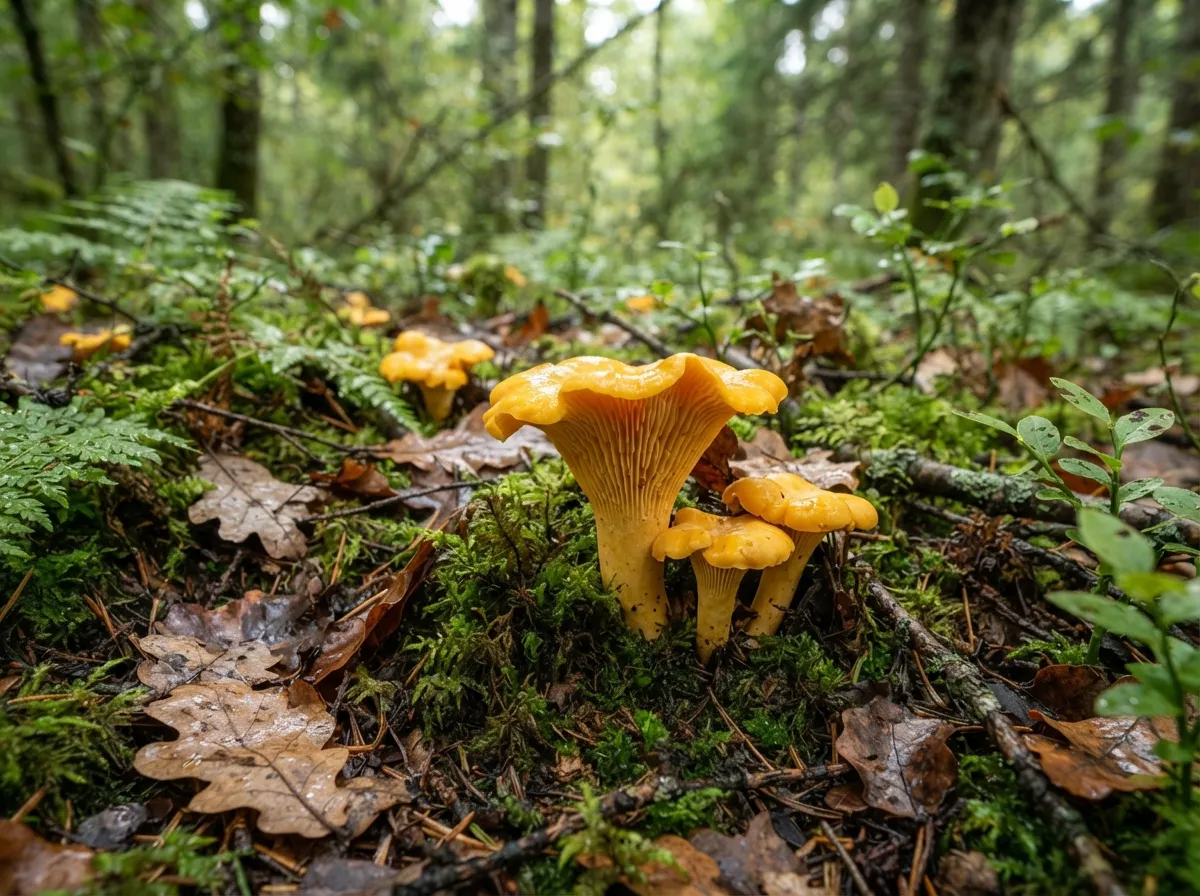
An egg-yellow mushroom shaped like an irregular funnel, one of the most sought-after in Europe. Its trap isn't deadly, but it is tricky: under the cap, you won't find true gills, but thick, forked, blunt ridges that run down the stem—the key feature that sets the real chanterelle apart from all its lookalikes.
- egg-yellow to uniform orange-yellow cap, irregular funnel-shaped, wavy and lobed margin
- underside with thick, forked, blunt RIDGES (not true fine, sharp gills), decurrent on the stem
- solid stem, same color as the cap, merging into it without a distinct boundary
- white to pale yellow flesh, firm
- distinctive fruity smell reminiscent of apricot
- spore print cream-white to pale yellow
⚠️ Not to be confused with
To tell them apart: the false chanterelle has TRUE fine, crowded, clearly forked gills (not thick ridges), a more orange and velvety cap, and no apricot smell; it often grows on dead wood or woody debris
To tell them apart: the Jack-o'-lantern mushroom grows in dense clusters at the base of hardwood stumps or roots (never solitary on the soil like the chanterelle), has true, very fine decurrent orange gills, and above all, its FRESH gills emit a faint greenish glow in pitch darkness (bioluminescence)—a spectacular feature, though hard to rely on in practice; rely instead on its wood habitat and true gills
To tell them apart: the yellowfoot chanterelle has a hollow stem and grayer/browner colors, while the golden chanterelle has a solid stem and a uniform egg-yellow color
To tell them apart: the chanterelle has thick forked ridges under the cap (no true gills) and a uniform egg-yellow color, lacking the cobweb-like cortina typical of webcaps
🍽️ Eating it
Preparation : always cooked, over high heat to release excess water; do not wash too much (brush instead) to preserve flavor; spoils quickly raw, freezes well after quick sautéing
USDA FoodData Central, raw, per 100 g
Sources (4)
No entry replaces a certain identification in the field, or medical advice. When in doubt: don't eat it. If ingestion is suspected: poison control or 112/911.