🔴 Slender Gracilaria
Gracilaria gracilis · Gracilariacées
🔍 Identify it without mistakes
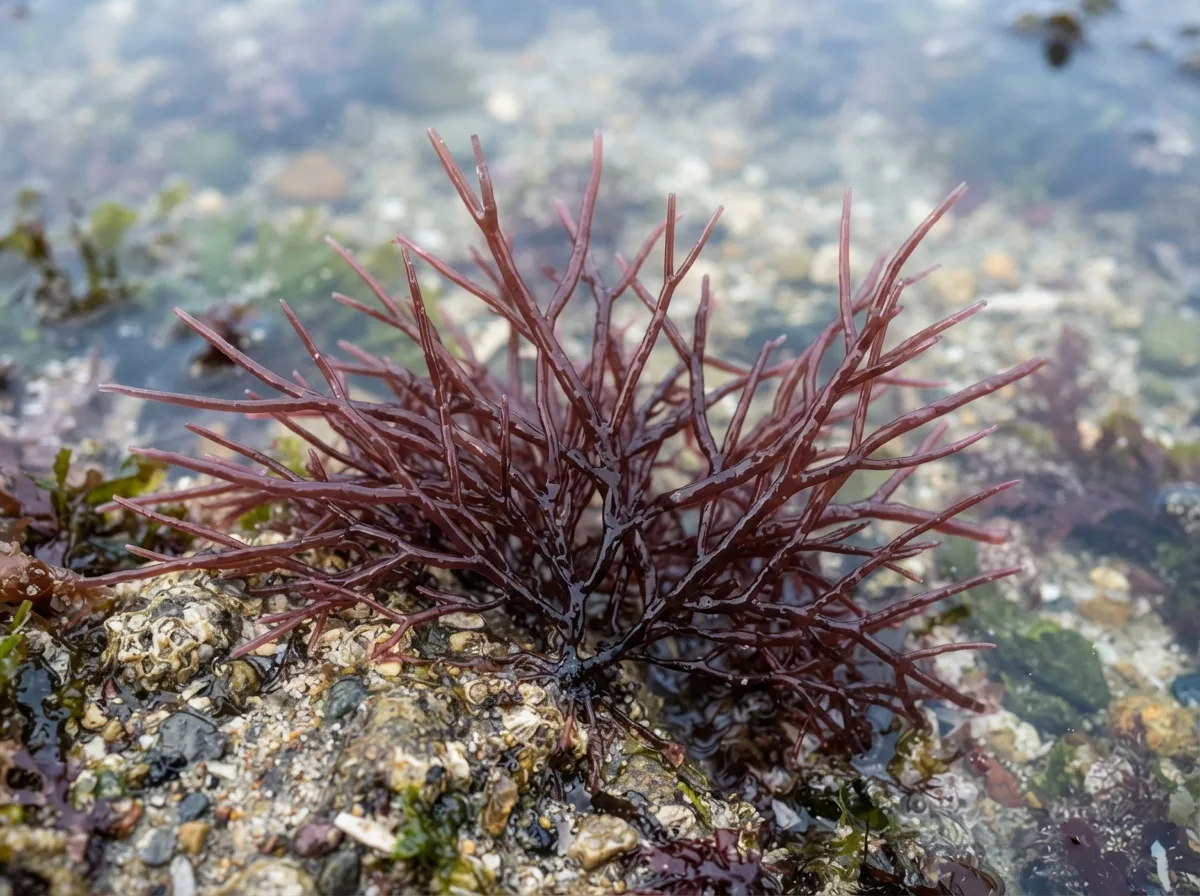
Red seaweed forming thin, cylindrical, cartilaginous yet elastic cords, irregularly branched and ending in tapered tips. Its color ranges from dark reddish-orange to yellowish in sun-exposed areas. It is one of the world's major sources of agar-agar.
- cylindrical cords 1 to 2 mm in diameter, cartilaginous and elastic to the touch
- irregular, spaced branching, narrowed at the base and tapering to a point at the tips
- dark reddish-orange color, turning yellowish in areas exposed to strong light
⚠️ Not to be confused with
To tell them apart: the cartilaginous yet elastic consistency and the tapered, irregular branching distinguish slender gracilaria from finer, more brittle red seaweeds; if in doubt about an unknown filamentous red seaweed, stick to species identified with certainty
🍽️ Eating it
Preparation : traditionally boiled to extract agar-agar, a natural gelling agent used in desserts, jams, and terrines; can also be eaten directly blanched in seaweed salad after thorough rinsing
💊 Healing with it
no direct traditional medicinal use; the extracted agar-agar serves as a neutral substrate in microbiology and as a gelling dietary fiber
Level of evidence : traditional use — PMC — Gracilaria gracilis as Source of Agar: Content, Chemical Characteristics, and Gelling Properties
⚠️ avoid harvesting in harbor or polluted areas; like other widely consumed red seaweeds, it is monitored by health authorities for its iodine content
🪓 Other bushcraft uses
- major source of agar-agar for the food industry and laboratory microbiology (culture media)
Sources (3)
No entry replaces a certain identification in the field, or medical advice. When in doubt: don't eat it. If ingestion is suspected: poison control or 112/911.