🍇 Grewia (Sahel raisin)
Grewia bicolor · Malvaceae (Tiliaceae)
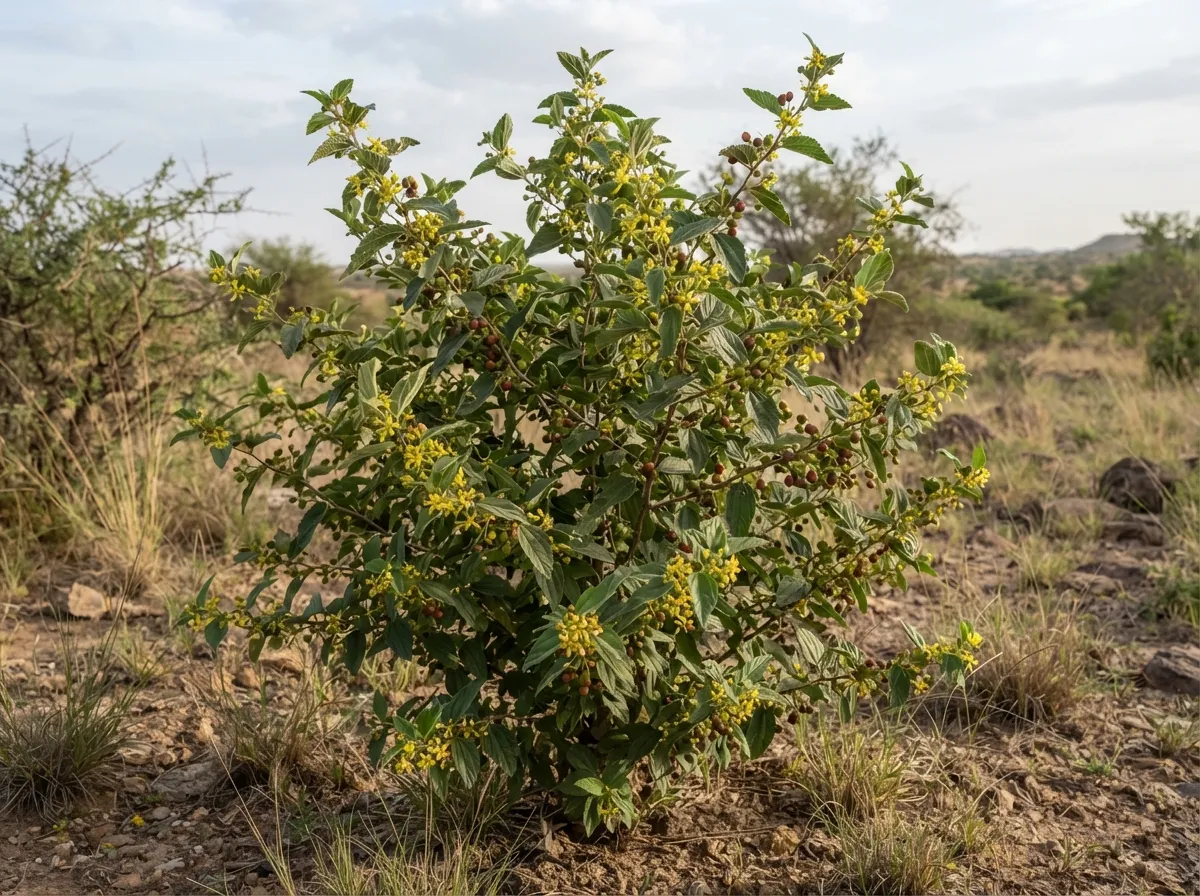
🔍 Identify it without mistakes
Multi-stemmed shrub or small tree common in the Sahel and dry African savannas, with characteristic leaves that are glossy green above and whitish and downy underneath (hence the name 'bicolor'). Its small, round, two-lobed fruits, reddish-brown when ripe, can be eaten fresh or dried.
- multi-stemmed shrub from 2 to 9 m high
- elliptical leaves, glossy green above and whitish, downy underneath (sharp contrast between both sides)
- small bright yellow flowers in clusters at the leaf axils
- simple or two-lobed fruit, each lobe about 6 mm, reddish-brown when ripe
⚠️ Not to be confused with
To tell them apart: the sharp contrast between the glossy green upper side and the whitish-downy underside of the leaves is a reliable, fast distinction among Sahelian savanna shrubs
🍽️ Eating it
Preparation : eat the fresh pulp straight off the bush, or dry it for long-term storage; you can also extract the juice and ferment it locally into a beverage
💊 Healing with it
bark and roots used in traditional Sahelian medicine, rich in triterpenes and alkaloids studied for their potential pharmacological properties
Level of evidence : traditional use — ScienceDirect — Grewia bicolor seed oil: Putative pharmaceutical, cosmetic and industrial uses
⚠️ no known toxicity for the fruit; traditional medicinal uses of the bark and roots are not standardized
🪓 Other bushcraft uses
- mucilaginous leaves used as a thickening agent in certain Sahelian sauces
- fruit sometimes fermented into beer or distilled into local spirits
- fibrous bark used for crude cordage
Sources (2)
No entry replaces a certain identification in the field, or medical advice. When in doubt: don't eat it. If ingestion is suspected: poison control or 112/911.