🚫 Gympie-gympie (Giant stinging tree)
Dendrocnide moroides · Urticaceae
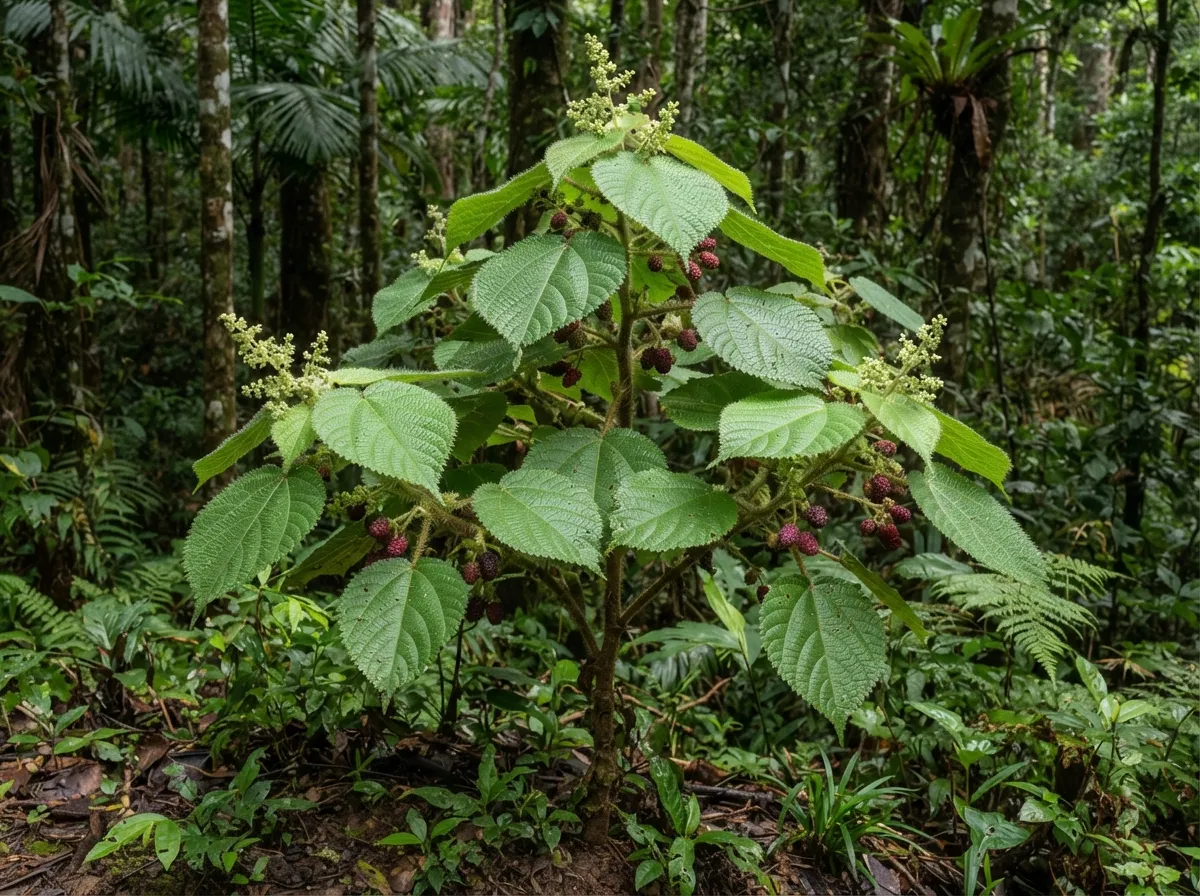
🔍 Identify it without mistakes
Scraggy shrub under 3 m tall, with large heart-shaped leaves (12-22 cm) with toothed edges, attached to the petiole on their underside (peltate attachment). The entire plant — stem, branches, petioles, and even the fruit — is covered with microscopic stinging hairs shaped like hypodermic needles, which break off on contact and inject a cocktail of toxins. Colonises rainforest gaps, disturbed riverbanks, and man-made clearings.
- large heart-shaped leaves (12-22 cm) with toothed edges, peltate petiole attachment under the leaf
- entire plant covered with fine microscopic stinging hairs, including the fruit
- scraggy shrub under 3 m, colonising rainforest gaps and clearings
- present from Cape York to northern New South Wales, where it is rare and threatened
⚠️ Not to be confused with
To tell them apart: the false stinger belongs to the same Urticaceae family as the gympie-gympie but, unlike it, never stings — the total absence of visible stinging hairs and the silver underside of the foliage allow you to rule it out safely before touching any suspicious leaf in the Australian rainforest
☠️ What kills
First steps : Do not rub the affected area. Remove visible hairs using hair removal wax or adhesive tape rather than bare hands. Avoid hot water and sudden temperature changes, which reactivate the pain. Consult a doctor in case of a severe reaction (widespread hives, swollen lymph nodes).
💊 Healing with it
no documented traditional medicinal use; the plant is actively avoided
Level of evidence : traditional use
⚠️ never touch a large heart-shaped leaf with bare hands in the Queensland rainforest without positive identification; airborne hairs can also cause respiratory complications during prolonged exposure
No entry replaces a certain identification in the field, or medical advice. When in doubt: don't eat it. If ingestion is suspected: poison control or 112/911.