🌿 Stinking hellebore
Helleborus foetidus · Ranunculaceae
🔍 Identify it without mistakes
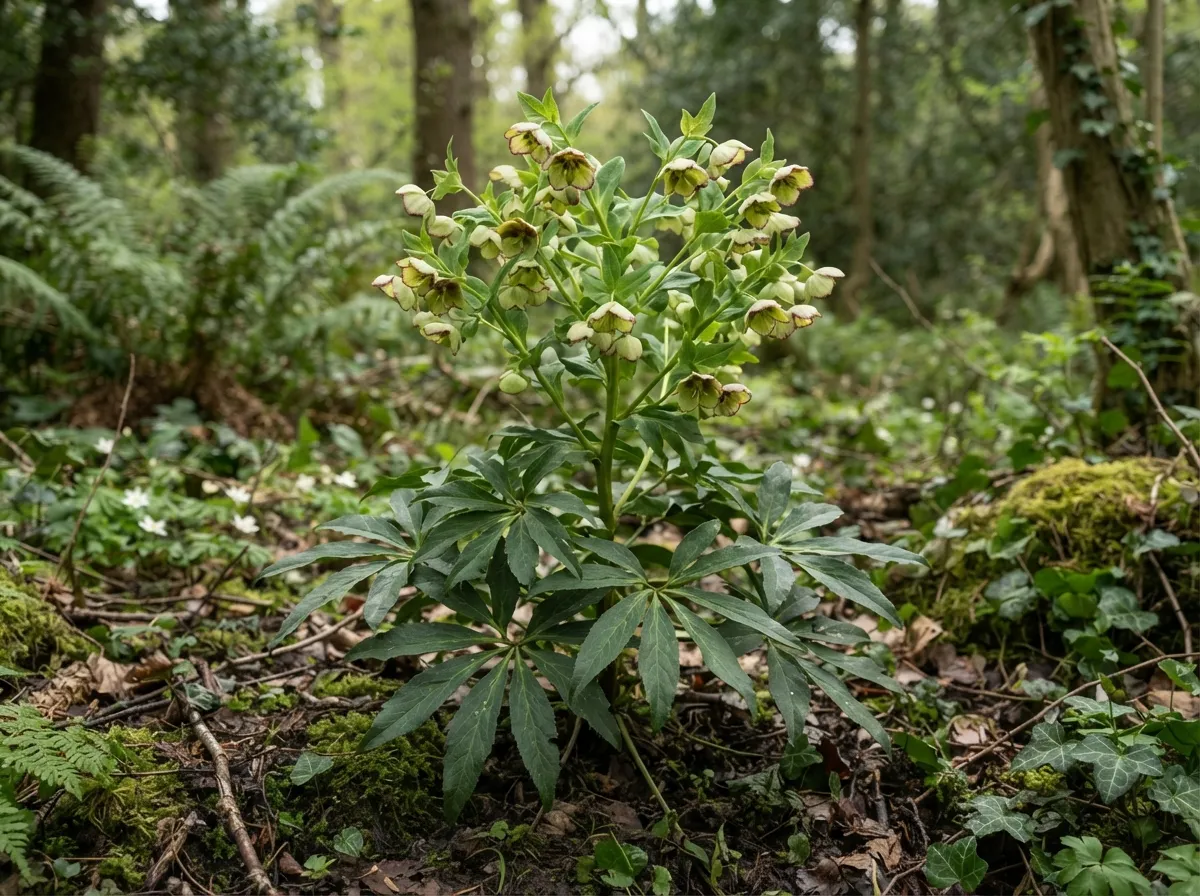
An evergreen perennial of limestone undergrowth, easy to recognize by its dark, deeply divided fan-like foliage and pale green, red-rimmed bell flowers that bloom at the end of winter, making it one of the year's earliest blooms. The entire plant releases an unpleasant smell when crushed, hence its name. Eating it is toxic across the board, having been used historically as a dangerous purge and even as a poison.
- evergreen, leathery leaves divided into narrow fan-arranged leaflets (palmate)
- drooping bell-shaped flowers, pale green edged with purple-red, grouped in a terminal panicle
- characteristic stinking odor when foliage is crushed
- stout stem, leafy along its entire height, unlike the Christmas rose which has a bare flower stalk
⚠️ Not to be confused with
To tell them apart: the main risk is historical (folk medicine use as a violent purge, now abandoned); the foul smell when crushed generally deters any accidental ingestion
☠️ What kills
First steps : Call poison control if ingested, even in tiny amounts, especially if a child handled the plant and put their hands to their mouth. Do not induce vomiting. Keep a piece of the plant for identification.
Sources (2)
No entry replaces a certain identification in the field, or medical advice. When in doubt: don't eat it. If ingestion is suspected: poison control or 112/911.