🍂 Poison ivy
Toxicodendron radicans · Anacardiaceae
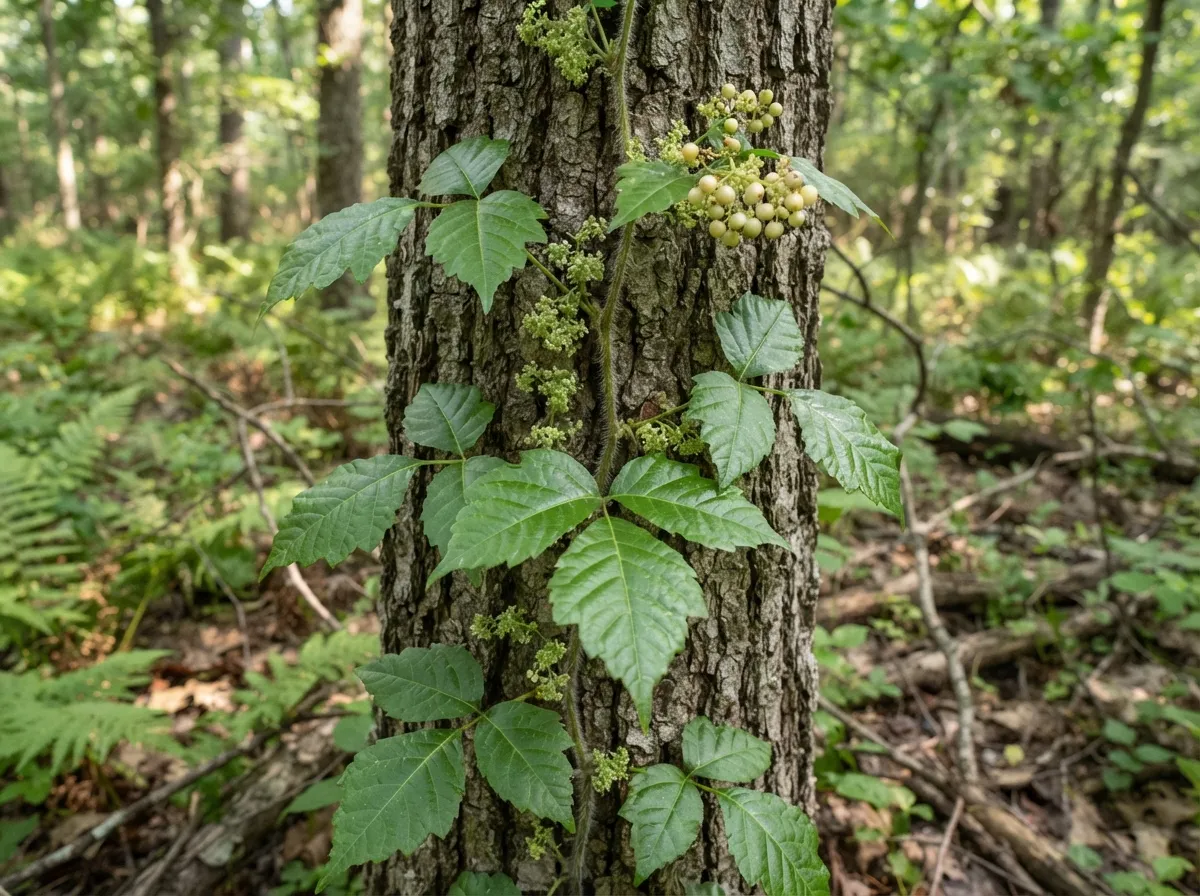
🔍 Identify it without mistakes
Extremely common climbing or bushy plant in North America, responsible for the continent's most frequent contact dermatitis. You can spot it by its compound leaf with three shiny leaflets — hence the North American saying "leaves of three, let it be" — and its resinous oil, urushiol, triggers a severe allergic reaction at the slightest contact, even years after touching a contaminated tool or piece of clothing.
- compound leaf with 3 shiny leaflets, the central leaflet attached by a small petiole longer than the two side ones
- variable leaflet edges: smooth, toothed, or lobed depending on the individual plant
- foliage turns a dramatic bright red in autumn
- variable growth habit: climbing vine with aerial roots, low shrub, or ground cover depending on the environment
⚠️ Not to be confused with
To tell them apart: Virginia creeper has 5 leaflets arranged like a fan, while poison ivy only has 3 — the saying "leaves of three, let it be" targets this exact difference
To tell them apart: staghorn sumac has compound leaves with many elongated leaflets arranged like a comb and upright, velvety red fruit cones, very different from poison ivy's 3 simple leaflets
☠️ What kills
First steps : Immediately wash exposed skin with cold water and soap (ideally within 10 minutes, as urushiol penetrates quickly). Never burn the plant or go near a fire where it might be burning — call emergency services if you cough or experience breathing distress after possible smoke inhalation. Wash all clothing and tools that came into contact separately.
Sources (3)
No entry replaces a certain identification in the field, or medical advice. When in doubt: don't eat it. If ingestion is suspected: poison control or 112/911.