🌳 European Beech
Fagus sylvatica · Fagaceae
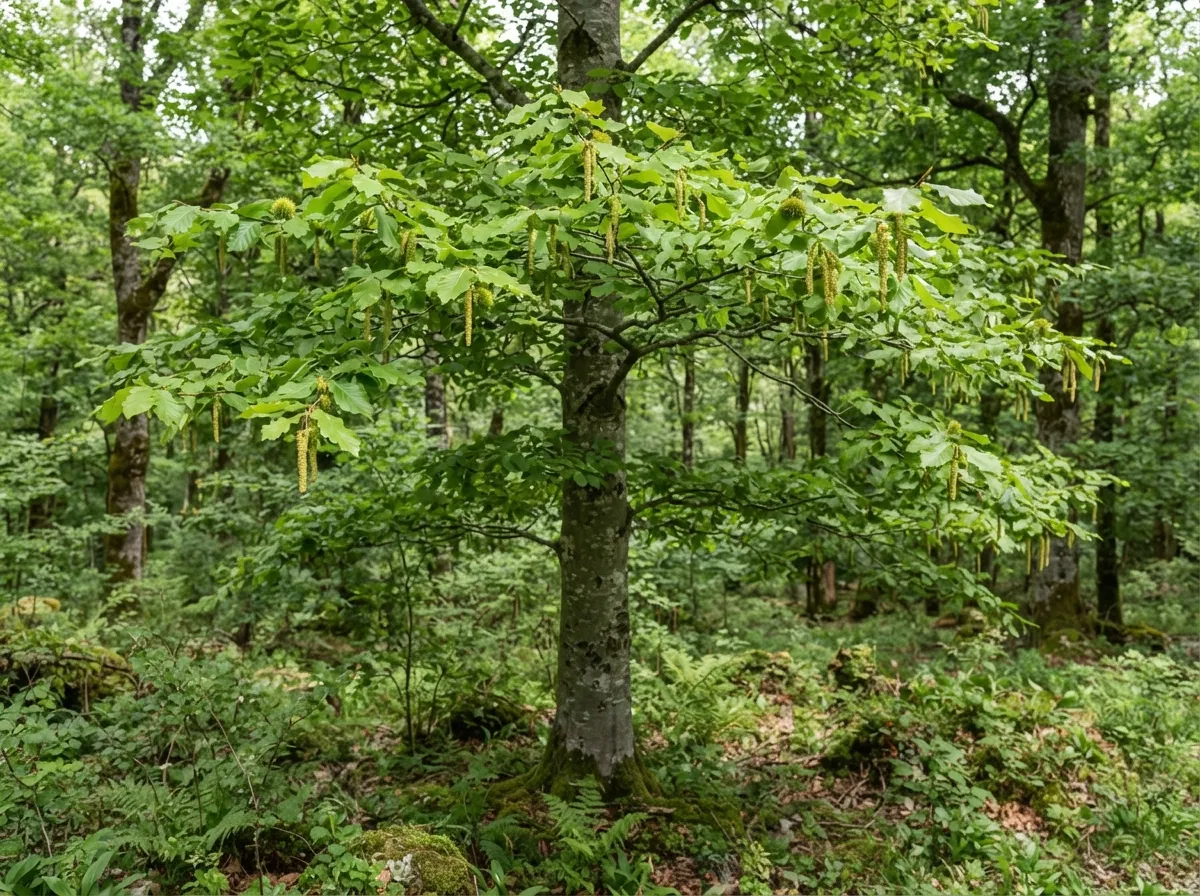
🔍 Identify it without mistakes
Large tree with remarkably distinctive, smooth grey bark that stays smooth even on very old specimens (unlike most European trees). Oval leaves with slightly wavy margins fringed with silky hairs when young, featuring well-marked parallel veins. Triangular nuts (beechmasts) grouped in pairs inside a woody husk covered with short, soft prickles.
- smooth grey bark even at maturity
- oval leaves with a wavy, hairy margin when young
- triangular beechmasts in pairs inside a soft-spined husk
- spindle-shaped, pointed buds, very distinctive in winter
- dense canopy creating deep shade that limits the ground-level herbaceous layer
⚠️ Not to be confused with
To tell them apart: the smooth grey bark and triangular beechmasts in pairs are unique among large European trees
To tell them apart: fluted/muscular trunk in hornbeam versus smooth in beech; serrated, rough leaves in hornbeam versus wavy margin fringed with fine hairs in beech
🍽️ Eating it
Preparation : beechmasts shelled and eaten raw in moderation (they contain fagine, a mild alkaloid causing headaches and digestive distress in large amounts), or roasted, which destroys the fagine and allows for more generous consumption; young tender leaves raw in salads in very early spring
approx, beechmast, ethnobotanical compilations (Couplan, PFAF) — high oil content historically pressed
💊 Healing with it
rarely used in modern herbal medicine; pressed beechmast oil was historically used as cooking oil and lamp fuel
Level of evidence : traditional use — ethnobotanical compilations (Couplan, Le régal végétal)
⚠️ eat raw beechmasts in moderation (fagine is mildly toxic in large quantities, causing headaches and stomach upset); roasting reduces this risk
🪓 Other bushcraft uses
- cold-pressed beechmast oil, used as table oil until the 20th century in some rural French regions
- hard, uniform wood widely used in cabinetmaking, toys, and tool handles
- dead leaves lingering on young twigs through winter (marcescence), useful for winter identification
No entry replaces a certain identification in the field, or medical advice. When in doubt: don't eat it. If ingestion is suspected: poison control or 112/911.