🌺 Hibiscus (roselle, bissap)
Hibiscus sabdariffa · Malvaceae
🔍 Identify it without mistakes
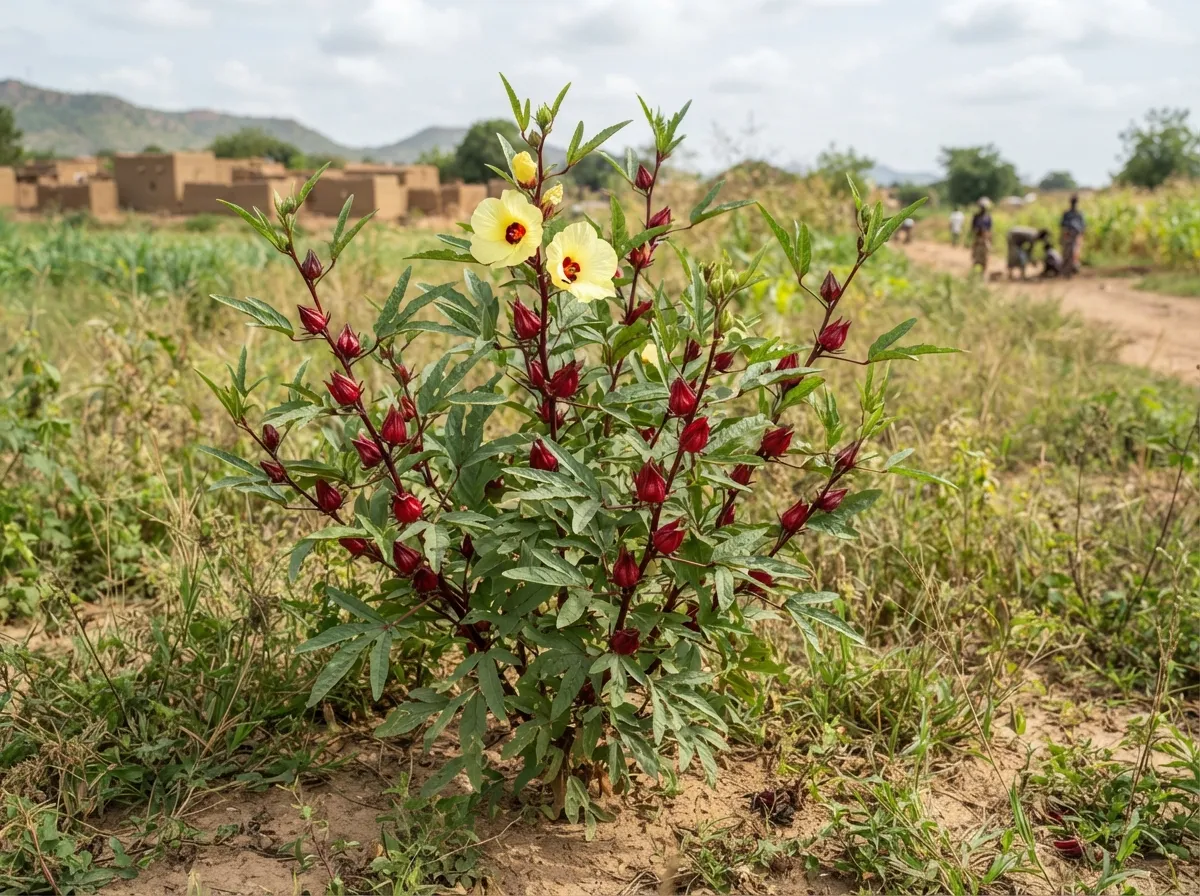
Annual shrub with reddish stems, deeply lobed leaves (3-5 lobes) green to purple depending on the variety, and pale yellow flowers with a purple center. After flowering, the calyx (base of the flower) swells and turns bright red: this fleshy, tangy structure is harvested—not the fruit itself.
- fleshy bright red calyx surrounding a dry capsule after flowering
- lobed leaves with reddish veins
- stem often tinged with red
⚠️ Not to be confused with
To tell them apart: the bright red, star-shaped fleshy calyx that swells around the dry capsule after flowering is a unique structure to roselle hibiscus among cultivated tropical shrubs
🍽️ Eating it
Preparation : fresh calyces steeped in hot water (bissap/karkade drink) or cooked into jam/tangy sauce; young leaves cooked like a green vegetable (flavor close to sorrel)
💊 Healing with it
infusion of calyces traditionally used for mild to moderate hypertension; clinical trials show a reduction in systolic blood pressure comparable to that of mild antihypertensive medications
Level of evidence : solid studies — Journal of Nutrition (clinical trial); Nutrition Reviews meta-analysis 2022
⚠️ not recommended for pregnant women (reported emmenagogue effect) and to be discussed with a doctor if currently taking antihypertensive treatment (risk of potentiation/interaction); does not replace prescribed treatment
🪓 Other bushcraft uses
- stem fibers used as a jute substitute (kenaf, related species)
- natural red food coloring for drinks and confectionery
Sources (2)
No entry replaces a certain identification in the field, or medical advice. When in doubt: don't eat it. If ingestion is suspected: poison control or 112/911.