🌵 Hoodia
Hoodia gordonii · Apocynaceae
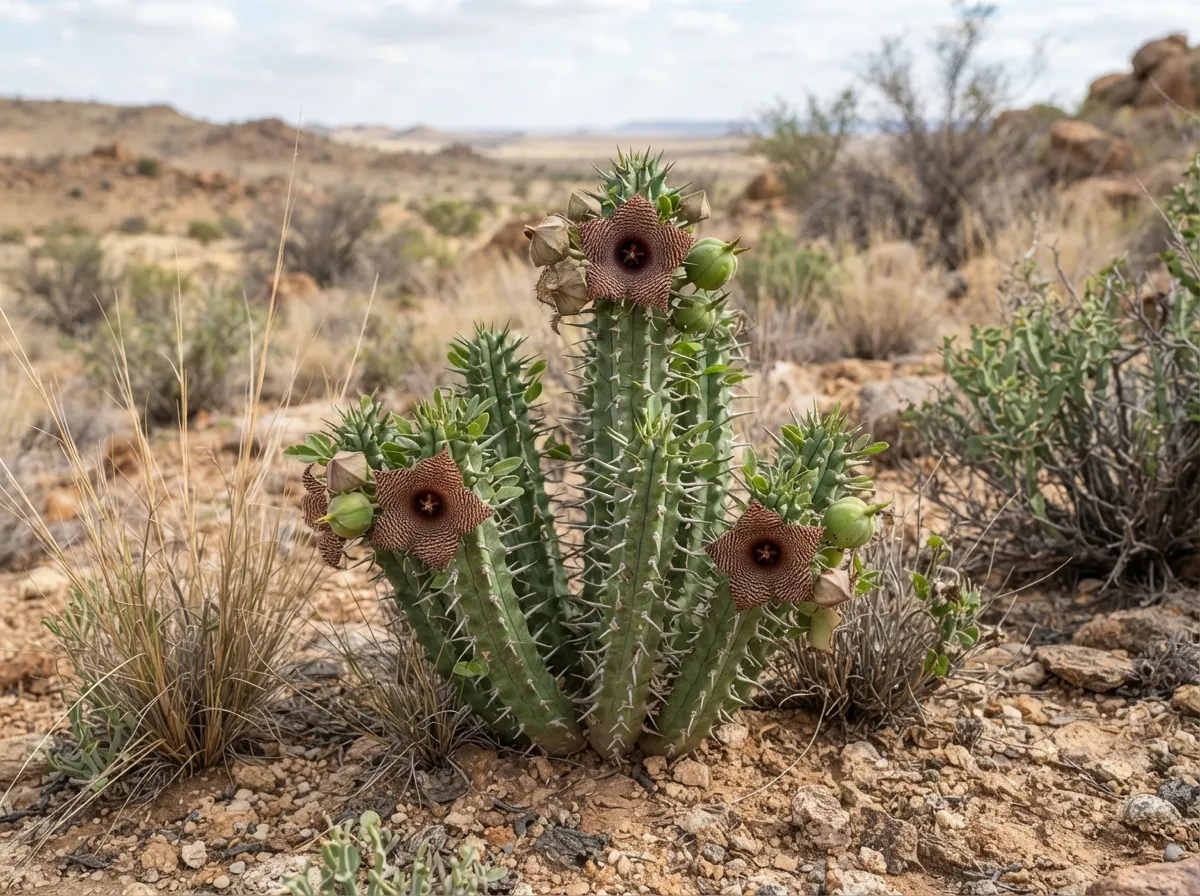
🔍 Identify it without mistakes
A succulent plant resembling a cactus (though botanically unrelated), forming upright, spiny, fleshy stems with an angular cross-section, bearing curious wheel-shaped fleshy flowers that are often foul-smelling to attract pollinating flies.
- succulent spiny stems with angular ribs, resembling a cactus
- fleshy wheel-shaped flowers, often brownish and foul-smelling
- no visible leaves
🍽️ Eating it
Preparation : the San of the Kalahari Desert traditionally chewed a piece of stem to suppress hunger and thirst during long hunts; it is not a food but a traditional occasional appetite suppressant
💊 Healing with it
traditionally used by the San as an appetite and thirst suppressant during multi-day hunting trips in the Kalahari
Level of evidence : traditional use — Wikipedia - Hoodia; documented abandonment of the industrial project
⚠️ despite a global commercial craze in the 2000s (slimming supplements), no high-quality clinical studies have confirmed an appetite-suppressant effect in humans; a major food company invested nearly £20 million in its research before abandoning the project, deeming the product insufficiently safe and effective; protected species (CITES Appendix II), its wild harvesting is strictly regulated
Sources (1)
No entry replaces a certain identification in the field, or medical advice. When in doubt: don't eat it. If ingestion is suspected: poison control or 112/911.