🌳 Common Holly
Ilex aquifolium · Aquifoliacées
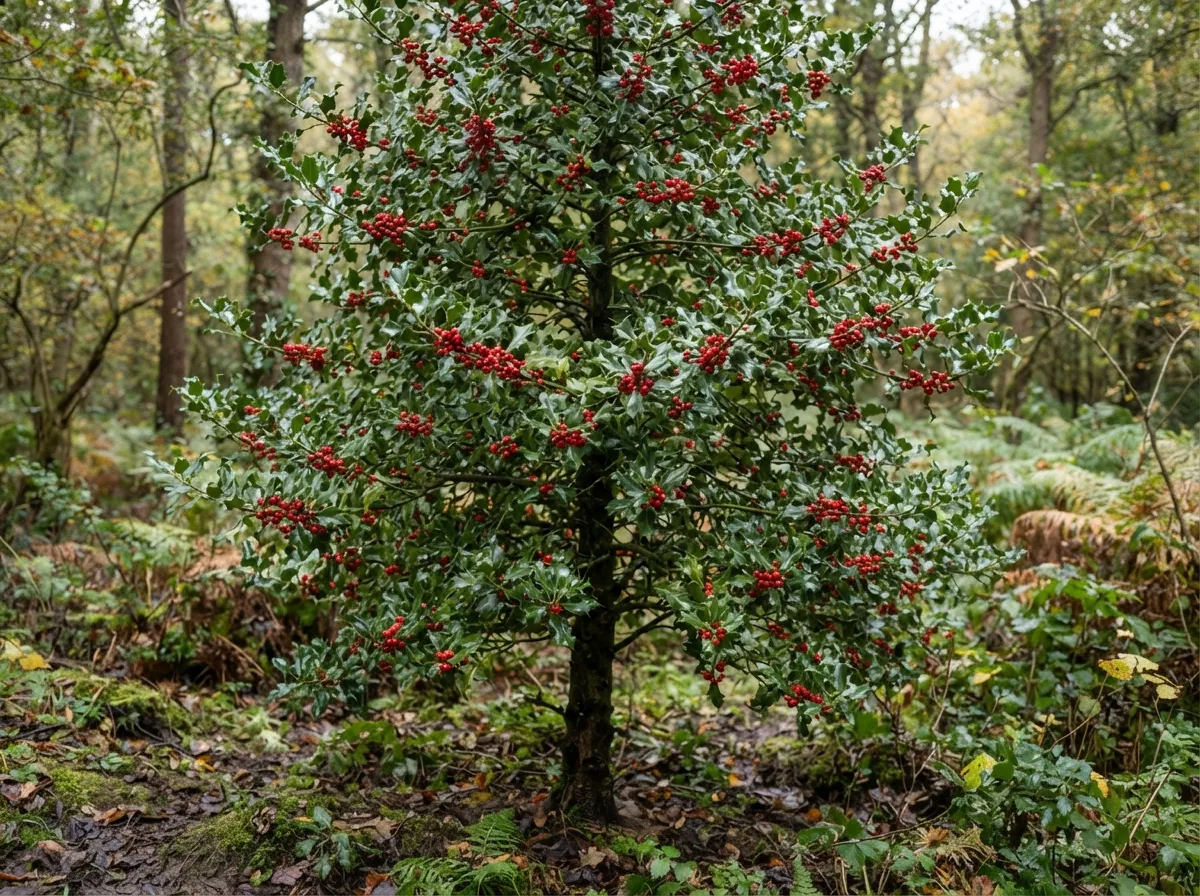
🔍 Identify it without mistakes
Evergreen shrub or small tree, dark shiny green, leathery. Remarkable feature: the lower leaves (within reach of herbivores) are spiny along their wavy margins, while higher leaves, out of reach from grazing, become smooth. Small fragrant white flowers, bright red berries persisting all winter, borne only on female plants (dioecious species).
- leathery, dark shiny green evergreen leaves, spiny at the bottom of the tree and smoother higher up
- smooth grey bark, almost like that of a young beech
- bright red berries persisting all winter, borne only by female plants
- dioecious shrub: only one in two plants (the female) bears fruit
⚠️ Not to be confused with
To tell them apart: opposite leaves on osmanthus vs alternate leaves on true holly
💊 Healing with it
leaves traditionally used in decoction against fever and rheumatism, as a European substitute for quinine in marshy areas ("holly wine"); leaf poultices for abscesses and boils
Level of evidence : tradition, internal use fell into disuse — Lille Poison Control Center — Holly; Échosciences Loire
⚠️ berries are toxic (≥10 drupes cause nausea, vomiting, and diarrhea in children) — keep out of reach of children
🪓 Other bushcraft uses
- handles and fine objects: hard, pearly white, homogeneous wood, prized in marquetry for fine tool handles, chess pieces, and walking sticks
- walking sticks: straight, flexible holly shoots, once dried, are highly shock-resistant
- defensive hedge: a trimmed holly hedge forms an almost impenetrable barrier — historically used as living fences in hedgerows
- birdlime (historical): crushed and fermented inner bark produced a plant glue used to catch birds
- winter shelter: dense evergreen foliage on low branches offers better snow protection than bare deciduous trees — great spot for a makeshift bivouac
- famine fodder: less spiky upper leaves were cut in the past to feed sheep when grass was scarce
- winter navigation landmark: the only green resource visible from afar in a bare deciduous forest
No entry replaces a certain identification in the field, or medical advice. When in doubt: don't eat it. If ingestion is suspected: poison control or 112/911.