🌲 English Yew
Taxus baccata · Taxaceae
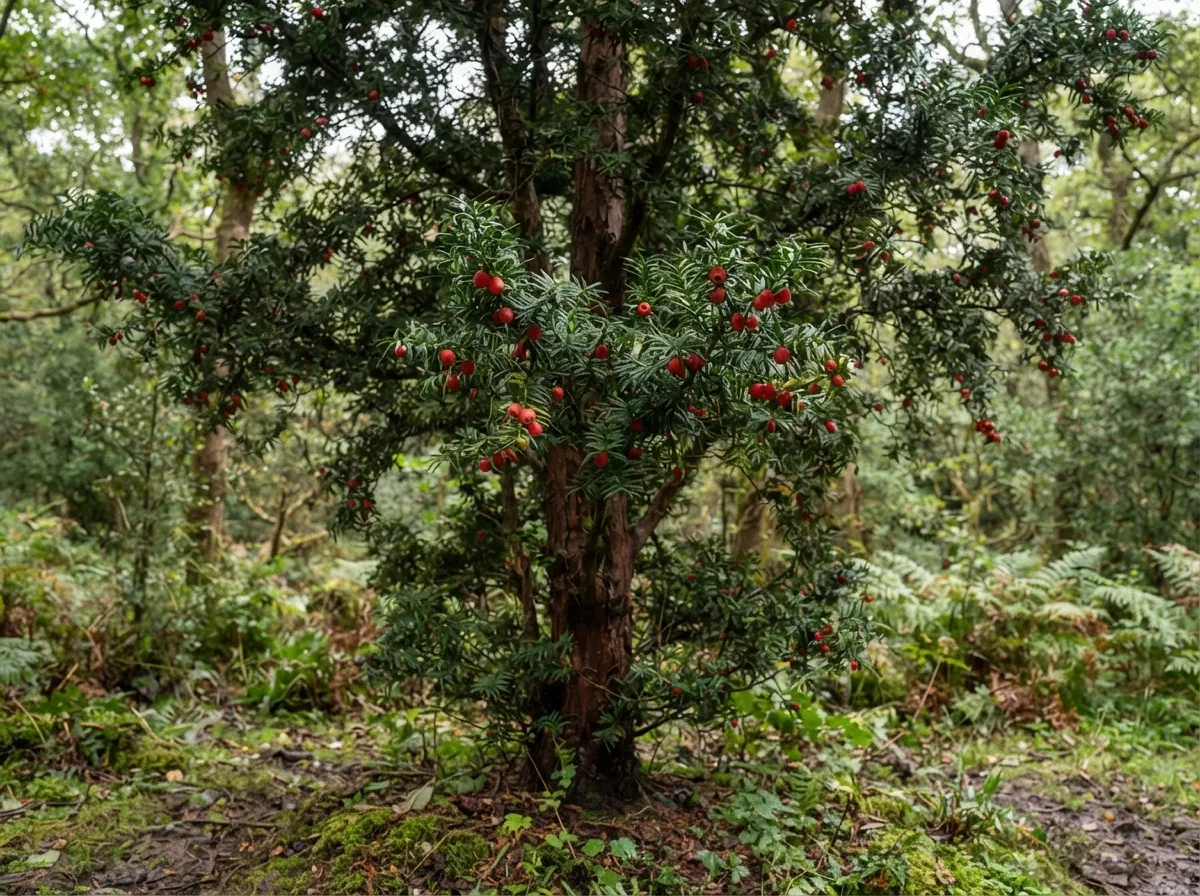
🔍 Identify it without mistakes
Dark conifer with flat, soft needles and no strong resinous smell. It grows in undergrowth as well as trimmed hedges in churchyards and parks. It doesn't produce cones: its seeds are surrounded by a fleshy, sweet red aril, unique in European flora. The entire tree is toxic except for this aril itself — it's the black seed inside that kills if chewed.
- flat needles arranged in two rows, dark green above, paler underneath
- no resin smell when crushing the needle (unlike fir trees)
- reddish-brown bark peeling off in plates
- bright red fruit shaped like a small cup open at the top, never a cone
⚠️ Not to be confused with
To tell them apart: fir smells strongly of resin when you crush a needle and bears upright cones; yew has no smell and bears a fleshy red aril
To tell them apart: juniper has prickly needles arranged in whorls of three and blue-black berries, not bright red
To tell them apart: yew has flat needles arranged like a comb in 2 rows instead of bundles of 2, scaly reddish-brown bark, and fleshy red fruits (arils) instead of woody cones
To tell them apart: yew has flat needles arranged in 2 rows like a comb just like fir, but its bark is scaly reddish-brown and above all it never produces woody cones: its fruits are fleshy red arils open with a single visible toxic black seed — if you have any doubt about a young conifer without identifiable cones, do not harvest
To tell them apart: Swiss pine has needles grouped in bundles of five and upright cones; yew has single flat needles in two rows, never cones, but red arils
☠️ What kills
First steps : Call the poison control center immediately even if you don't have symptoms, as cardiac arrest can occur without warning. Never induce vomiting. Keep a twig or the chewed seeds for identification at the hospital.
Sources (3)
No entry replaces a certain identification in the field, or medical advice. When in doubt: don't eat it. If ingestion is suspected: poison control or 112/911.