🫐 Illawarra Plum
Podocarpus elatus · Podocarpaceae
🔍 Identify it without mistakes
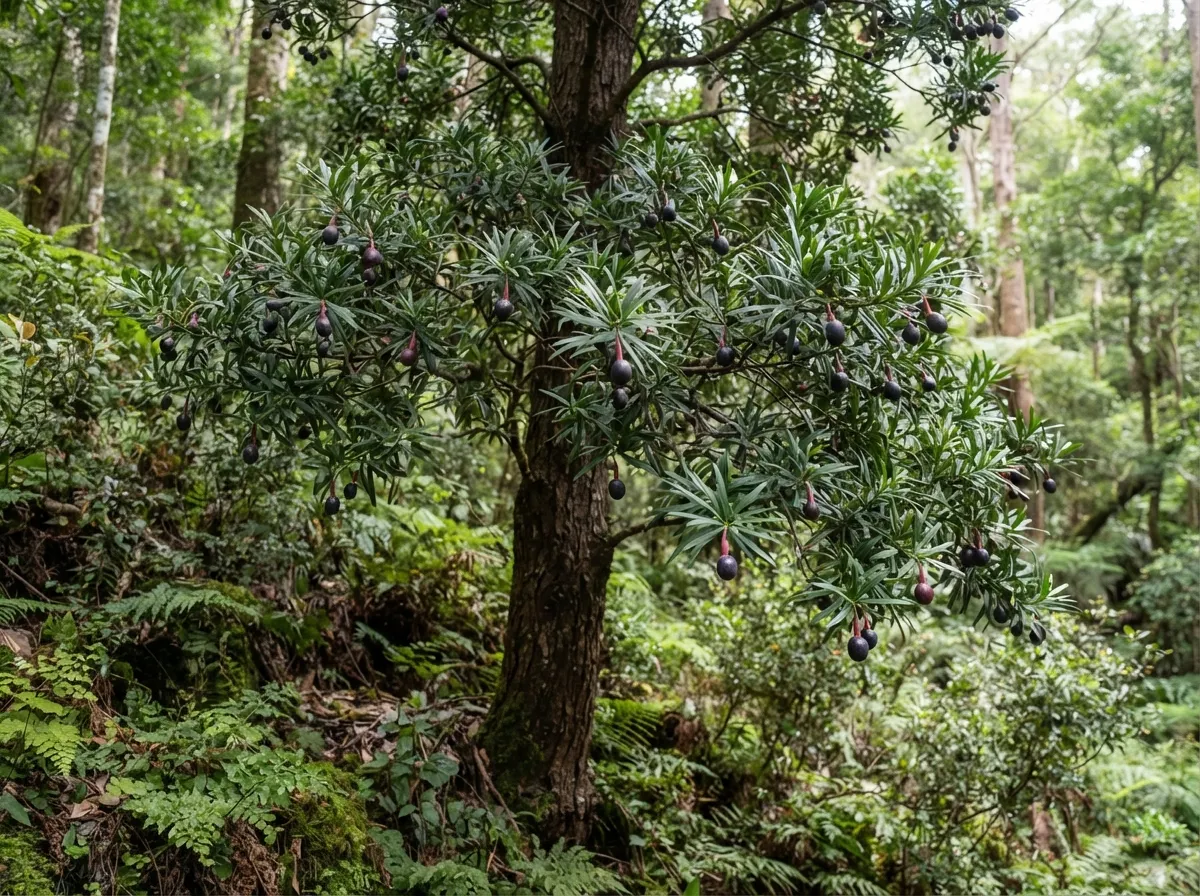
Australian conifer reaching 30 to 36 m tall, with a trunk up to 1.5 m in diameter, featuring lanceolate leaves 5 to 15 cm long (up to 25 cm on vigorous young shoots). The fruiting structure is unusual for a conifer: a fleshy, dark blue-purple receptacle resembling a berry bears a distinct, hard, globose true seed at its tip, separate from the edible fleshy part.
- slender conifer up to 30-36 m, trunk up to 1.5 m in diameter
- lanceolate leaves 5-15 cm long (up to 25 cm on vigorous regrowth)
- fleshy, dark blue-purple receptacle 2-2.5 cm long bearing a distinct hard seed at its tip
- coastal rainforest habitat on sandy soils of the east coast
⚠️ Not to be confused with
To tell them apart: the conifer fruiting structure, with a fleshy blue-purple receptacle bearing a hard, distinct globose seed at its tip, is unique to Podocarpus and is not found on any toxic fruit trees of the Australian east coast
🍽️ Eating it
Preparation : eat the fleshy receptacle raw when fully ripe, or process it into preserves and jams; also used in modern Australia to flavor sloe gin-style spirits; the hard true seed at the tip is not eaten
💊 Healing with it
no major traditional medicinal uses documented in the consulted sources
Level of evidence : traditional use — Wikipedia — Podocarpus elatus
⚠️ eat only the fleshy receptacle, not the hard seed attached to it
🪓 Other bushcraft uses
- timber historically used for furniture, joinery, and shipbuilding, including in marine environments
- planted today as a street ornamental tree in older Australian suburbs
Sources (1)
No entry replaces a certain identification in the field, or medical advice. When in doubt: don't eat it. If ingestion is suspected: poison control or 112/911.