🍄 Red Staining Inocybe
Inocybe erubescens · Inocybacées
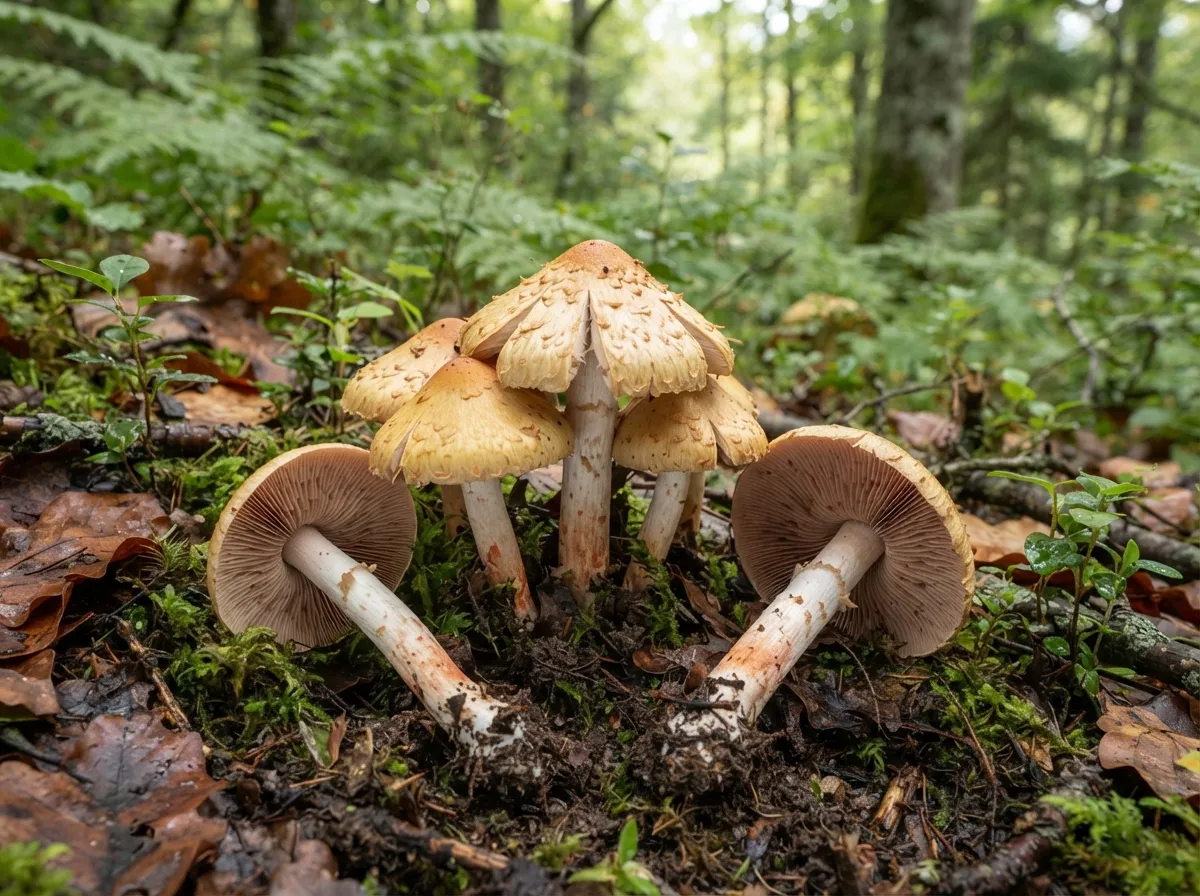
🔍 Identify it without mistakes
A small, whitish to pinkish fibrillose mushroom, often growing under linden trees and along park edges. It contains one of the highest concentrations of muscarine in the fungal kingdom—far more than the fly agaric, which actually owes its name to this same family of toxins. The genus Inocybe includes many toxic species that are difficult to tell apart from one another and from certain edible fairy ring mushrooms.
- whitish to cream cap, radially fibrillose, gradually turning pinkish when touched and as it ages
- gills initially whitish then olive-brown, sometimes also turning pink
- odor often described as spermatic or unpleasantly fruity, typical of many inocybes
- frequently grows under linden trees, in parks, and public gardens
⚠️ Not to be confused with
To tell them apart: the inocybe has a peculiar (spermatic) smell that St. George's mushroom lacks, which smells rather mealy; reliable identification of the genus Inocybe requires mycological expertise, as no single simple criterion is enough for an amateur
☠️ What kills
First steps : Call emergency services or a poison control center immediately as soon as heavy sweating and salivation appear after eating mushrooms—these are characteristic signs that should alert you right away. Since atropine is an effective antidote, fast medical care changes the prognosis. Keep a specimen for identification.
Sources (3)
No entry replaces a certain identification in the field, or medical advice. When in doubt: don't eat it. If ingestion is suspected: poison control or 112/911.