🚫 Jojoba
Simmondsia chinensis · Simmondsiacées
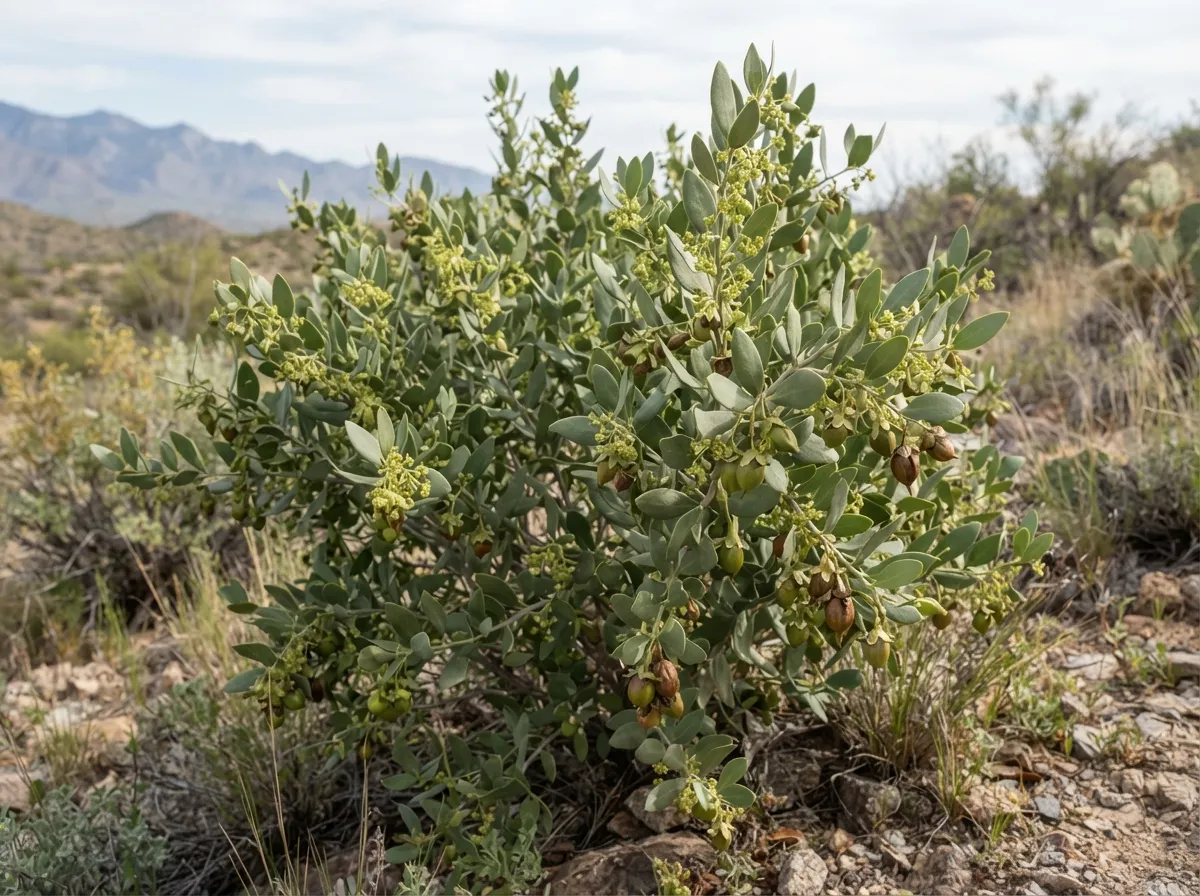
🔍 Identify it without mistakes
Evergreen shrub 1 to 2 m tall with a dense crown, opposite oval leaves (2-4 cm) that are waxy and grey-green. Small yellow-green flowers from March to May, followed by acorn-shaped capsules containing a single seed rich in liquid wax. Often grows alongside creosote in the lowlands of the Sonoran Desert.
- waxy, grey-green opposite oval leaves (2-4 cm)
- acorn-shaped fruit capsule containing a single seed
- compact 1-2 m shrub with a dense crown
- frequently grows alongside creosote on well-drained sandy soils
⚠️ Not to be confused with
To tell them apart: the confusion is purely name-based (jojoba / jujube sound almost the same in English): botanically, the two plants are completely unrelated — the jujube tree produces a true sweet fleshy fruit on a spiny shrub with pairs of thorns at the leaf base, whereas the jojoba seed grows alone in a dry acorn-shaped capsule on a spineless, waxy-leaved shrub
To tell them apart: both shrubs often grow side by side in the Sonoran Desert, but creosote has small leaves with two leaflets joined in a V, shiny and resinous, giving off a strong characteristic smell after rain, whereas jojoba has simple, waxy, grey-green oval leaves with no strong smell
💊 Healing with it
seed traditionally heated and applied as a salve on burns and skin afflictions by desert Indigenous peoples; jojoba oil (actually a liquid wax) is widely used today in cosmetics for its moisturizing, anti-inflammatory, and antimicrobial properties
Level of evidence : limited studies — Wikipedia — Simmondsia chinensis ; Plants For A Future — Simmondsia chinensis
⚠️ raw seed not recommended for food: it contains simmondsin (an appetite suppressant) and an indigestible wax that acts as a purgative, causing nausea and laxative effects; some ethnobotanical sources report limited traditional consumption after roasting ("parching"), but it is not a recommended food practice today; toxic in quantity to most non-adapted mammals
🪓 Other bushcraft uses
- liquid wax extracted from the seed, stable up to 300°C, used as an industrial lubricant, in candles, and as experimental fuel
- only seed in the region digestible by certain specialized rodents like Bailey's pocket mouse
No entry replaces a certain identification in the field, or medical advice. When in doubt: don't eat it. If ingestion is suspected: poison control or 112/911.