🌵 Joshua Tree
Yucca brevifolia · Asparagaceae
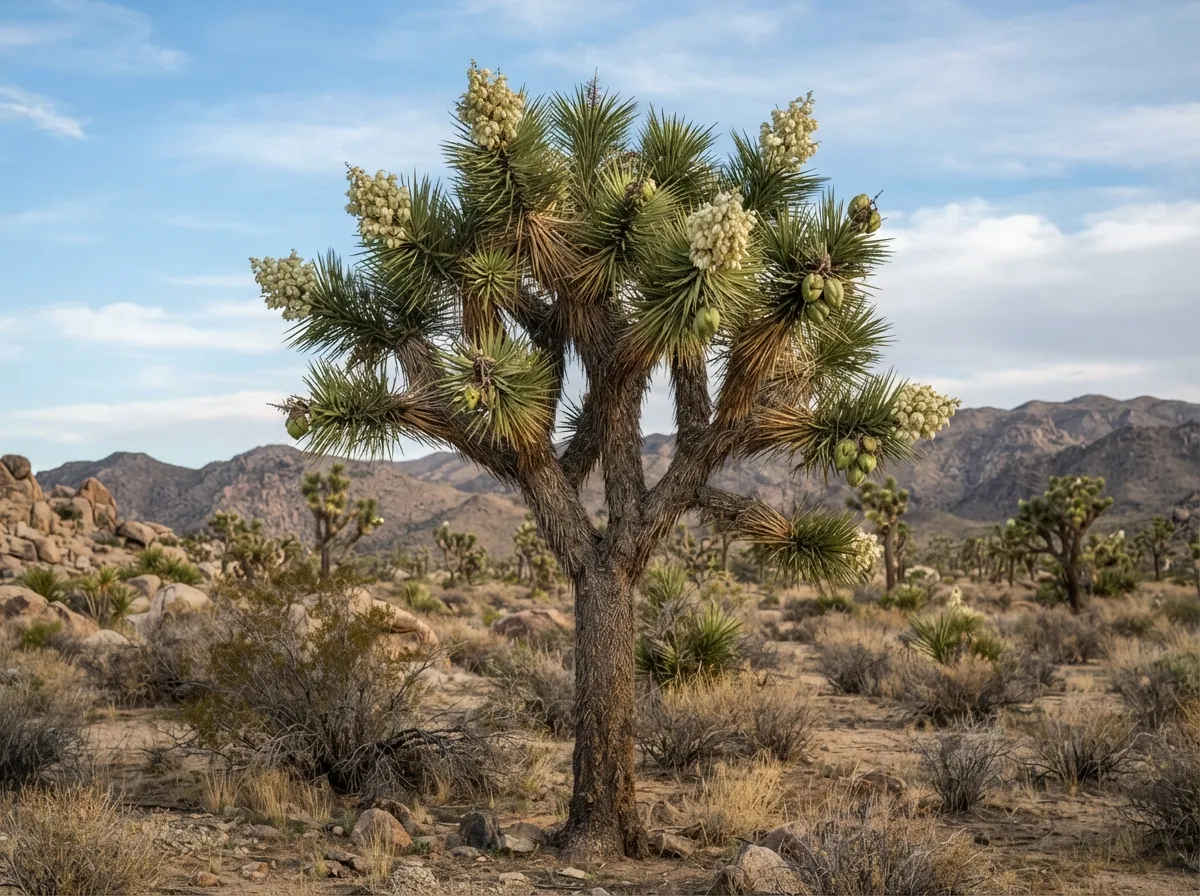
🔍 Identify it without mistakes
Arborescent plant with a distinctive branched growth habit, reaching up to 15 m. Dark green, bayonet-shaped leaves (15-35 cm) with finely serrated white margins bristle at every branch tip. Unlike most yuccas, it has a true branched woody trunk. It requires a winter freeze to bloom, which limits its flowering to certain years.
- branched tree-like habit up to 15 m, visible woody trunk
- dark green bayonet-shaped leaves (15-35 cm), finely serrated white margin
- irregular flowering, requiring a prior winter freeze episode
- found only in the Mojave Desert and its margins, between 400 and 1800 m elevation
⚠️ Not to be confused with
To tell them apart: the Joshua Tree develops a real branched woody trunk reaching up to 15 m, whereas the soapweed yucca remains a low tuft of leaves with no apparent trunk, typical of the Great Plains and desert further east; their ranges barely overlap, the former being restricted to the Mojave Desert
🍽️ Eating it
Preparation : flowers and fruits were traditionally baked or boiled before eating; seeds were ground into flour, mixed with other plant flours, and shaped into moist cakes dried for storage
💊 Healing with it
no major traditional medicinal use documented in the consulted sources, apart from food and fiber use
Level of evidence : traditional use — Wikipedia — Yucca brevifolia
⚠️ no specific precautions known for properly cooked flowers and fruits
🪓 Other bushcraft uses
- leaf fibers traditionally used by the Mojave and western Sonoran Desert peoples for making cordage and weaving before the 20th century
Sources (1)
No entry replaces a certain identification in the field, or medical advice. When in doubt: don't eat it. If ingestion is suspected: poison control or 112/911.