🌳 Shea tree
Vitellaria paradoxa · Sapotaceae
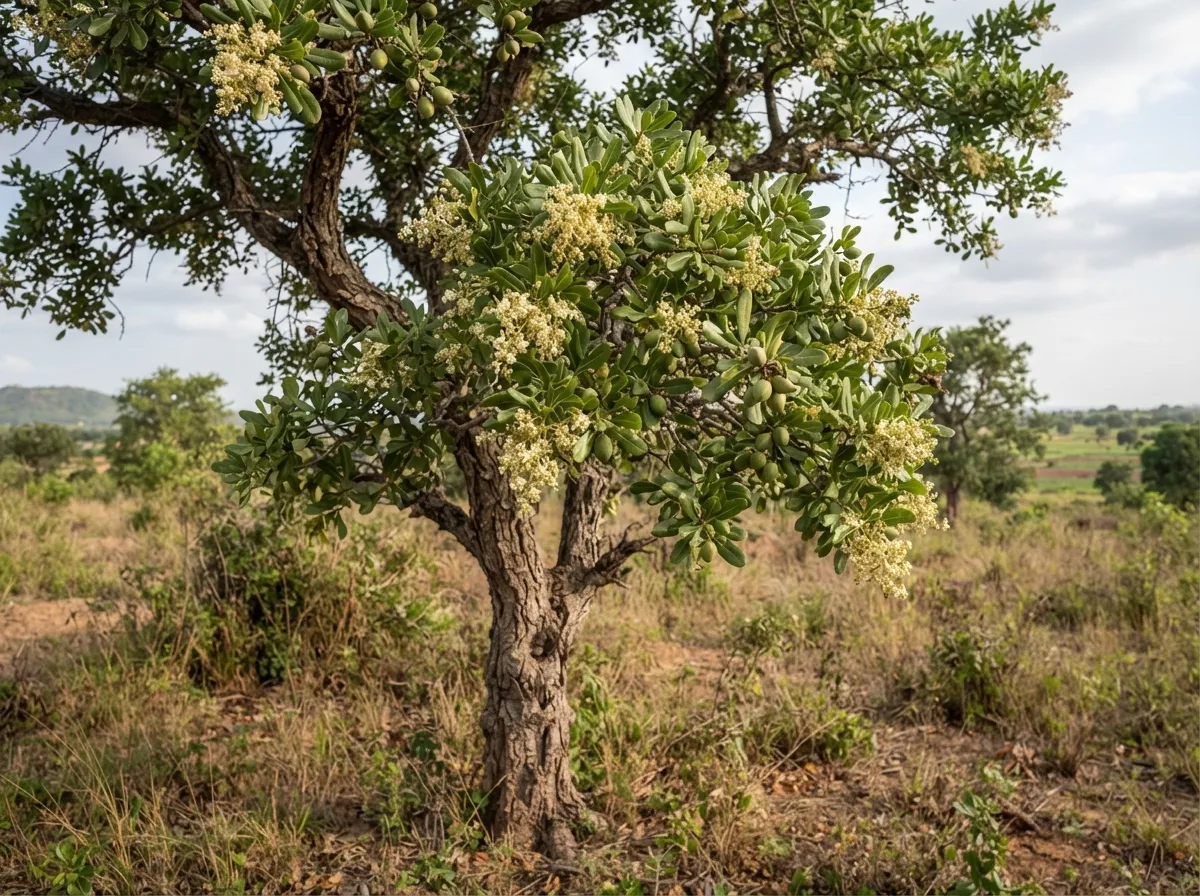
🔍 Identify it without mistakes
Medium-sized deciduous tree with thick, deeply fissured bark and leaves clustered in rosettes at the ends of the branches. Green fleshy fruits resemble large plums, containing a single fat-rich nut.
- thick and heavily fissured bark
- dense rosettes of leaves at branch ends
- fleshy green fruit resembling a large plum, containing an oil-rich nut inside
⚠️ Not to be confused with
To tell them apart: the very thick, fissured bark paired with leaves clustered in dense rosettes at branch ends distinguishes the shea tree from other West African savanna trees
🍽️ Eating it
Preparation : the pulp is eaten fresh straight off the fruit; the nut kernel is traditionally boiled, dried, roasted, pounded, and then churned extensively with water to extract shea butter, a fat that solidifies as it cools
fruit pulp is very rich in vitamin C (196 mg/100 g reported in scientific literature); the nut kernel contains 17 to 59% fat depending on the variety
💊 Healing with it
shea butter is traditionally used as a skin emollient, for chapped skin, minor burns, and massaged into joints for pain relief
Level of evidence : limited studies — Wikipedia - Vitellaria
⚠️ a tree only produces its first fruits after 10 to 15 years and reaches full production around 20-30 years—a very long-term resource, usually protected by customary law rather than felled
🪓 Other bushcraft uses
- shea butter is exported on a massive scale to the global cosmetics industry (creams, soaps)
- a single tree can produce nuts for nearly 200 years
- hard wood rarely harvested because the tree is traditionally protected
Sources (1)
No entry replaces a certain identification in the field, or medical advice. When in doubt: don't eat it. If ingestion is suspected: poison control or 112/911.