🌭 Sausage Tree
Kigelia africana · Bignoniaceae
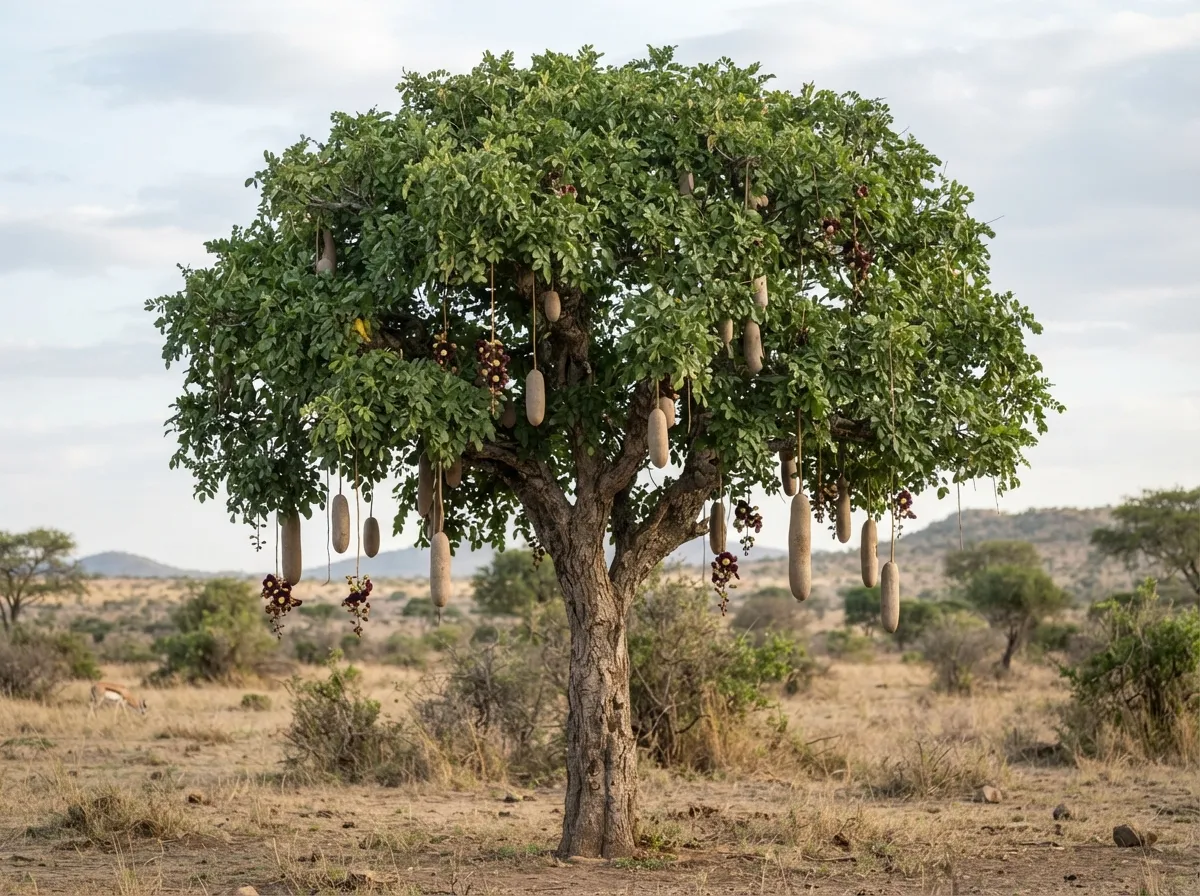
🔍 Identify it without mistakes
Large savanna tree immediately recognizable by its huge, grey-brown, sausage-shaped fruits hanging from long peduncles that can exceed one meter. These very heavy fruits (up to 10 kg) are toxic and purgative when raw, becoming edible only after a long traditional drying and fermentation process.
- smooth, grey-brown sausage-shaped fruits hanging from long, flexible peduncles sometimes over 1 m long
- large dark red-maroon trumpet-shaped flowers, pollinated at night by bats
- opposite pinnately compound leaves, with broad, shiny leaflets
- very heavy fruit (up to 7-10 kg), with fibrous flesh that is strongly purgative when raw
⚠️ Not to be confused with
To tell them apart: the giant hanging sausage shape on a long peduncle resembles no other African savanna fruit, making identification easy; the real risk is ignoring that this recognizable fruit is nevertheless toxic when raw
🍽️ Eating it
Preparation : never consume raw: the raw flesh causes nausea, vomiting, and digestive distress; traditional preparation consists of drying the fruit in the sun then fermenting it twice in succession, up to four days, often with sugar cane juice, to neutralize the toxic compounds (iridoids and saponins) before processing it into traditional beer (Kenyan muratina)
💊 Healing with it
the fruit and bark are used in traditional medicine for skin conditions, wounds, and as a controlled purgative; extracts are currently studied and marketed in cosmetics for their firming properties
Level of evidence : limited studies — africafreak.com / Thomson Safaris — Traditional Uses of the Kigelia Tree (cross-referenced ethnobotanical synthesis)
⚠️ toxic and strongly purgative when raw; never apply to sun-exposed skin without precaution (reported photosensitization); internal use reserved for long-fermented traditional preparations
🪓 Other bushcraft uses
- dried and fermented fruit forms the base of 'muratina' traditional beer among the Kikuyu, Embu, and Akamba of Kenya
- light wood sometimes used for small carved items
No entry replaces a certain identification in the field, or medical advice. When in doubt: don't eat it. If ingestion is suspected: poison control or 112/911.