🍄 Saffron milkcap
Lactarius deliciosus · Russulaceae
🔍 Identify it without mistakes
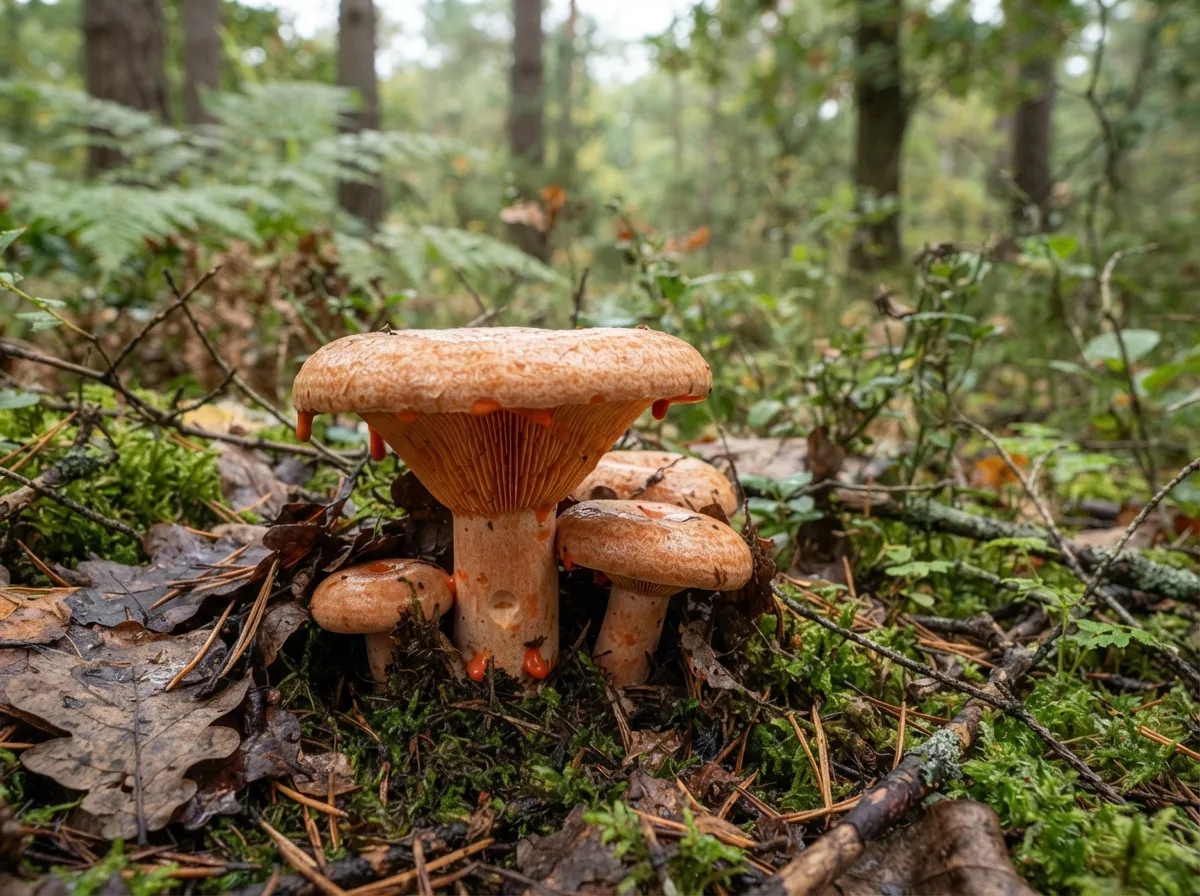
Mushroom associated with pine trees, recognizable by its orange milk oozing as soon as you damage it — the key feature distinguishing it from the woolly milkcap, which is toxic.
- orange to salmon-orange cap, with darker concentric zones, becoming funnel-shaped at the center with age, margin rolled in when young
- orange, decurrent gills, turning green when bruised or with age
- short, orange stem, often hollow, sometimes marked with darker small pits
- orange flesh exuding a BRIGHT ORANGE MILK when cut (never white), the milk turns green as it dries in the air
- cream spore print
- grows exclusively under pine trees (strict mycorrhizal association)
⚠️ Not to be confused with
To tell them apart: the woolly milkcap has a SALMON-PINK cap with a distinctly shaggy, hairy margin ("woolly"), grows under birch trees (never under pines), and exudes a WHITE milk (never orange); the saffron milkcap has a smooth, hairless cap, grows under pines, and its milk is always orange
🍽️ Eating it
Preparation : always cooked; pan-fried on a griddle or grilled, traditional Spanish style ("níscalos")
Sources (3)
No entry replaces a certain identification in the field, or medical advice. When in doubt: don't eat it. If ingestion is suspected: poison control or 112/911.