🟢 Sea lettuce
Ulva lactuca · Ulvaceae
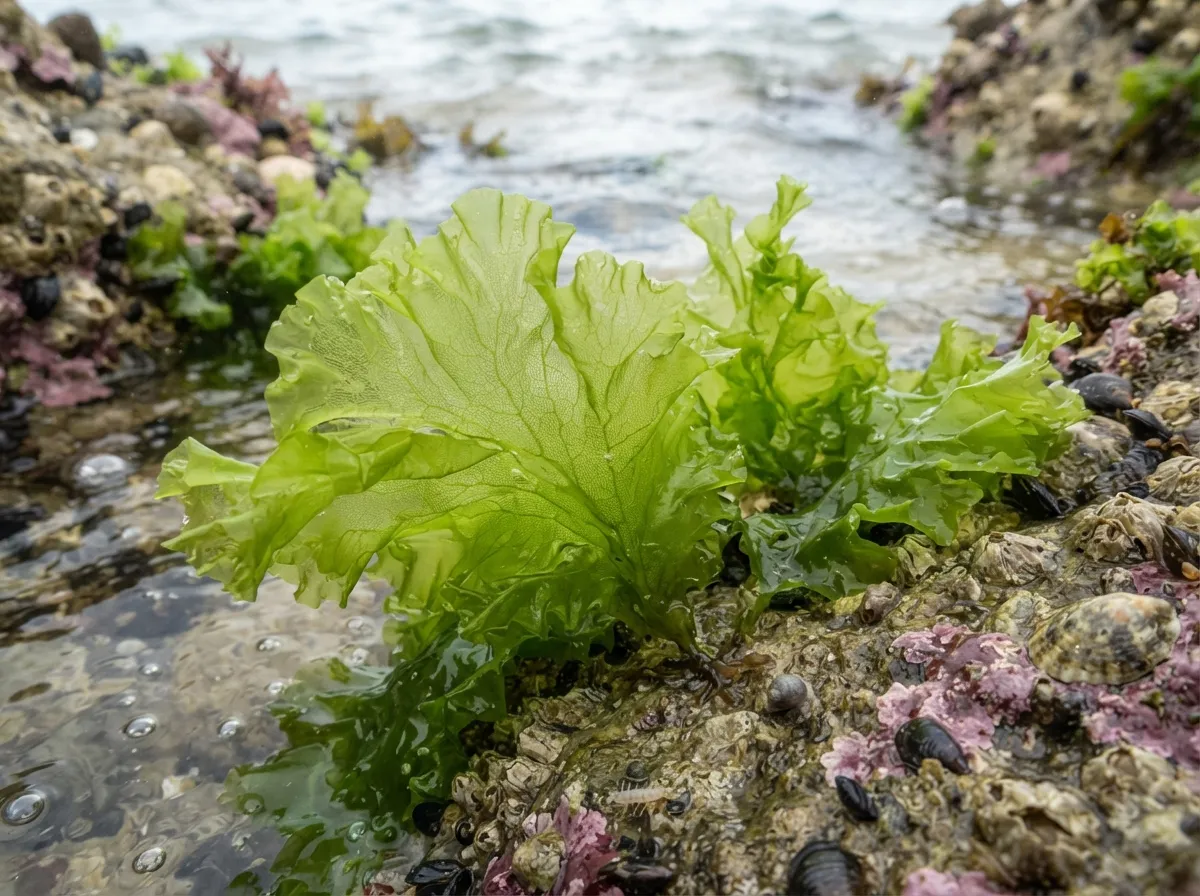
🔍 Identify it without mistakes
Thin, translucent green alga forming a flat, wavy blade resembling a crumpled lettuce leaf, attached to rocks by a small basal holdfast. Grows in dense groups in and just below the intertidal zone.
- bright green flat blade, thin and translucent, wavy/crumpled edge
- slippery texture, fragile, tears easily
- grows attached to rocks, shells, or other algae in the intertidal zone
⚠️ Not to be confused with
To tell them apart: the bright green, thin, and translucent flat blade with no woody structure distinguishes sea lettuce from any toxic alga; the only real risk comes from rotting washed-up piles, not from species confusion
🍽️ Eating it
Preparation : rinse thoroughly with clean water to remove sand and small organisms; eat raw in salads after a brief soak, or cooked in soups, as a side, or dried for preservation
💊 Healing with it
no major documented medicinal uses; traditionally used as coastal fertilizer and in certain cultures (Hawaii, Scotland) as a common food
Level of evidence : traditional use — Wikipedia - Ulva lactuca (Brittany 2009 incidents)
⚠️ during massive strandings and decomposition in thick piles on beaches, fermentation releases toxic hydrogen sulfide — never approach or camp near rotting piles of green algae on the sand; always harvest fresh, living algae, never rotting washed-up heaps
🪓 Other bushcraft uses
- used as coastal organic fertilizer
- studied as a biofuel source (biodiesel) requiring no arable land or fertilizer
Sources (1)
No entry replaces a certain identification in the field, or medical advice. When in doubt: don't eat it. If ingestion is suspected: poison control or 112/911.