🟤 Oarweed (Breton kombu)
Laminaria digitata · Laminariacées
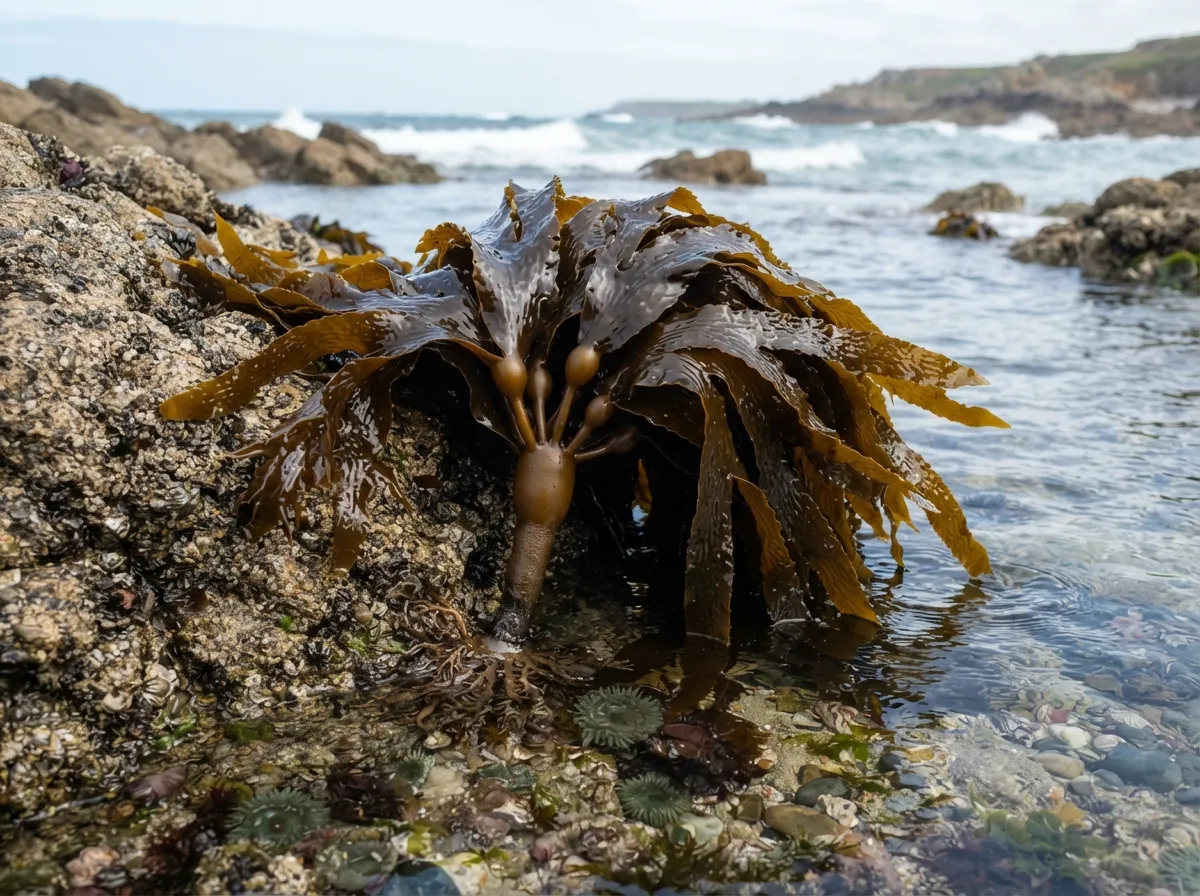
🔍 Identify it without mistakes
Large brown seaweed emblematic of exposed rocky shores, featuring a blade divided into broad finger-like straps that resemble giant floating fingers in the water. Attached by a claw-like holdfast, it remains permanently submerged in the infralittoral zone and is only visible on foot during spring tides.
- brown frond divided into broad finger-like straps (like fingers), 1 to 4 m long
- smooth, flexible stalk (stipe), cylindrical at the base and rigid towards the top
- claw-like holdfast attached to rock, exposed only during high spring tides (coefficients above 80)
⚠️ Not to be confused with
To tell them apart: sugar kelp has an undivided, wavy blade with a short, flexible stipe; Laminaria digitata has a frond clearly split into broad finger-like straps supported by a longer, stiffer stipe
To tell them apart: oarweed has an entire or finger-divided frond without a distinct midrib or wavy sporophyll at the base; wakame is recognized by its thick midrib, regular pinnate lobes, and ruffled sporophyll (mekabu)
🍽️ Eating it
Preparation : traditionally dried then rehydrated for broths (the foundation of Japanese dashi), cut into strips and simmered, or ground into powder as a flavor enhancer; white surface deposits are natural monosodium glutamate, a sign of quality and not mold; always rinse thoroughly before cooking
💊 Healing with it
traditionally used as a dietary source of iodine to treat deficiency goiters before salt iodization
Level of evidence : traditional use — ANSES — Opinion on the risk of excess iodine intake linked to seaweed consumption (NUT2017SA0086)
⚠️ high iodine content: ANSES advises against regular, heavy consumption without medical advice, particularly for pregnant women and people with thyroid, heart, or kidney conditions; increased risk of heavy metal contamination (arsenic, cadmium) in harbor or industrial zones; local regulations apply for shore harvesting—check regional guidelines before harvesting
🪓 Other bushcraft uses
- industrial source of alginates, food gelling agents (E400-E405), and cosmetics
Sources (4)
No entry replaces a certain identification in the field, or medical advice. When in doubt: don't eat it. If ingestion is suspected: poison control or 112/911.