🌿 Bay Laurel
Laurus nobilis · Lauraceae
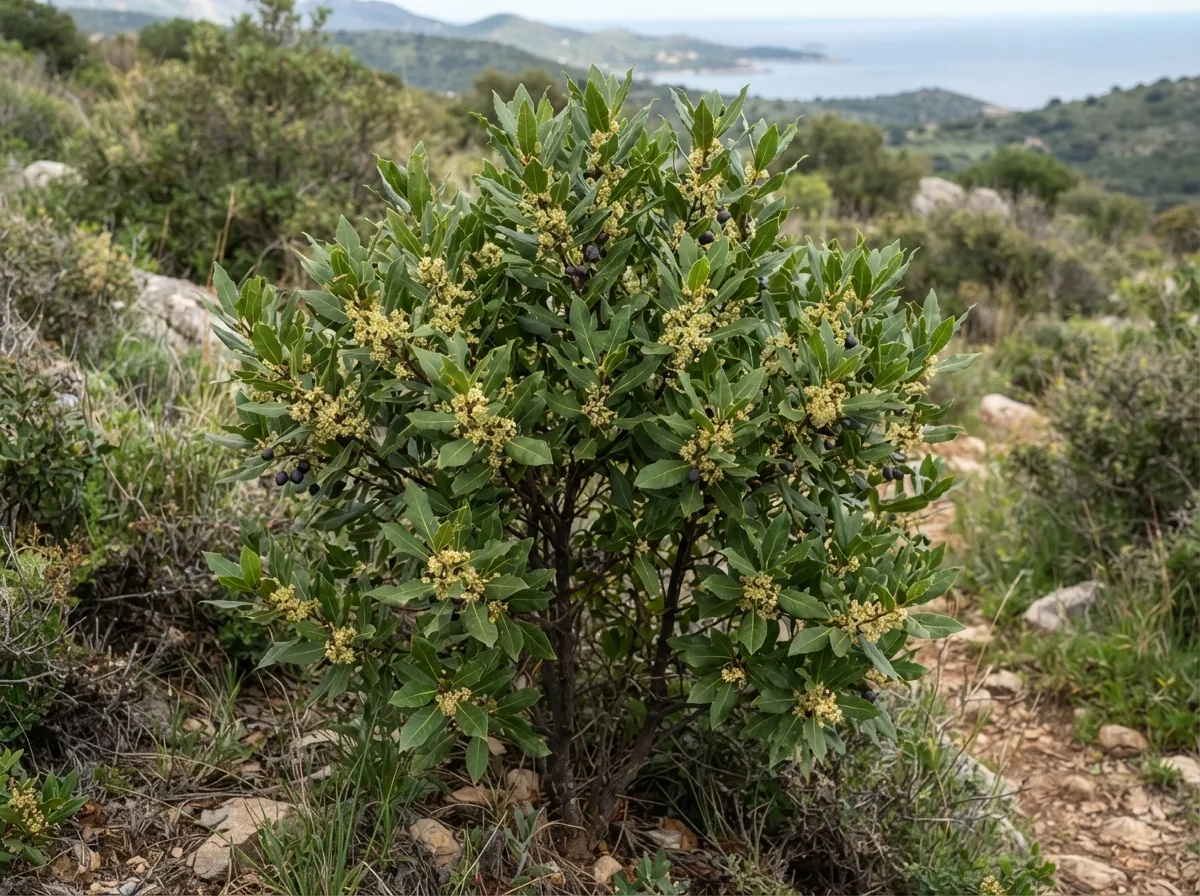
🔍 Identify it without mistakes
Evergreen shrub or small tree, 2 to 10 m, with alternate, simple, leathery, lanceolate, shiny leaves above, slightly wavy margins, giving off a characteristic aromatic scent when crushed — this is THE key feature to avoid deadly confusion. Small pale yellow flowers in small clusters at the leaf axils, black berries when ripe. It's the only species in the genus Laurus used in cooking.
- alternate leaves (never opposite), lanceolate, leathery, shiny
- distinct and pleasant aromatic scent when crushed
- no dark spots or deeply sunken veins
- purplish-black berries when ripe
⚠️ Not to be confused with
To tell them apart: opposite or whorled leaves (never alternate) in narrow dull grey-green strips, NO pleasant aromatic scent, sticky white latex oozes when broken — bay laurel never has latex
To tell them apart: alternate leaves but bitter almond (cyanide-like) scent when crushed instead of the spicy bay laurel scent, larger and softer leaves, round fruits hanging in cherry-like clusters
🍽️ Eating it
Preparation : whole dried leaf infused in broths, sauces, marinades, then removed before serving (never chew or swallow whole, sharp edges)
USDA FoodData Central, dried leaf, per 100 g — used in tiny quantities (1-2 leaves per dish)
💊 Healing with it
traditionally digestive and carminative as a light herbal tea
Level of evidence : traditional use — Traditional use, documented Mediterranean tradition (no dedicated EMA monograph)
⚠️ safe for culinary use at standard doses; concentrated essential oil is not recommended without specialist advice
🪓 Other bushcraft uses
- symbolic crowns (victory, wisdom — origin of the word 'baccalaureate', bay berry)
- insect repellent in cupboards (dried leaves placed among flour bags)
Sources (3)
No entry replaces a certain identification in the field, or medical advice. When in doubt: don't eat it. If ingestion is suspected: poison control or 112/911.