💜 Sea lavender (statice)
Limonium vulgare · Plumbaginaceae
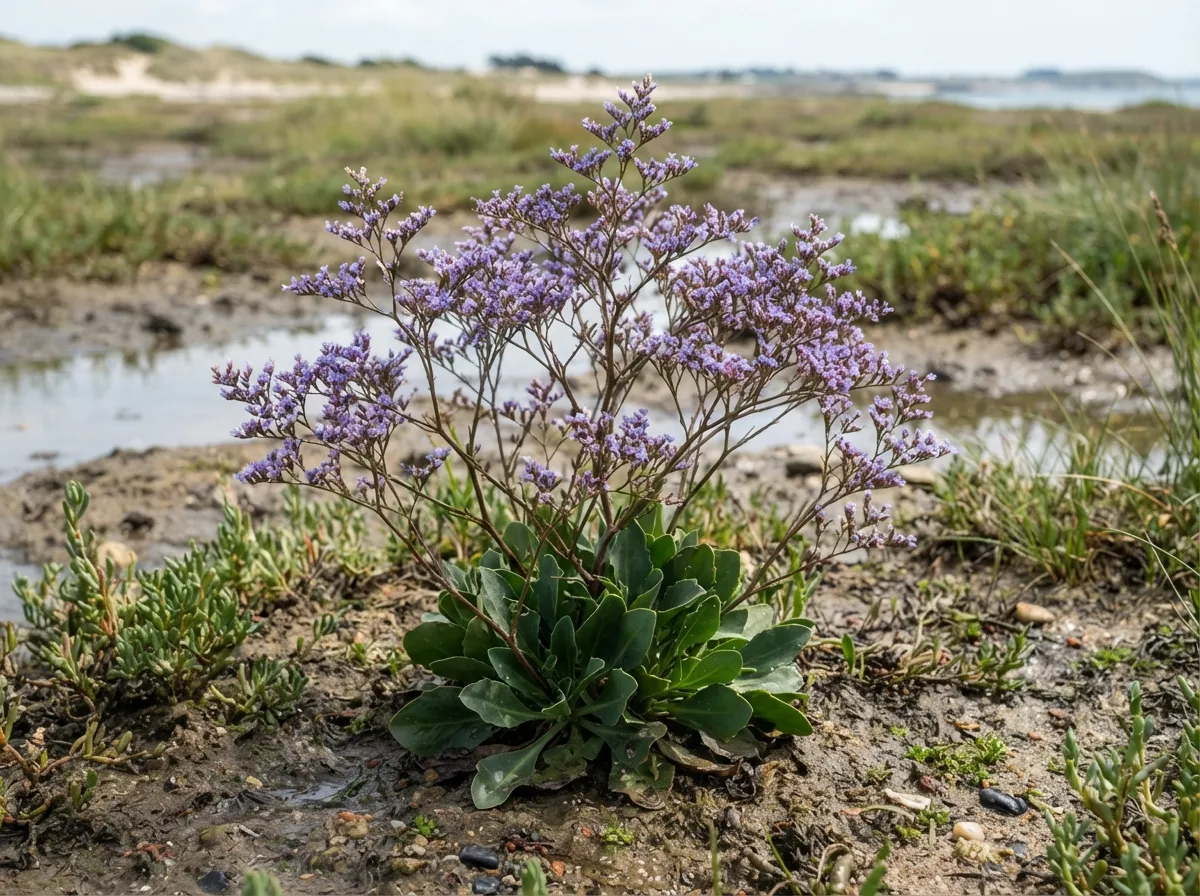
🔍 Identify it without mistakes
Perennial plant with a basal rosette of thick, oblong, bright green and slightly fleshy leaves, topped in summer by rigid, branched flowering stems bearing a cloud of tiny purple flowers that persist for a long time even when dry — hence its other French name of « immortelle bleue ».
- basal rosette leaves, oblong to spatulate, bright green, slightly fleshy
- erect, rigid and branched flowering stems, well above the foliage
- countless small purple flowers with a persistent papery calyx, forming a blue-violet cloud typical of salt marshes in summer
⚠️ Not to be confused with
To tell them apart: sea lavender has basal rosette leaves without a leafy stem and tiny purple flowers with a dry persistent calyx; sea aster has an erect leafy stem and real flower heads in yellow and purple, larger, resembling a small daisy
🍽️ Eating it
Preparation : young leaves eaten raw in small quantities in salads or cooked as a green vegetable, like spinach
💊 Healing with it
traditionally used in decoction against sore throats, for its astringent and anti-inflammatory properties related to its tannin content
Level of evidence : traditional use — ASMG 85 — Common Statice (Limonium vulgare), sea lavender of the Olonne marshes
⚠️ no therapeutic use validated by European health authorities to date; limit yourself to food use or light traditional use
🪓 Other bushcraft uses
- dried flowers used in decorative dried bouquets for their color and shape which persist for a very long time after picking
Sources (2)
No entry replaces a certain identification in the field, or medical advice. When in doubt: don't eat it. If ingestion is suspected: poison control or 112/911.