🌿 Ground ivy
Glechoma hederacea · Lamiaceae
🔍 Identify it without mistakes
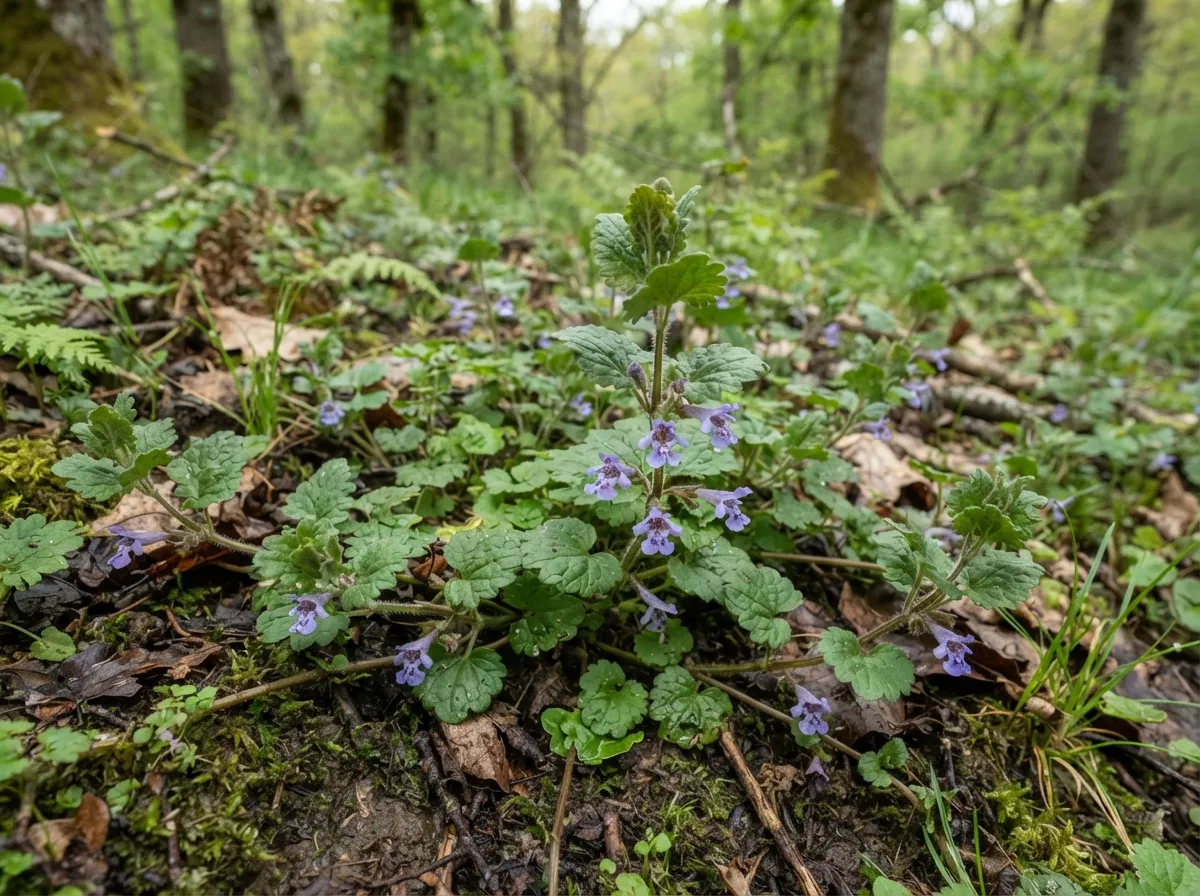
Small, creeping, ground-covering plant (has nothing to do with English ivy, despite the name), with round to kidney-shaped, scalloped leaves borne on long petioles, and square stems typical of the Lamiaceae that root at the nodes. Blue-violet two-lipped flowers in small clusters in the leaf axils. Strong minty-aromatic scent when crushed.
- creeping square stem, rooting at the nodes
- round to kidney-shaped leaves, scalloped, with long petioles
- strong aromatic scent when crushed (minty, slightly acrid)
- small blue-violet two-lipped flowers in the leaf axils
- low, dense carpet, never climbing (unlike true ivy)
⚠️ Not to be confused with
To tell them apart: the combination of creeping square stem + kidney-shaped leaf + aromatic scent is distinctive among common low groundcovers
🍽️ Eating it
Preparation : raw leaves in small quantities (strong flavor) in salads, infused as herbal tea, historically used to clarify and flavor beer before the widespread adoption of hops
💊 Healing with it
traditionally used for upper respiratory tract ailments (coughs, catarrh) and as a mild digestive tonic
Level of evidence : traditional use — ethnobotanical compilations (Fournier, PFAF)
⚠️ consume in moderate amounts (concentrated essential oils can be potentially irritating in high doses); avoid during pregnancy as a general precaution
🪓 Other bushcraft uses
- historically used in medieval English brewing to clarify, flavor, and preserve beer ("alehoof", before the widespread adoption of hops in the 15th century)
No entry replaces a certain identification in the field, or medical advice. When in doubt: don't eat it. If ingestion is suspected: poison control or 112/911.