🍒 Small-leaved lilly pilly (riberry)
Syzygium luehmannii · Myrtacées
🔍 Identify it without mistakes
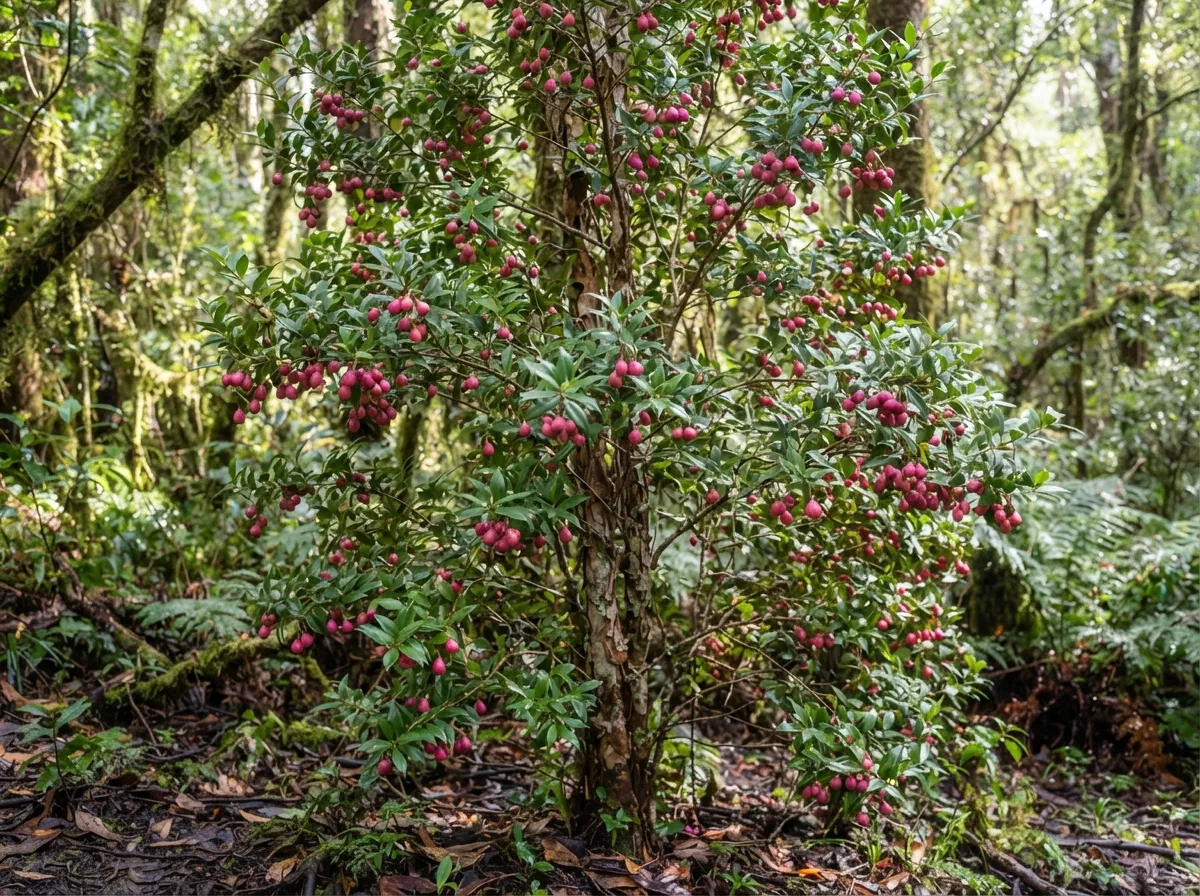
Rainforest tree from the eastern coast of Australia, reaching up to 30 m, with red-brown, grey, or pale pink bark that flakes off in papery sheets. The dense foliage features small, glossy lanceolate leaves that emerge pinkish-red before turning a shiny green. The pear-shaped, bright red fruits ripen from December to February.
- shiny lanceolate leaves 4-5 cm long, pronounced tip, bright pinkish-red young shoots
- red-brown to grey bark, peeling off in papery flakes
- small cream-white flowers in panicles, November-December
- bright red pear-shaped fruits, 13 mm, a single 4 mm seed
⚠️ Not to be confused with
To tell them apart: the lilly pilly fruit remains bright red and pear-shaped (13 mm) and never turns black, unlike the strychnine tree berry which turns from orange to red then black at maturity; lilly pilly foliage is lanceolate and shiny, while that of the strychnine tree is more oval and leathery
To tell them apart: lilly pilly forms bright red pear-shaped fruits borne on slender stalks at the ends of twigs, whereas Davidson's plum grows cauliflorously directly on the trunk and thick branches, with very tart burgundy-red flesh under a downy purplish skin
🍽️ Eating it
Preparation : eat them raw; the thin pulp around the central seed is mainly processed into jam, sauce, syrup, or confectionery, as the skin and fresh flesh have a tart flavour that stands up well to cooking
💊 Healing with it
no major documented traditional medicinal use
Level of evidence : traditional use — Wikipedia — Syzygium luehmannii
⚠️ no specific precautions known for the ripe fruit
🪓 Other bushcraft uses
- ornamental tree and street tree widely planted in eastern Australia
- fruit consumed by frugivorous birds (figbirds, emus) and flying foxes, which disperse the seeds
No entry replaces a certain identification in the field, or medical advice. When in doubt: don't eat it. If ingestion is suspected: poison control or 112/911.