🍎 Manchineel
Hippomane mancinella · Euphorbiaceae
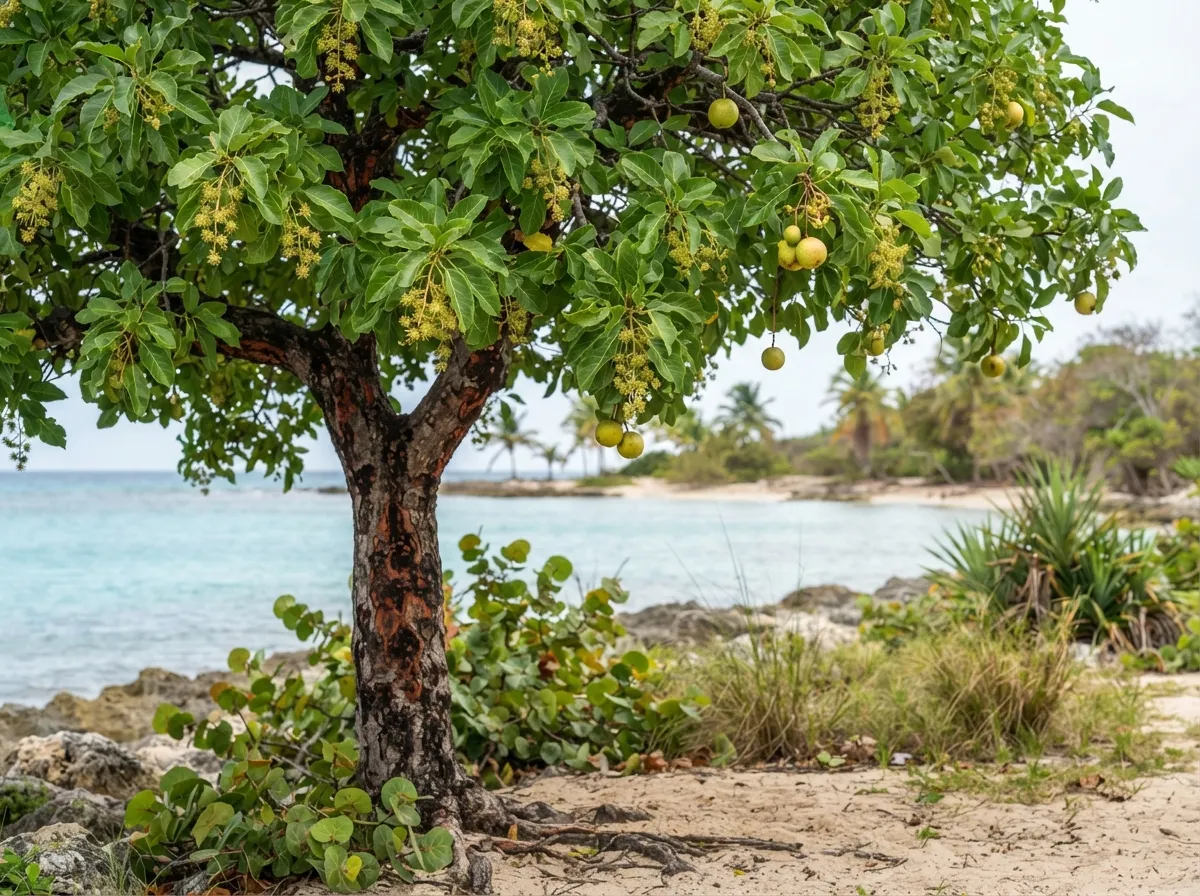
🔍 Identify it without mistakes
Beach tree of the Caribbean, Florida, and tropical America, regularly listed in the Guinness World Records as the most dangerous tree in the world. All of its parts, from the sap to the bark and the fruit that resembles a small, sweet apple (nicknamed "manzanilla de la muerte", the little apple of death), are extremely toxic and caustic; even taking shelter under the tree during a rainstorm can burn your skin, as the rain dissolves the sap from the leaves.
- coastal tree 5 to 15 m tall with shiny light green foliage, often marked with a red warning sign or cross in tourist areas
- fruit looking exactly like a small green-yellowish apple, with a deceptively sweet smell
- milky white and extremely caustic sap flowing at the slightest damage to the bark
- typically grows on tropical beach fronts, often among coconut palms
⚠️ Not to be confused with
To tell them apart: ABSOLUTE RULE in Caribbean or tropical zones: never taste a fruit resembling a small apple found under a coastal tree without absolute certainty of identification, and never take shelter under this tree during rain; local authorities generally mark manchineel trees accessible to the public with red paint or a sign
☠️ What kills
First steps : Never touch or taste this tree or its fruit; in case of contact with the sap, rinse abundantly and immediately with clean water (never seawater) and seek emergency medical attention. If ingested, call local emergency services immediately, do not induce vomiting, and stay away from any shelter under this tree during rain.
No entry replaces a certain identification in the field, or medical advice. When in doubt: don't eat it. If ingestion is suspected: poison control or 112/911.