🍠 Cassava
Manihot esculenta · Euphorbiaceae
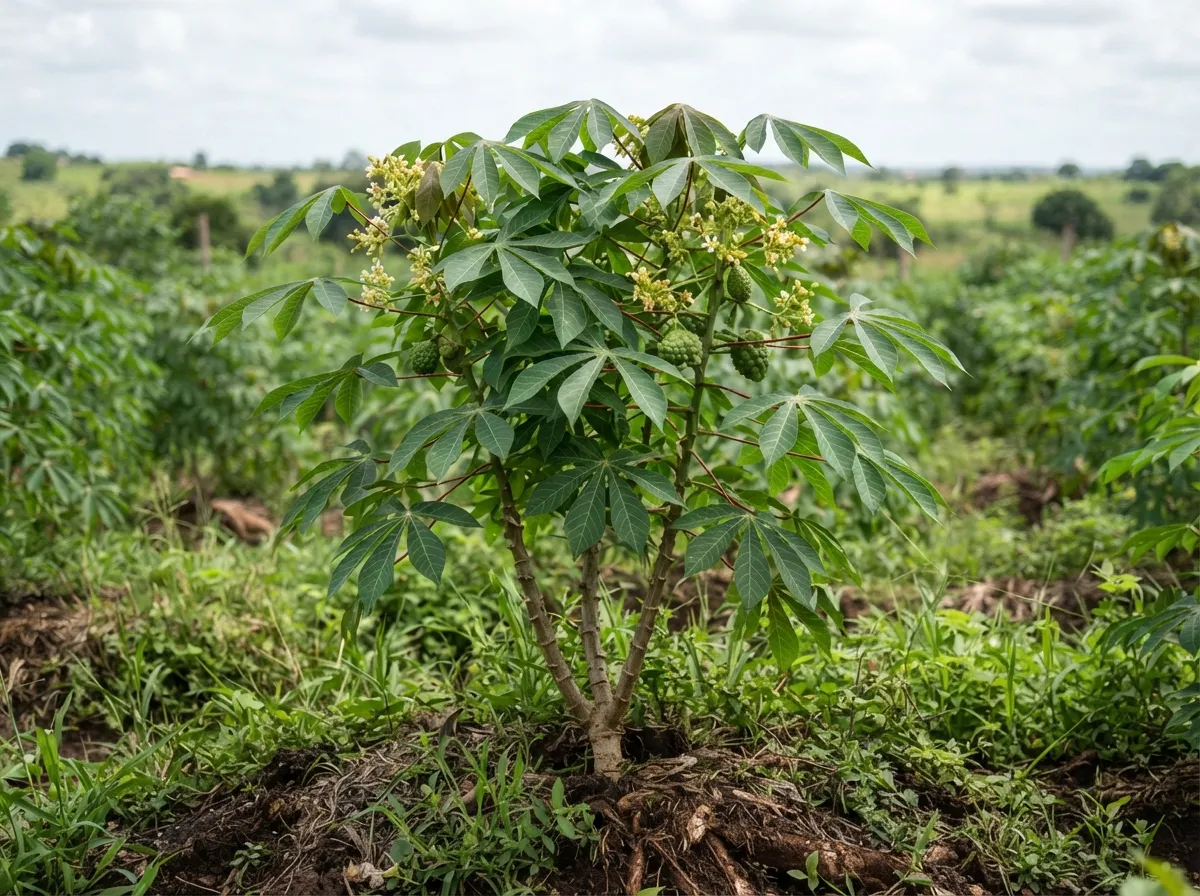
🔍 Identify it without mistakes
Shrub with a knobby woody stem and palmate leaves with 3-9 deep lobes, dark green, carried on long reddish petioles. The tuberous root, brown and rough on the outside, white or yellowish on the inside, is the sought-after part.
- digitate palmate leaves with narrow lobes
- milky sap when cut
- elongated tubers originating from the same root collar
⚠️ Not to be confused with
To tell them apart: no reliable visual criteria; in a survival context, ALWAYS treat all cassava as bitter and perform full preparation
🍽️ Eating it
Preparation : MANDATORY before consumption: peel, then either rets/soak for 8-24 h in water (fermentation that hydrolyzes glycosides), or grate and press to squeeze out the juice, then cook thoroughly for at least 10-15 min above 100°C. Untreated bitter cassava contains up to 1000 mg of cyanide (HCN) per kg compared to 20-30 mg/kg for sweet cassava; never eat raw, never settle for quick cooking without prior soaking for bitter varieties
USDA/myfooddata, raw root, per 100 g - cooking/retting slightly reduces vitamin C but removes cyanide
💊 Healing with it
no recognized medicinal use; the plant is primarily a major calorie source (3rd world tropical carbohydrate source after rice and corn)
Level of evidence : traditional use — FAO / toxicological literature (agris.fao.org, PMC)
⚠️ chronic consumption of improperly prepared cassava causes konzo, an irreversible paralysis of the legs documented in Central Africa during famines; never give raw or underprocessed cassava to a child
🪓 Other bushcraft uses
- cooked leaves as a protein-rich leafy vegetable after prolonged cooking
- extracted starch (tapioca)
Sources (3)
No entry replaces a certain identification in the field, or medical advice. When in doubt: don't eat it. If ingestion is suspected: poison control or 112/911.