🌰 Horse Chestnut
Aesculus hippocastanum · Sapindaceae
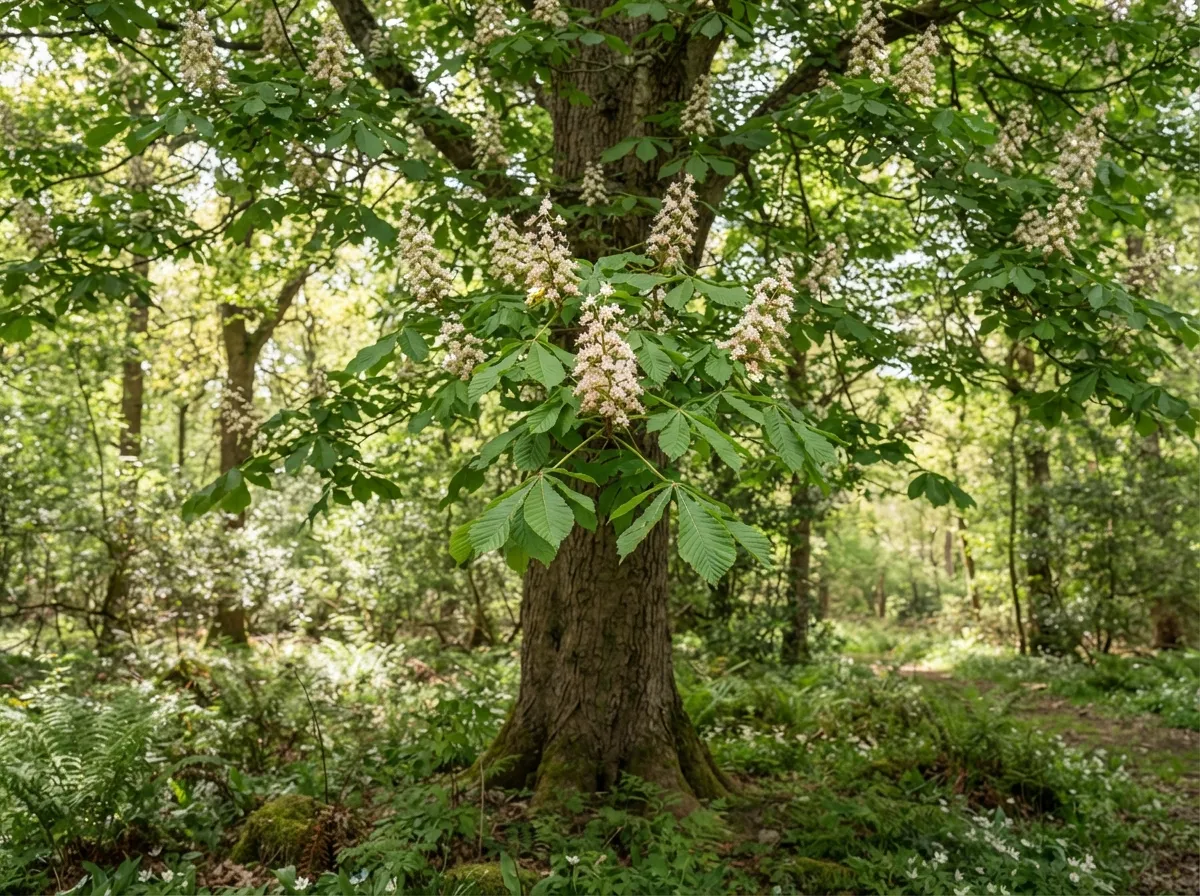
🔍 Identify it without mistakes
Large tree with palmate compound leaves (5 to 7 leaflets radiating from a single point, unlike the simple leaves of the sweet chestnut). Large white flowers with a pink-yellow center in upright spikes ('candles') clearly visible in May. Fruit: green capsule spiky with spaced out, soft prickles, containing 1 to 3 smooth, shiny brown seeds — visually similar to the sweet chestnut but from a completely different tree and NOT edible.
- palmate compound leaves with 5-7 leaflets (sweet chestnut has simple, non-compound leaves)
- large white flowers with a pink-yellow center in upright spikes ('candles') visible in May
- fruit: green capsule with SPACED OUT, soft prickles, containing 1 to 3 smooth seeds (versus burr very spiky with dense fine spines on sweet chestnut)
- seed ('conker') shiny brown with a large pale rounded scar, NOT edible
⚠️ Not to be confused with
To tell them apart: simple, toothed leaves on sweet chestnut versus palmate compound leaves on horse chestnut; burr very spiky with dense fine spines on sweet chestnut versus capsule with spaced out, soft prickles on horse chestnut; sweet chestnut seed has a pointed tip (persistent style), whereas horse chestnut has a large pale scar and no tip
💊 Healing with it
bark, seeds, and flowers rich in saponins (aescin) and coumarins (aesculin), used in herbal medicine against venous insufficiency, heavy legs, and hemorrhoids, through standardized extracts
Level of evidence : solid studies — EMA/HMPC — monograph Hippocastani semen
⚠️ raw seeds are toxic (hypoglycemia, digestive disorders, neurotoxicity); internal use restricted to standardized pharmaceutical extracts, never use the raw seed; not recommended during pregnancy and breastfeeding
🪓 Other bushcraft uses
- makeshift soap: crushed seeds infused in water release foaming saponins — traditionally used as a rustic laundry soap to wash clothes and wool
- natural moth repellent: conkers placed in wardrobes and drawers naturally repel moths and spiders, a persistent folk remedy
- famine flour (historical, complex processing required): seeds turned into starch after extensive extraction of saponins and aesculin, never without this processing
- wildlife fodder: raw conkers are eaten without issue by deer and wild boars, whose digestive system tolerates saponins — a wildlife tracker cue (chewed conkers = game activity)
- easy carving: soft and lightweight wood, not durable outdoors, used in small light joinery and for easy carving
- seasonal marker: the blooming of white 'candles' starting late April is one of the most visible signs of spring in temperate Europe
No entry replaces a certain identification in the field, or medical advice. When in doubt: don't eat it. If ingestion is suspected: poison control or 112/911.