🍑 Marula
Sclerocarya birrea · Anacardiaceae
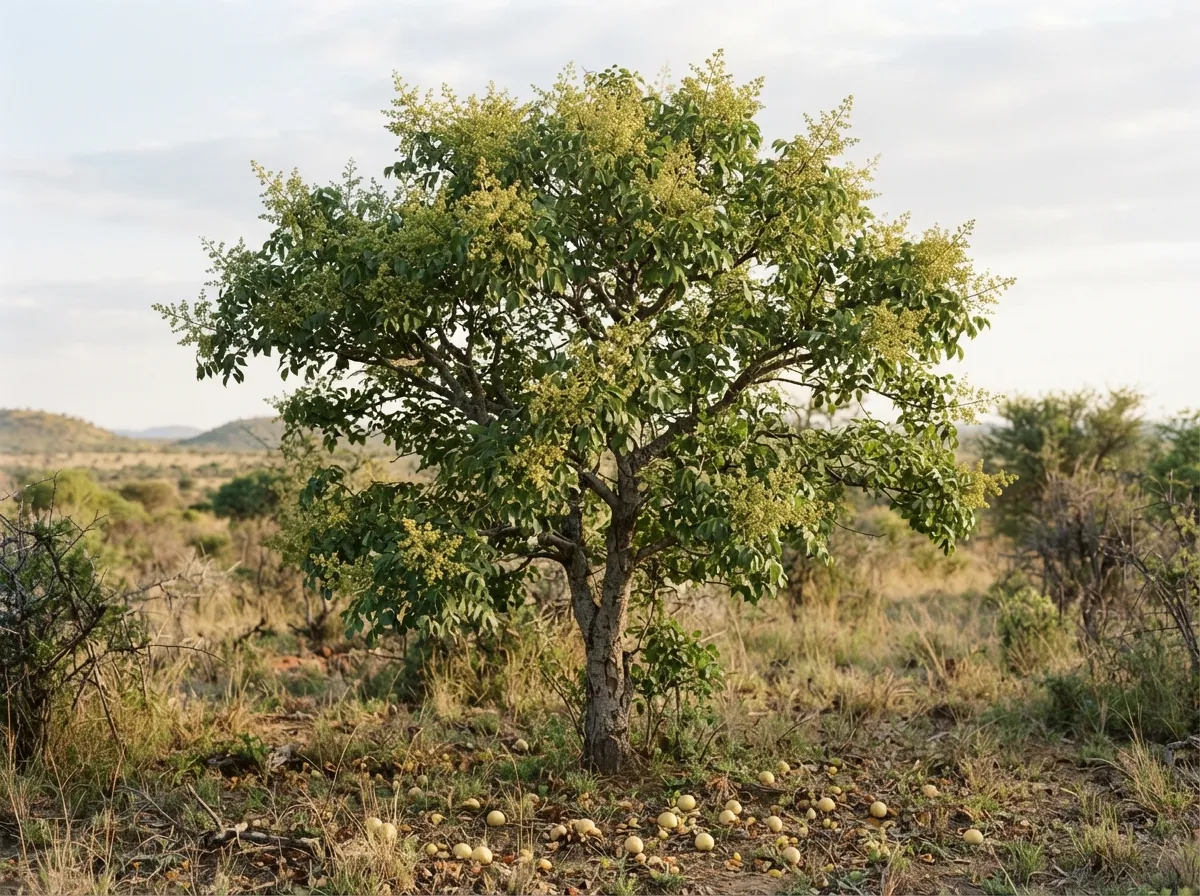
🔍 Identify it without mistakes
Medium-sized tree with flaky gray bark peeling off in patches, compound leaves clustered at the ends of branches. Round pale yellow-green fruits with thick skin, juicy, highly fragrant white pulp surrounding a hard stone containing 2-3 edible kernels.
- gray bark flaking off in characteristic round patches
- grouped pale yellow round fruits, falling abundantly to the ground when ripe
- hard stone with small visible round pores (exit points for the kernels)
⚠️ Not to be confused with
To tell them apart: the gray bark flaking off in characteristic round patches and the hard stone with small visible round pores distinguish the marula from other large African savanna trees
🍽️ Eating it
Preparation : pulp eaten fresh, or squeezed for juice; kernel extracted from the hard stone (requires a tool to crack it) eaten raw or roasted; juice fermented for a few days yields a traditional beer
💊 Healing with it
bark and leaves traditionally used against digestive disorders and malaria; kernel oil used in skin care
Level of evidence : traditional use — Wikipedia - Sclerocarya birrea
⚠️ no known toxicity of the pulp or kernel
🪓 Other bushcraft uses
- wood used for carvings and small objects
- kernel pressed for a cosmetic oil now exported (marula oil)
Sources (1)
No entry replaces a certain identification in the field, or medical advice. When in doubt: don't eat it. If ingestion is suspected: poison control or 112/911.