🌾 Yellow Sweet Clover
Melilotus officinalis · Fabacées
🔍 Identify it without mistakes
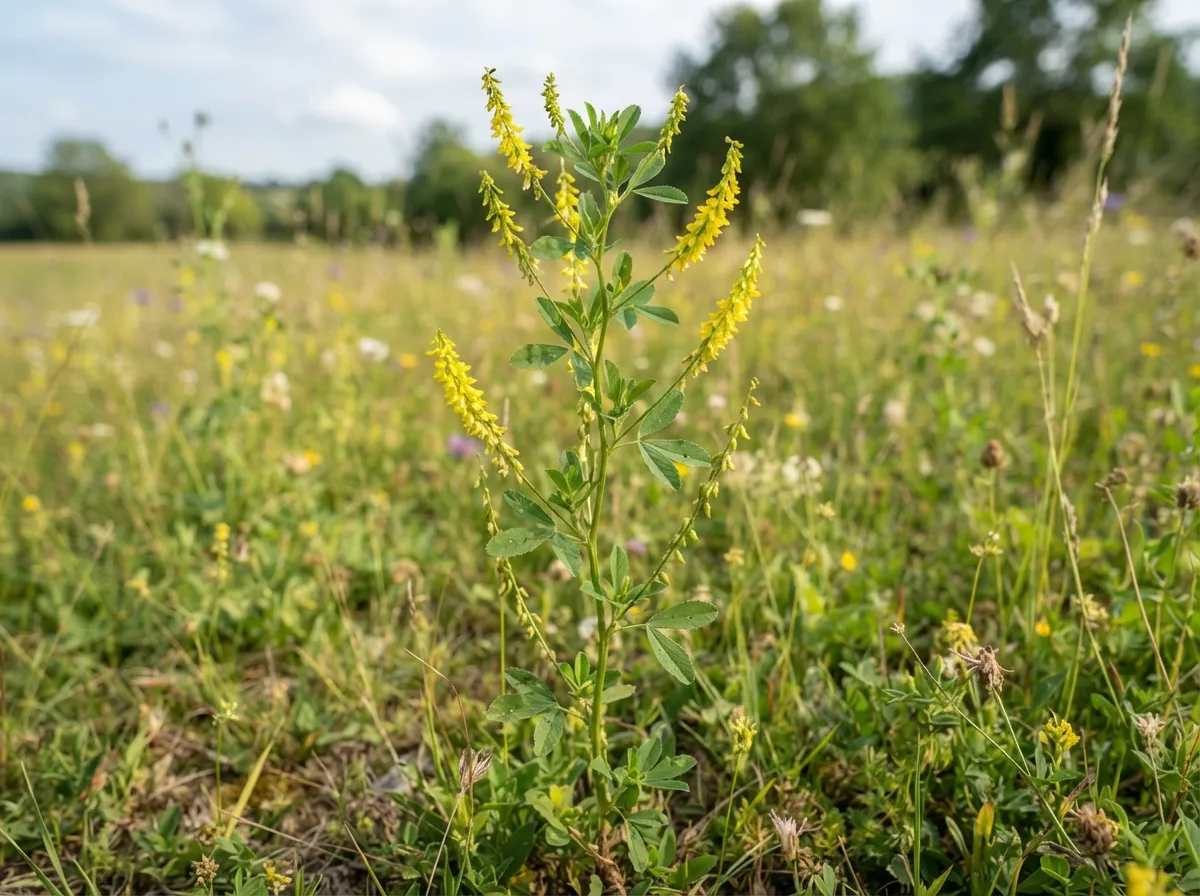
A tall legume found in wasteland and on embankments, easily recognized by its long racemes of small, highly fragrant yellow flowers (sweet hay smell, due to coumarin) and its trifoliate leaves, similar to clover but more elongated. The fresh plant is harmless; it is its fermentation or molding in poorly dried hay that makes it dangerous.
- elongated, loose racemes of tiny bright yellow flowers, highly fragrant (hay/vanilla scent)
- trifoliate leaves, elongated and toothed leaflets (unlike clover, which is rounder)
- erect, branched stem, up to 1.5 m tall
- very distinct coumarin smell (freshly cut hay) when drying
- small, brown pods containing one or two seeds
⚠️ Not to be confused with
To tell them apart: white sweet clover has white flowers instead of yellow, but shares the same silhouette and cut-hay scent
💊 Healing with it
traditionally used externally (gel, cream) for heavy legs and bruises, as coumarin has a recognized veinotonic and anti-edematous action in European herbal medicine
Level of evidence : limited studies — Cueilleurs Sauvages — Toxicité des plantes à coumarines ; INRAE HYPPA
⚠️ DANGER: improperly dried or moldy sweet clover turns its coumarin into dicoumarol, a powerful anticoagulant that causes severe internal bleeding — it was this exact mechanism, discovered in the 1920s in cattle fed moldy sweet clover hay, that led to the synthesis of warfarin; never consume sweet clover that has been dried in uncertain conditions, and strictly avoid if taking blood thinners
🪓 Other bushcraft uses
- historically cultivated as forage and green manure (fixing nitrogen like all Fabaceae), before the danger of moldy hay was understood
Sources (3)
No entry replaces a certain identification in the field, or medical advice. When in doubt: don't eat it. If ingestion is suspected: poison control or 112/911.