🌿 Water Mint
Mentha aquatica · Lamiaceae
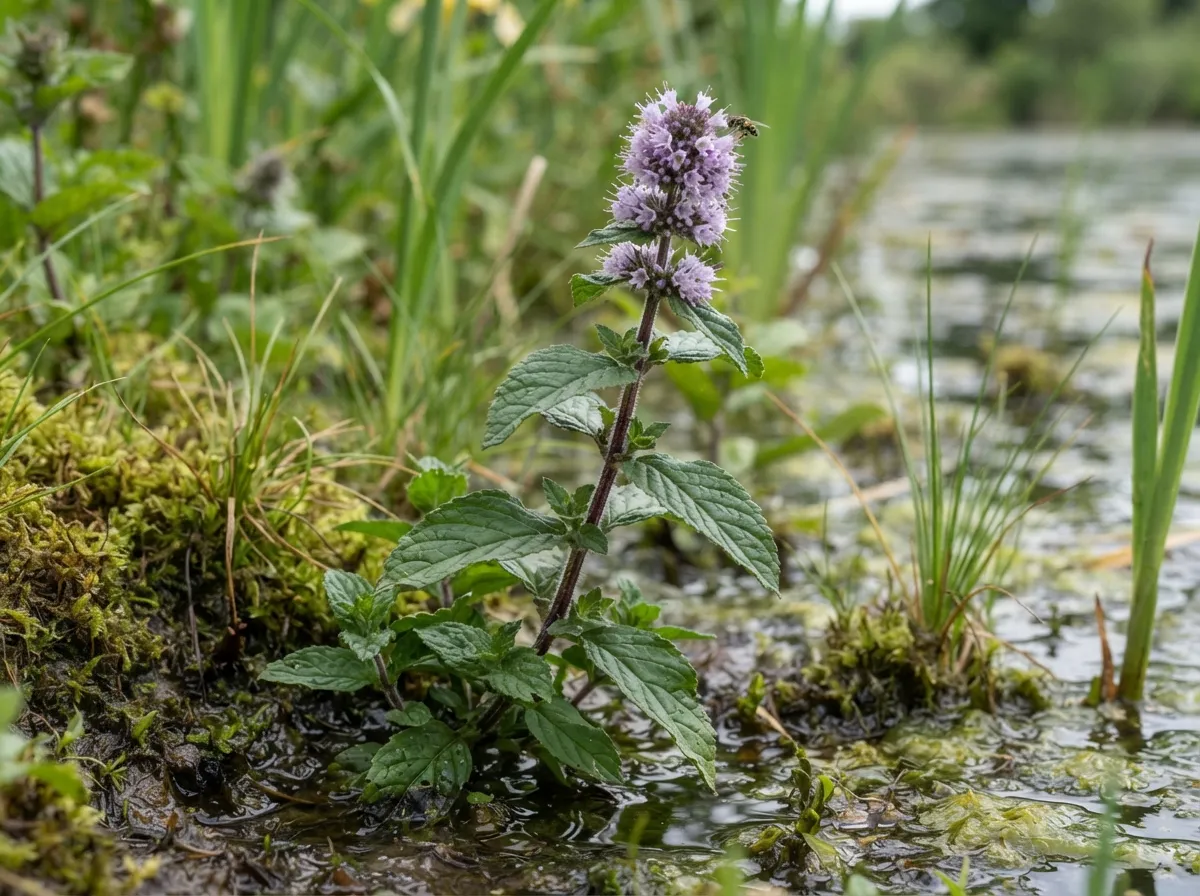
🔍 Identify it without mistakes
Aromatic plant growing along water edges, featuring a square stem typical of the Lamiaceae family, often reddish-purple, with opposite, oval, toothed leaves. Unlike most mints, its mauve-lilac flowers are clustered in a compact, rounded head at the top of the stem rather than in a spike along the stem. It gives off a strong, immediate minty smell when crushed, which is the safety signature of the entire Mentha genus.
- square stem, often tinged with reddish-purple
- opposite, oval, toothed leaves
- mauve flowers grouped in a rounded terminal head (not a tiered spike)
- strong and immediate minty smell when crushed — key safety test
- grows with its feet in the water or in waterlogged soil
⚠️ Not to be confused with
To tell them apart: gypsywort grows in the same habitat, but its crushed leaves emit no mint smell whatsoever — a criterion that presents no danger, just a different identification
To tell them apart: flowers arranged in separate, spaced whorls all along the stem (rather than in a continuous terminal head) and a sharper, camphoraceous smell point towards pennyroyal; when in doubt, abstain
🍽️ Eating it
Preparation : fresh leaves as an infusion, in salads, sauces, and drinks; dried for winter use
💊 Healing with it
traditionally used as a digestive and carminative (against mild digestive spasms and bloating), similar to peppermint uses
Level of evidence : traditional use — phytotherapy compilations (Wikiphyto, PFAF) by analogy with peppermint, which is better documented by the EMA
⚠️ avoid concentrated use (essential oil) in infants and young children (risk of laryngeal spasm caused by high menthol concentrations); leaf infusions at normal doses are safe
🪓 Other bushcraft uses
- one of the two natural parents of cultivated peppermint (Mentha × piperita), which is a spontaneous hybrid between water mint and spearmint
- crushed leaves traditionally used to repel insects when camping near water
No entry replaces a certain identification in the field, or medical advice. When in doubt: don't eat it. If ingestion is suspected: poison control or 112/911.