⚠️ Pennyroyal
Mentha pulegium · Lamiaceae
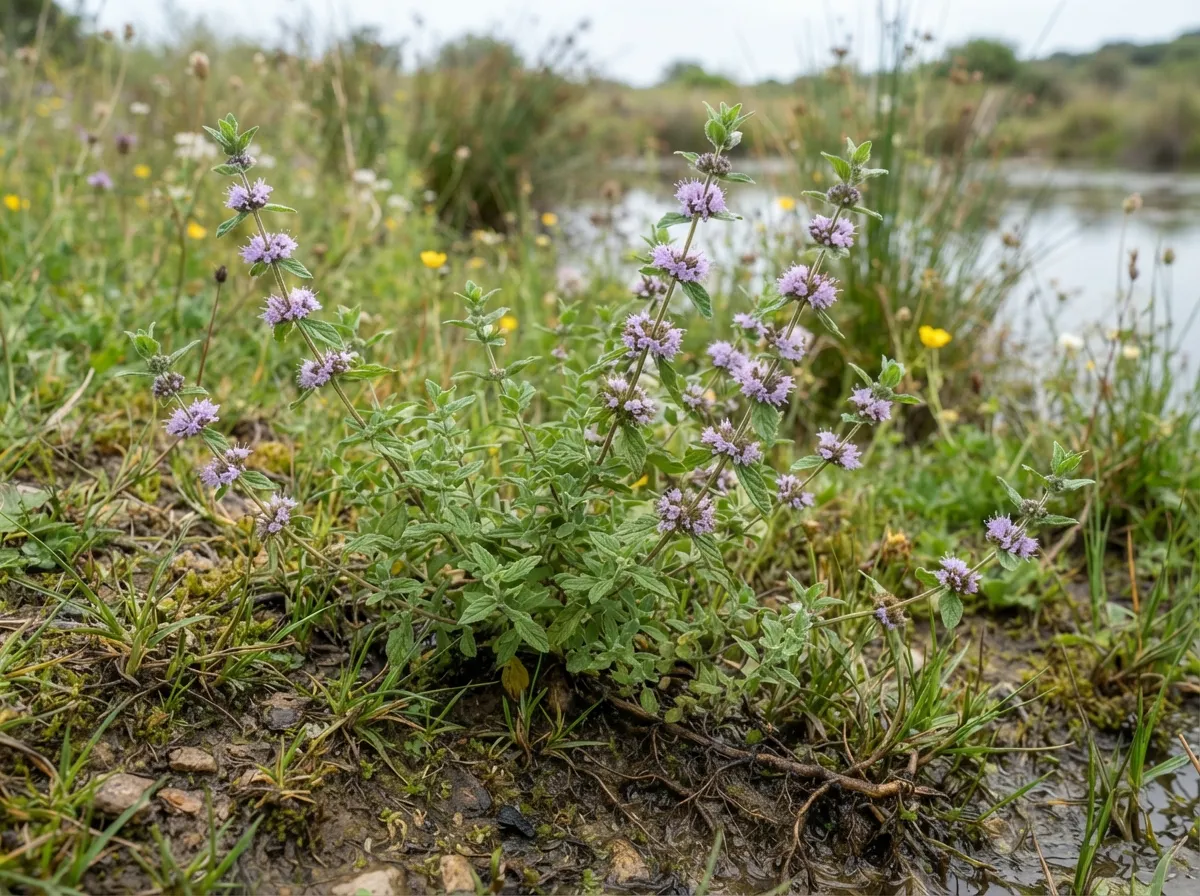
🔍 Identify it without mistakes
Small creeping mint with a very strong minty smell, recognizable by its purple flowers grouped in tight whorls spaced regularly all along the stem (unlike most other mints, which have a continuous terminal spike). Historically used in herbal medicine, it is now strongly discouraged due to its liver toxicity.
- square stem, creeping then erect, often hairy
- small oval leaves, very strong and pungent minty smell when crushed
- mauve-pink flowers grouped in dense AND SEPARATE whorls, arranged in layered rings all along the stem
- grows in low mats in wet to waterlogged spots in summer (temporary ponds, edges of dried-up pools)
- more pungent and "camphoraceous" smell than classic peppermint
⚠️ Not to be confused with
To tell them apart: the arrangement of flowers in separate, spaced whorls along the stem (rather than in a continuous terminal spike) and the more pungent, camphoraceous smell point to pennyroyal; when in doubt, refrain
💊 Healing with it
historically used as an herbal tea for emmenagogue and digestive purposes, an usage now formally advised against by modern scientific literature
Level of evidence : traditional use — PMC — Mentha pulegium L.: A Plant Underestimated for Its Toxicity ; PMC — Abortion or Fetal-Mediated Toxicity
⚠️ TOXIC: the plant contains pulegone, a hepatotoxic compound that converts in the liver into toxic metabolites (menthofuran) causing severe liver damage and neurological disorders, even in herbal teas; abortifacient effect documented in animals and strongly suspected in humans — strictly forbidden during pregnancy and discouraged for everyone, including occasional herbal teas
🪓 Other bushcraft uses
- used in Roman Antiquity as an insect repellent and to flavor questionable drinking water, a practice that long masked its real toxicity due to a lack of chemical analysis
Sources (3)
No entry replaces a certain identification in the field, or medical advice. When in doubt: don't eat it. If ingestion is suspected: poison control or 112/911.