🍒 Wild Cherry (Sweet Cherry)
Prunus avium · Rosacées
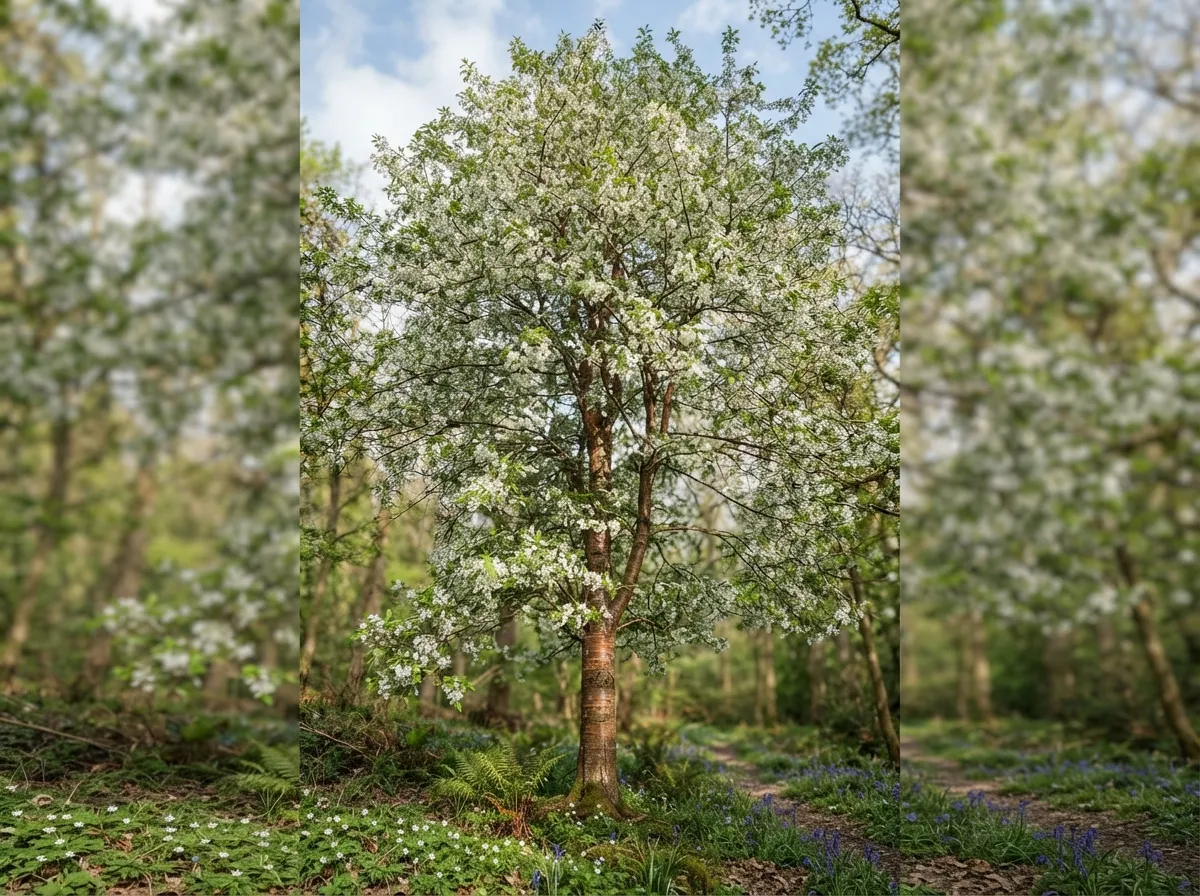
🔍 Identify it without mistakes
Tall, slender forest tree, wild ancestor of the cultivated cherry, recognizable by its smooth reddish-brown bark marked with horizontal bands (lenticels) that peels off in thin papery strips as it ages — a reliable identification feature even in winter, without fruit or leaves. Small red to black fruits, smaller and more tart than cultivated cherries.
- smooth reddish-brown bark with coppery highlights, marked with light horizontal bands (lenticels), peeling in thin strips
- oval-elongated, toothed, pointed leaves with 2 small reddish glands at the base of the blade on the petiole
- white flowers grouped in small clusters, appearing before or with the leaves, in April
- round fruits 1-1.5 cm in size, bright red to black, on a long thin stalk
- tall slender forest tree with a high canopy, unlike the shorter and broader cultivated cherry tree
⚠️ Not to be confused with
To tell them apart: wild cherry has distinctive smooth bark with horizontal bands; blackthorn is a low, very thorny shrub with small blue-black fruits covered in a waxy bloom
🍽️ Eating it
Preparation : ripe fruits eaten raw, slightly tart and less fleshy than cultivated cherries; excellent in jams, syrups, or fruit brandy (traditional Kirsch); as with all Prunus species, never chew or swallow the pits, as the inner kernel contains amygdalin, which can release cyanide in large quantities
🪓 Other bushcraft uses
- wild cherry wood is highly sought after in fine cabinetmaking and marquetry for its warm color and fine grain, making it one of Europe's most prized hardwoods after walnut
No entry replaces a certain identification in the field, or medical advice. When in doubt: don't eat it. If ingestion is suspected: poison control or 112/911.