🦪 Oyster plant (Mertensia maritima)
Mertensia maritima · Boraginacées
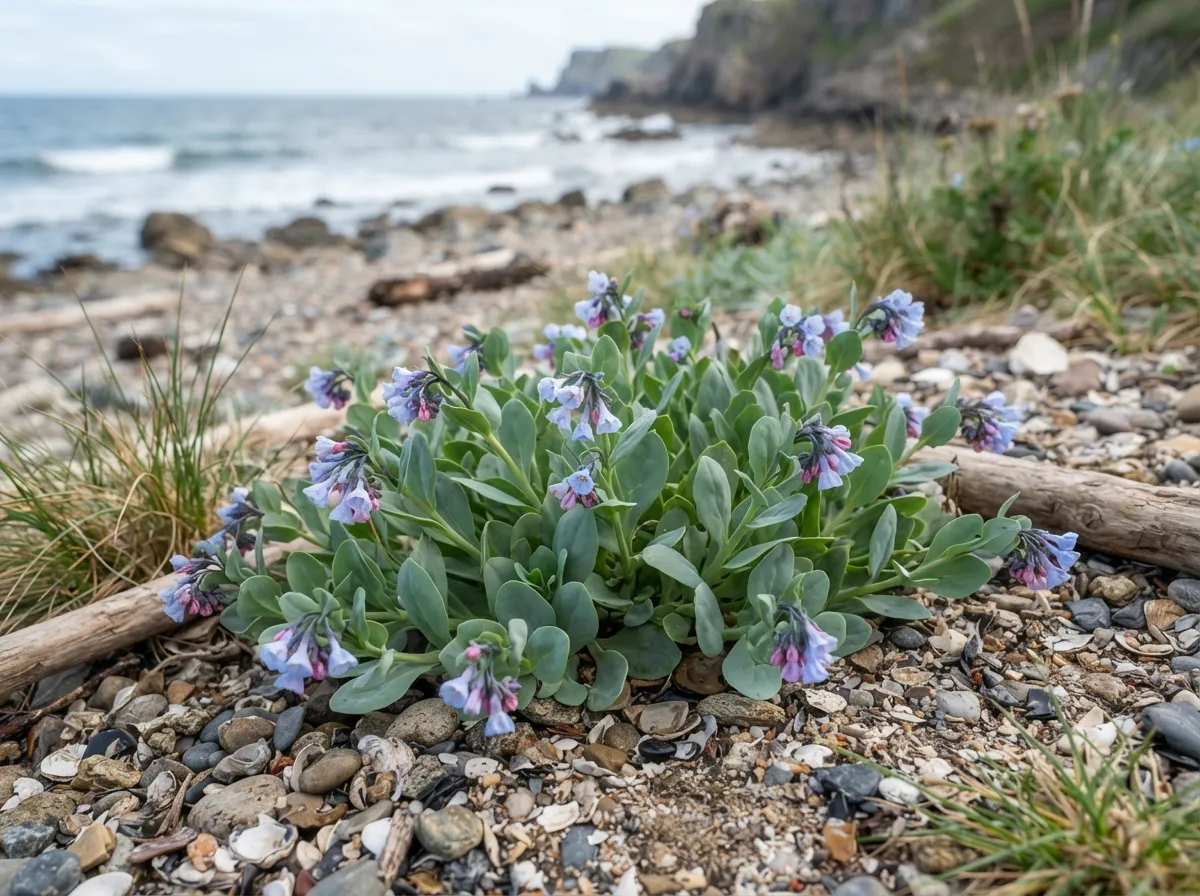
🔍 Identify it without mistakes
Small, extremely rare creeping perennial plant with fleshy, glaucous (frosted blue-green) leaves, slightly rough to the touch, which release an amazingly accurate smell and taste of fresh oyster when crushed—a unique trait in European flora.
- fleshy, oval, glaucous blue-green leaves, slightly grainy to the touch
- creeping and spreading habit, prostrate stems forming a low mat (15 cm high for a spread of about 50 cm)
- characteristic smell and taste of fresh oyster when leaves are crushed, unique among coastal plants
⚠️ Not to be confused with
To tell them apart: mertensia has broader, frosted blue-green leaves with a very recognizable oyster smell when crushed; sea sandwort has no particular smell and its leaves are arranged in 4 regular, closely overlapping rows
🍽️ Eating it
Preparation : eaten raw, chopped in a salad or as an accompaniment to fish and seafood dishes whose briny taste it enhances; can also be preserved in vinegar like samphire; a species that has become very rare—forage with extreme moderation, taking only a few leaves, never the whole plant
💊 Healing with it
no documented traditional medicinal use; exclusively culinary and gastronomic interest
Level of evidence : traditional use — Le blog de la Mertensia maritima — botanical and gastronomic presentation
⚠️ a rare species in severe decline due to overharvesting on certain coasts (virtually extinct in Normandy): never harvest the whole plant, limit yourself to a few leaves per clump, and favor nursery-grown plants whenever possible
Sources (2)
No entry replaces a certain identification in the field, or medical advice. When in doubt: don't eat it. If ingestion is suspected: poison control or 112/911.