🌳 European Hop-Hornbeam / Mediterranean Hackberry
Celtis australis · Cannabaceae
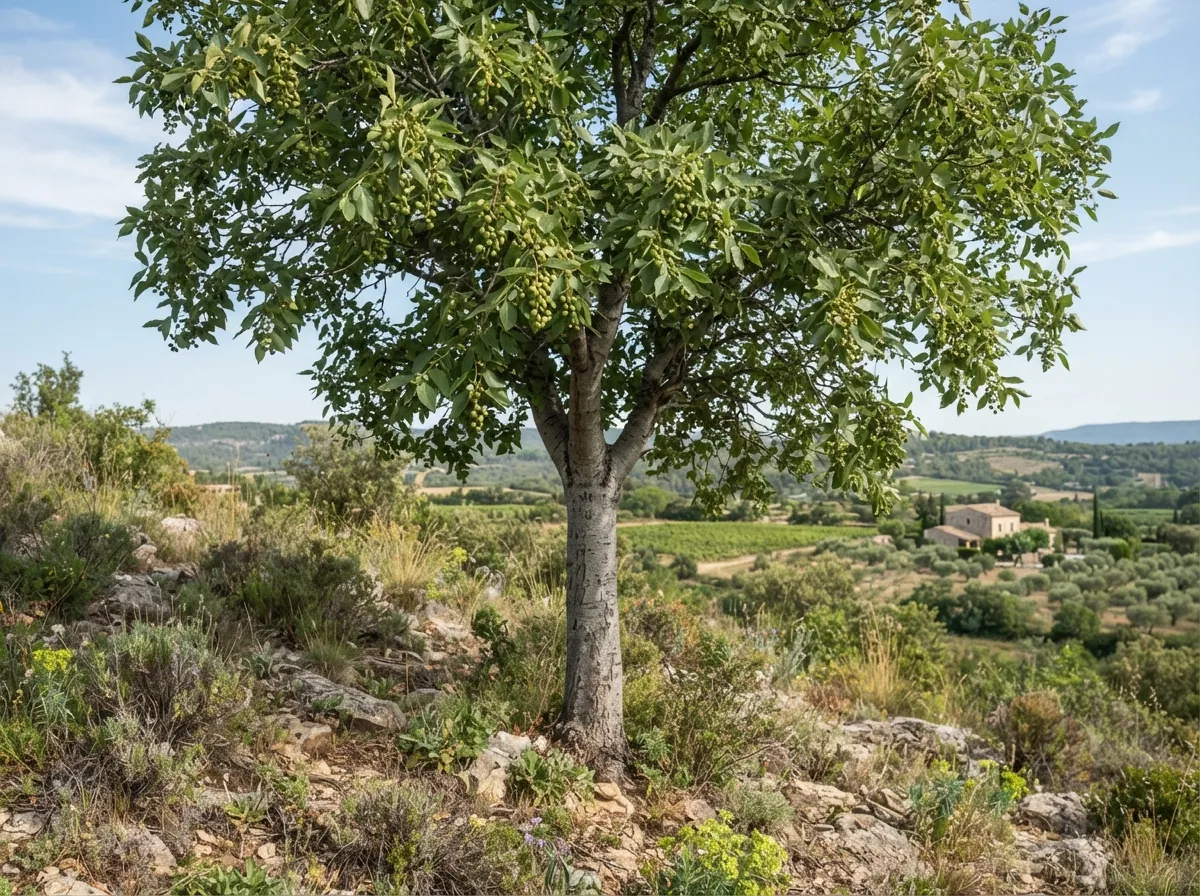
🔍 Identify it without mistakes
Mediterranean tree with smooth light gray bark, resembling beech from a distance. Alternate leaves, asymmetrical at the base, serrated margin, slightly rough to the touch (like nettles). Small round fruits ("hackberries") turning from green to purplish-black when ripe. Broad, spreading crown, highly drought-resistant.
- smooth light gray bark, resembling beech from a distance
- alternate leaves, asymmetrical at the base, serrated margin, slightly rough to the touch
- small round fruits ("hackberries") turning from green to purplish-black when ripe
- broad, spreading crown, highly resistant to drought and pollution
⚠️ Not to be confused with
To tell them apart: hackberry bark is smooth and gray (similar to beech) compared to the more deeply furrowed bark of the elm; small round black fruits on the hackberry versus winged samaras on the elm
🍽️ Eating it
Preparation : ripe black fruits eaten raw, thin but sweet flesh surrounding a lipid-rich pit that is also edible once crunched
🪓 Other bushcraft uses
- agricultural handles and pitchforks: exceptionally flexible and resistant wood, almost unbreakable under bending, traditional benchmark for pitchfork handles, whips, riding crops, and walking sticks
- natural pitchforks: branches often grow directly into three-pronged forks, used as-is to make agricultural pitchforks without complex carving
- handles for impact tools: unique combination of hardness, lightness, and flexibility, excellent for tool handles subjected to repeated shocks
- traditional oars: flexibility and strength of the wood valued in the Mediterranean for making oars
- dry terrain indicator: deep root system tolerating very poor and dry soils, reliable marker of arid but stable Mediterranean ground
- late summer snacking: fruits offer a light caloric source available when few other wild fruits are ripe
- village shade: dense and broad shade valued in hot Mediterranean climates, traditionally planted on village squares for this reason
No entry replaces a certain identification in the field, or medical advice. When in doubt: don't eat it. If ingestion is suspected: poison control or 112/911.