☀️ St. John's Wort
Hypericum perforatum · Hypericaceae
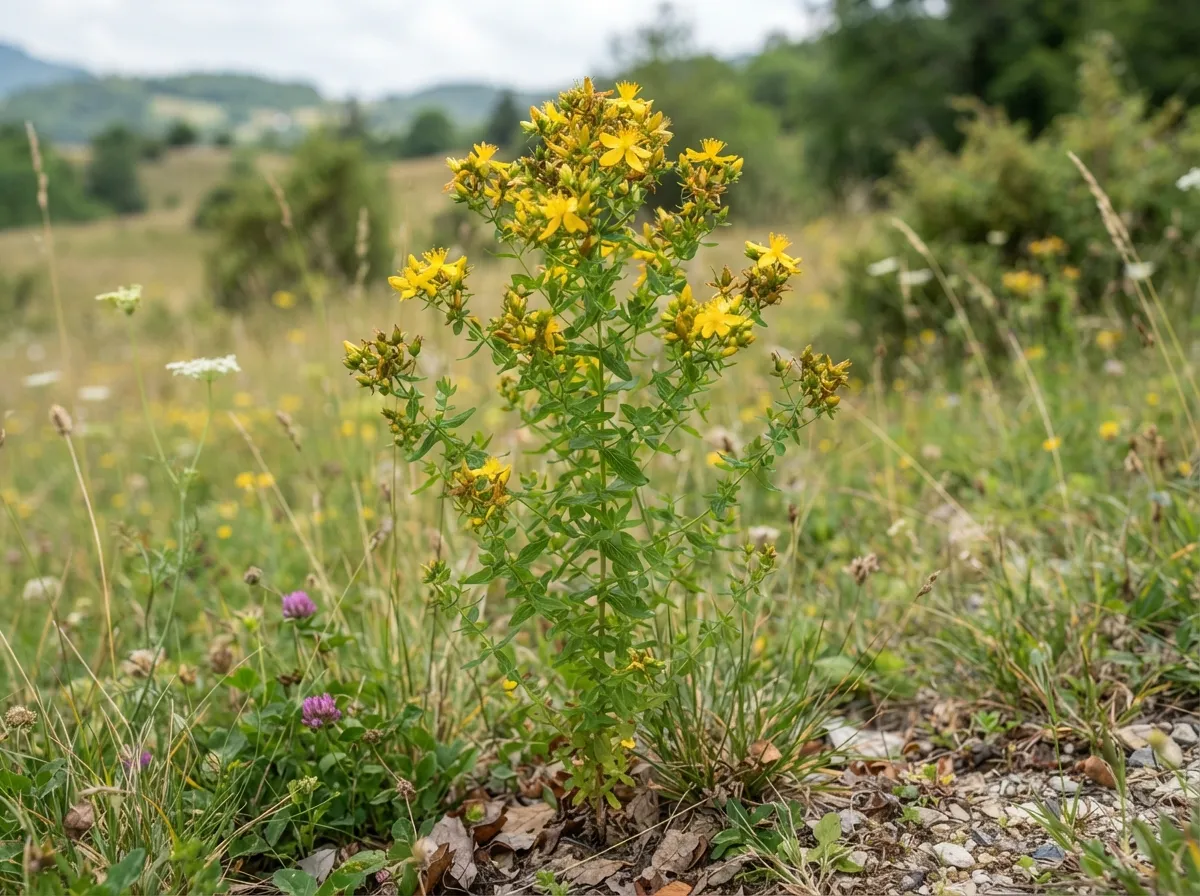
🔍 Identify it without mistakes
A plant of wasteland and dry slopes, easily identified by holding a leaf up to the light: it appears peppered with tiny translucent dots, as if perforated by pinpricks—these are tiny essential oil glands, not actual holes, which gave it its Latin species name. Bright yellow flowers with 5 petals, whose edges are often dotted with tiny black spots that stain your fingers red when crushed.
- opposite, sessile leaves, peppered with tiny translucent dots visible against the light (essential oil glands)
- bright yellow flowers with 5 petals, numerous stamens, black dots along the petal edges
- crushing the flower buds or petals releases a reddish-purple pigment (hypericin) that stains your fingers
- erect stem with 2 raised ridges (nearly round in cross-section but with 2 distinct ridges)
- grows in clumps on dry, sunny soils, wasteland, and embankments
💊 Healing with it
well-established medicinal use recognized by the EMA for the short-term treatment of symptoms of mild, temporary depressive states (standardized dry extract), efficacy supported by clinical trials
Level of evidence : solid studies — EMA — monographie Hypericum perforatum L., herba (révision 1)
⚠️ MAJOR DRUG INTERACTIONS: St. John's Wort strongly induces hepatic enzymes CYP3A4, CYP2C9, CYP2C19, and P-glycoprotein, reducing the effectiveness of many medications (oral contraceptives, anticoagulants like warfarin, cyclosporine, certain antiretrovirals, digoxin, benzodiazepines...)—concurrent use is contraindicated with several of these treatments; it also causes photosensitization (hypericin): avoid intense sun exposure during treatment; never combine with ongoing medication without medical advice
🪓 Other bushcraft uses
- red St. John's Wort oil (maceration of flowering tops in oil, colored red by hypericin) traditionally used topically on minor burns and sunburns
Sources (2)
No entry replaces a certain identification in the field, or medical advice. When in doubt: don't eat it. If ingestion is suspected: poison control or 112/911.