🍄 Morel
Morchella esculenta · Morchellaceae
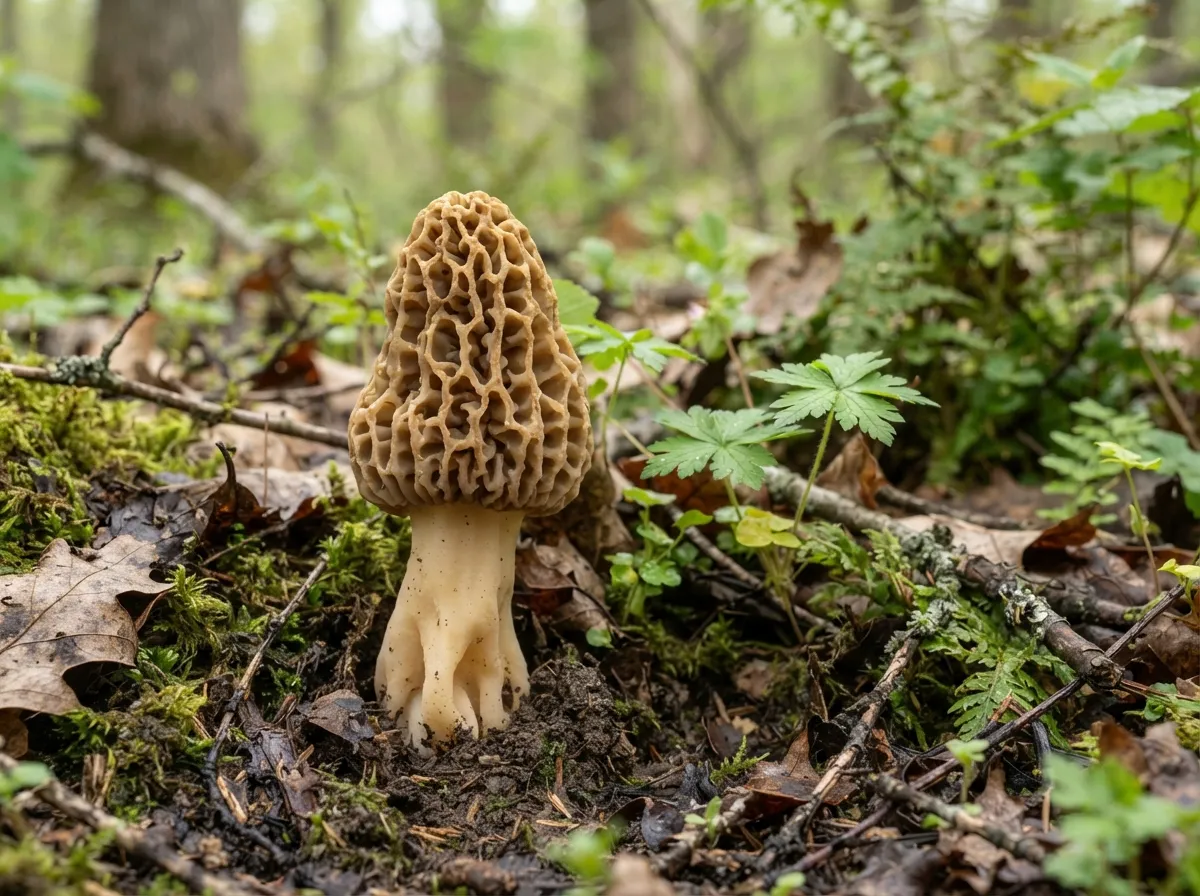
🔍 Identify it without mistakes
A highly prized spring mushroom with a honeycomb-like cap. NEVER consume it raw: it contains thermolabile hemolysins that cause digestive and neurological disorders when raw, which are completely destroyed by thorough and sufficient cooking. Its deadly look-alike, the false morel, is easily distinguished by systematically cutting the mushroom in half.
- ovate to conical cap, pitted with a honeycomb structure, cream to brown in color depending on the species
- HOLLOW cap clearly attached to the stem (visible junction line), never with internal chambers or filaments
- whitish, hollow, cylindrical stem, sometimes swollen at the base
- thin and brittle flesh
- cream to yellowish spore print
- grows in spring, often in orchards, forest edges, under ash or poplar trees, sometimes after forest fires
⚠️ Not to be confused with
To tell them apart: CUT THE MUSHROOM IN HALF lengthwise: the true morel has a completely hollow cap, clearly attached to the stem, with regular honeycomb pits; the false morel has an irregularly brain-like wrinkled cap, never with neat honeycomb pits, and is often filled with cottony or chambered internal filaments rather than being hollow
🍽️ Eating it
Preparation : ALWAYS cook thoroughly for at least 10-15 minutes (never eat raw, even in tiny amounts); dries very well, which further reduces any residual toxic risk; slice in half before cooking to check for insects and confirm the hollow structure
Sources (3)
No entry replaces a certain identification in the field, or medical advice. When in doubt: don't eat it. If ingestion is suspected: poison control or 112/911.