🌱 Moringa
Moringa oleifera · Moringaceae
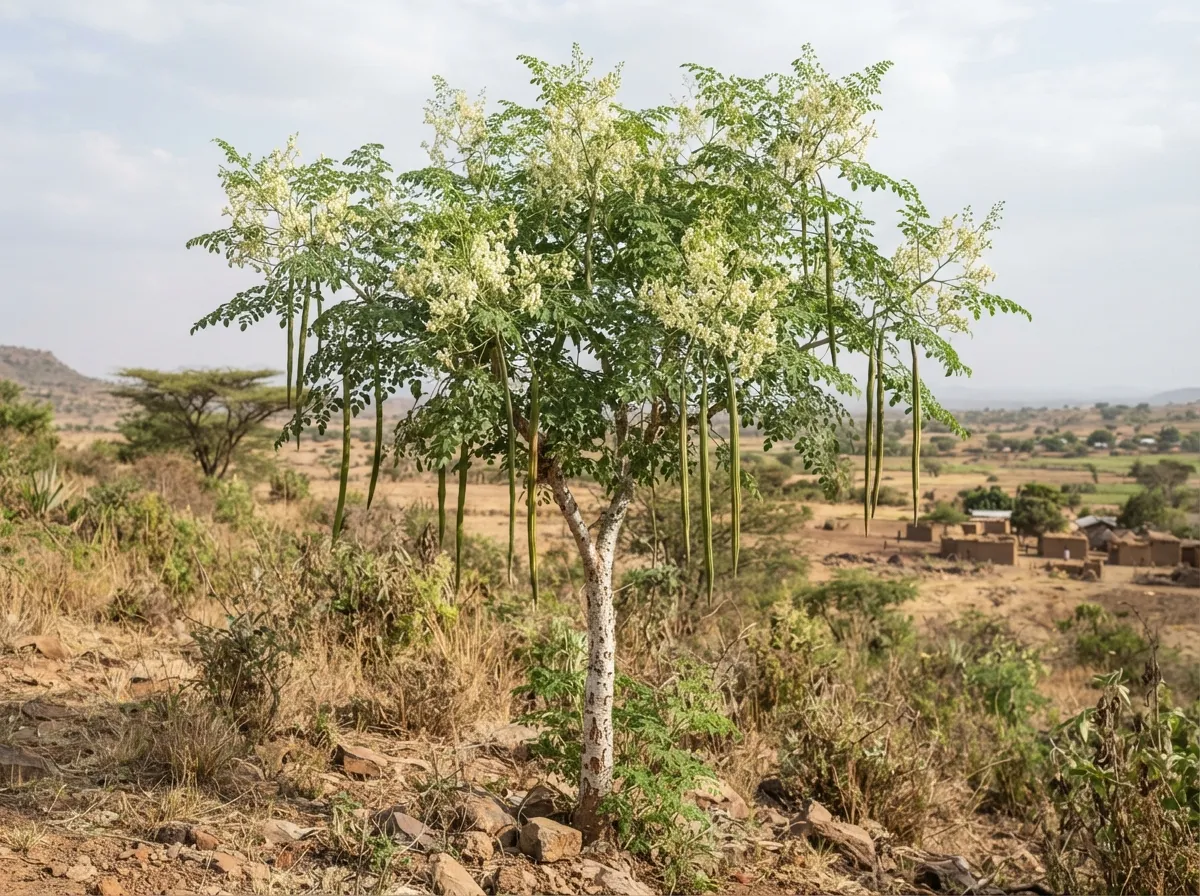
🔍 Identify it without mistakes
Small, extremely fast-growing tree with soft grayish bark and tripinnate compound leaves, creating a light, delicate foliage reminiscent of a fern. Fragrant cream-white flowers grow in clusters, followed by long, hanging drumstick-shaped pods (hence its English name "drumstick tree").
- highly divided tripinnate leaves, small oval leaflets of 1-2 cm
- hanging pods, triangular in cross-section, up to 45 cm long
- extremely fast growth, reaching up to 5 m in the first year
⚠️ Not to be confused with
To tell them apart: the highly divided tripinnate leaves and long, hanging, triangular drumstick-like pods are unique to moringa among small tropical fast-growing trees
🍽️ Eating it
Preparation : fresh leaves eaten raw in small quantities or cooked as vegetables/sauces; dried and powdered to enrich porridges and sauces; immature pods cooked like green beans
USDA, raw fresh leaves, per 100 g
💊 Healing with it
traditionally used against anemia, as a nutritional supplement for children and pregnant/lactating women, anti-inflammatory and antioxidant; antiviral and hepatoprotective properties studied in lab settings
Level of evidence : limited studies — EFSA/FDA (food use of leaves); PMC - pharmacological reviews 2022-2023
⚠️ no EMA-HMPC or WHO monograph exists to date (2026) - recognized only by Indian Ayurvedic pharmacopoeia; root bark contains potentially toxic and abortifacient alkaloids and must be avoided, unlike the leaves
🪓 Other bushcraft uses
- pressed seeds provide a cooking and cosmetic oil with a long shelf life
- crushed seeds used as a natural flocculant to clarify muddy water
- soft wood, rarely used in construction
Sources (2)
No entry replaces a certain identification in the field, or medical advice. When in doubt: don't eat it. If ingestion is suspected: poison control or 112/911.