🌳 Mulga
Acacia aneura · Fabaceae (Mimosoideae)
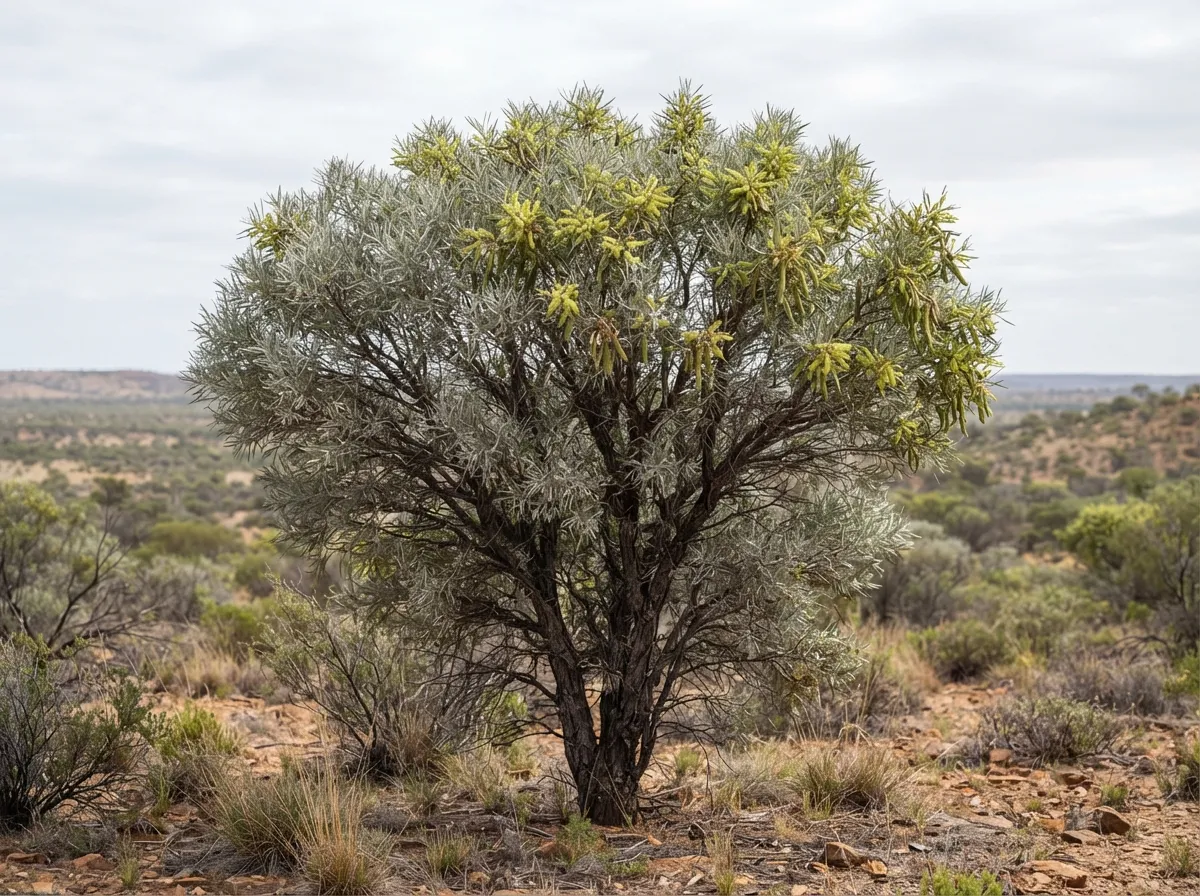
🔍 Identify it without mistakes
A variable shrub or small tree growing 2.5 to 7 m tall, dominating vast arid stretches of the Australian interior (mulga woodlands cover around 1.5 million km²). Its leaves are actually phyllodes (flattened leaf stalks that act as leaves), narrow and flat, measuring 4 to 10 cm. The bright yellow flowers form small cylindrical spikes, followed by flat pods with winged margins.
- narrow, flat phyllodes (4-10 cm) replacing true leaves
- bright yellow cylindrical flower spikes
- flat pods with winged margins
- very dense wood (850-1100 kg/m³), extremely durable when buried
⚠️ Not to be confused with
To tell them apart: mulga has narrow, flat phyllodes that are much longer and a fissured grayish bark typical of mulga woodlands, whereas toxic gidgee grows in more localized stands along watercourses in the Georgina River basin and emits a characteristic foul odor when crushed
🍽️ Eating it
Preparation : seeds are traditionally ground into cakes after roasting; the gum secreted on twigs by scale insects is harvested and eaten as a sweet treat, much like solid honey
💊 Healing with it
no major traditional medicinal uses documented in the consulted sources
Level of evidence : traditional use — Wikipedia — Acacia aneura
⚠️ no specific precautions known for properly prepared seeds and gum
🪓 Other bushcraft uses
- extremely hard wood used by Aboriginal people to make tools, shields, and digging sticks
- highly durable fence posts when buried thanks to its exceptional resistance to decay
- excellent firewood and charcoal
- emergency fodder for livestock during droughts despite its tannin content
No entry replaces a certain identification in the field, or medical advice. When in doubt: don't eat it. If ingestion is suspected: poison control or 112/911.