🌳 White Mulberry
Morus alba · Moraceae
🔍 Identify it without mistakes
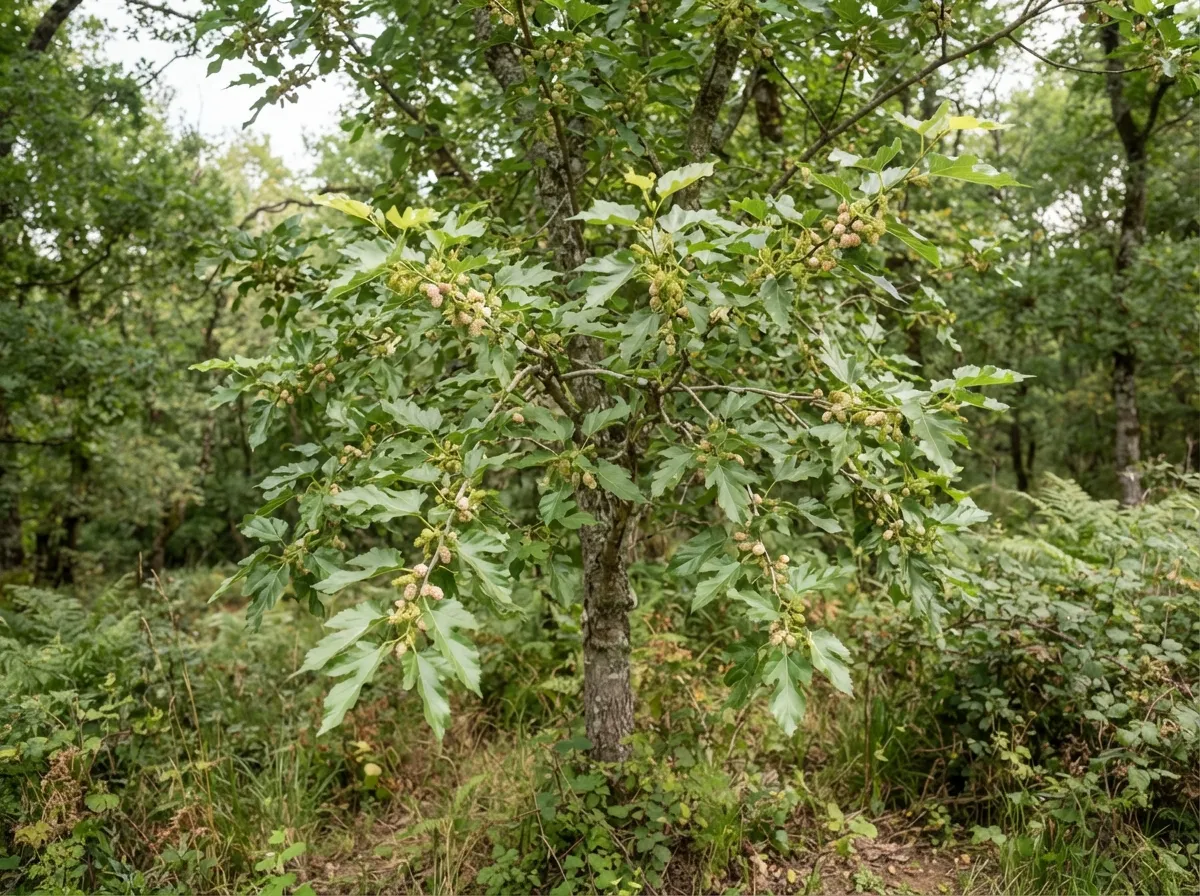
Tree with grey-brown bark that becomes fissured with age, alternate leaves with highly variable shapes even on the same branch (entire, lobed, mitten-shaped) — a great identification key. Characteristic whitish buds (hence the name "white mulberry"). Fruits shaped like elongated blackberries, white, pink, or black depending on the variety.
- alternate leaves with highly variable shapes even on the same branch (entire, lobed, mitten-shaped)
- grey-brown bark, fissured with age
- fruits shaped like elongated blackberries, white, pink, or black depending on the variety
- characteristic whitish buds
⚠️ Not to be confused with
To tell them apart: paper mulberry leaves are velvety and fuzzier to the touch, round orange fruits are not edible in the same way
🍽️ Eating it
Preparation : ripe fruits eaten fresh, in jam, or dried; never consume green/unripe fruits or large quantities of leaves or sap, which contain compounds that upset digestion when green
💊 Healing with it
leaves used in Traditional Chinese Medicine and modern herbal medicine for their hypoglycemic effect (blood sugar regulation), subject of clinical studies
Level of evidence : limited studies — scientific literature on Morus alba leaf extracts
⚠️ may potentiate antidiabetic treatments, medical monitoring recommended if taken concurrently
🪓 Other bushcraft uses
- sericulture: white mulberry leaves are the exclusive and historical food of the silkworm (Bombyx mori) — the foundation of the entire silk industry since Chinese antiquity
- paper and cordage: the fibrous inner bark, like that of its cousin the paper mulberry, can be beaten and transformed into fibers for rustic cordage or handmade paper
- bows and handles: flexible and resilient wood, traditionally used to make bows, tool handles, and fishing rods
- dye: bark and roots used to obtain yellow to brown dyes
- energy reserve: dried fruits keep for several months, an easy sweet reserve to build up in summer
- emergency fodder: leaves browsed by many herbivores, good emergency fodder for domestic animals during shortages
- wasteland colonization: fast growth and hardiness, often planted as a windbreak hedge, indicator of disturbed/formerly cultivated soils
Sources (2)
No entry replaces a certain identification in the field, or medical advice. When in doubt: don't eat it. If ingestion is suspected: poison control or 112/911.