🌿 Common Myrtle
Myrtus communis · Myrtaceae
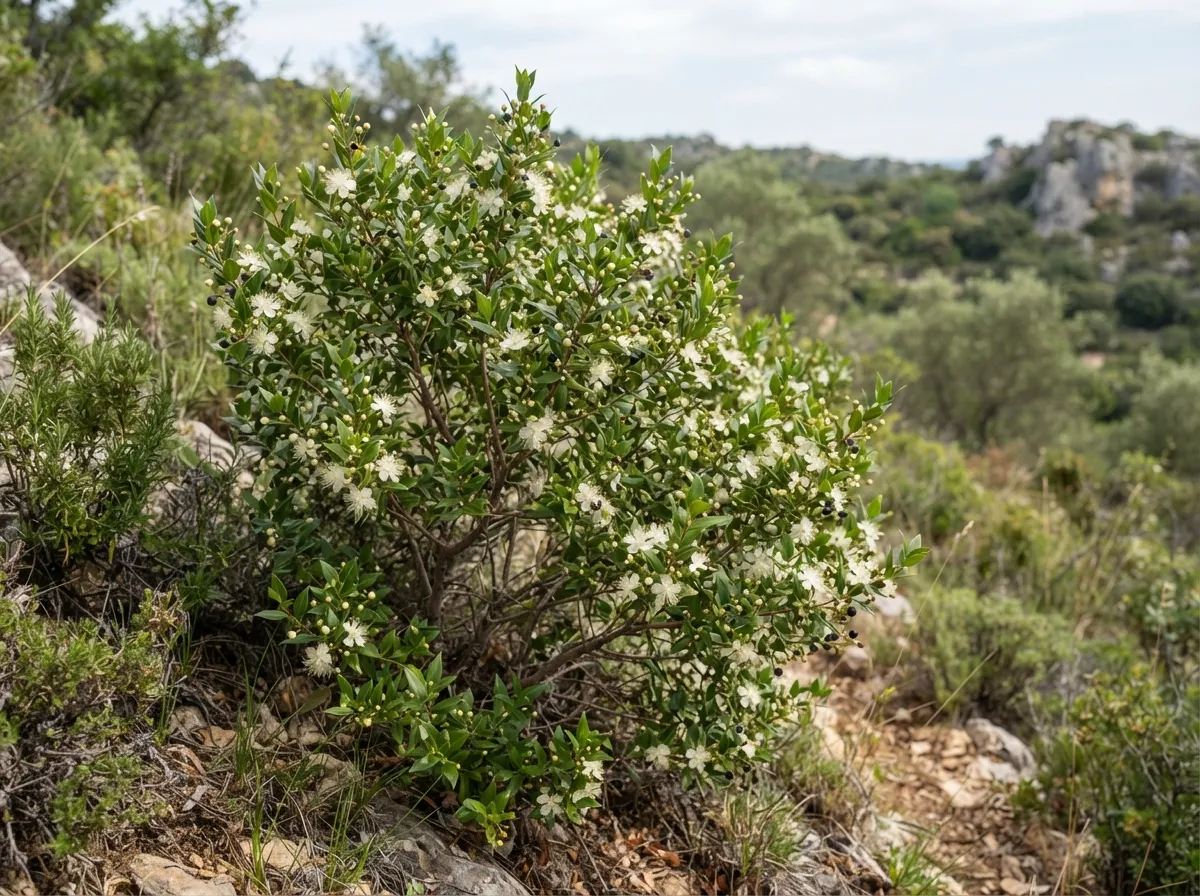
🔍 Identify it without mistakes
Highly branched evergreen shrub, 1 to 3 m tall, with small opposite, oval, leathery, shiny leaves, dotted with tiny translucent dots visible against the light (essential oil glands), highly aromatic when crushed. White flowers with 5 petals and numerous very fragrant stamens, followed by blue-black berries at maturity.
- opposite oval leaves dotted with translucent spots visible against the light
- strong resinous aromatic scent when crushed
- fragrant white flowers with numerous stamens
- blue-black berries at maturity
⚠️ Not to be confused with
To tell them apart: the opposite leaves dotted with tiny translucent spots visible against the light, unique to the Myrtaceae family, and the strong resinous aromatic scent when crushed are enough to identify myrtle safely
🍽️ Eating it
Preparation : ripe berries eaten raw or dried as a spice (used similarly to pepper in Corsica and Sardinia), macerated into traditional liqueur (mirto)
💊 Healing with it
traditionally used as a gargle and inhalation for mild respiratory tract ailments
Level of evidence : traditional use — Mediterranean ethnobotanical literature (no dedicated EMA monograph)
⚠️ no major contraindications at traditional food doses; concentrated essential oil is not recommended without professional advice
🪓 Other bushcraft uses
- traditional Corsican-Sardinian liqueur (mirto)
- foliage used in symbolic crowns in Antiquity (peace, love)
No entry replaces a certain identification in the field, or medical advice. When in doubt: don't eat it. If ingestion is suspected: poison control or 112/911.