🫐 Bilberry
Vaccinium myrtillus · Ericaceae
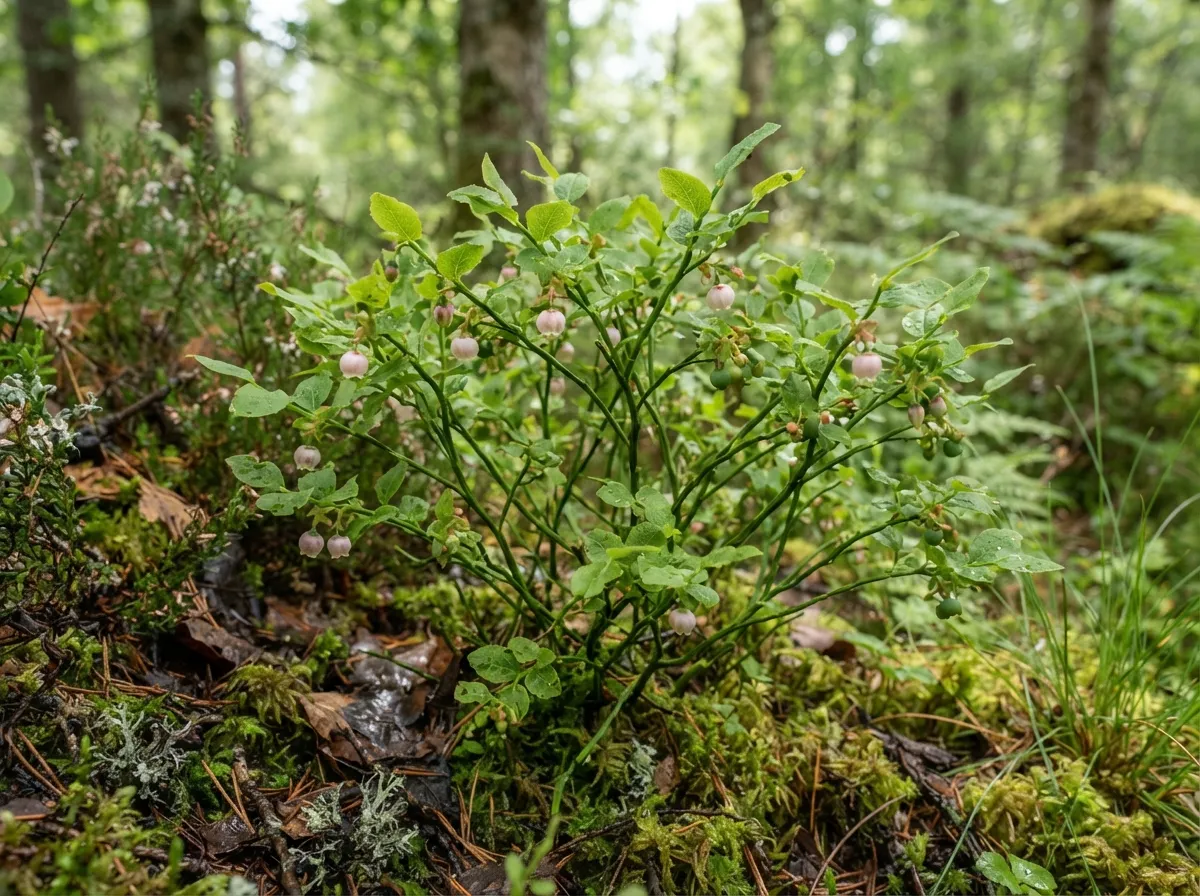
🔍 Identify it without mistakes
Small, low-growing dwarf shrub forming dense carpets in coniferous understories or mountain heathlands. Distinctive angular green stems (nearly square cross-section, visible even without leaves). Small, oval, finely serrated deciduous leaves. Fruit: blue-black berry with a waxy bloom, featuring staining purple flesh (unlike the cowberry/lingonberry which has pale flesh).
- green stems with a nearly square cross-section
- small, low-growing dwarf shrub (15-50 cm), carpet-forming
- deciduous, oval, finely serrated leaves
- waxy blue-black berry with staining purple flesh
- acidic understory habitat, often under pines and spruces or in mountain heathland
⚠️ Not to be confused with
To tell them apart: the staining purple flesh and the green angular stem are enough to confirm; be careful in high arctic areas where black crowberry (Empetrum) shares the habitat, but it remains edible too, just bland
To tell them apart: bilberry is a low dwarf shrub (30-60 cm) with small serrated leaves and dull blue-black berries in clusters; deadly nightshade is a tall plant with large, solitary shiny black berries on a star-shaped calyx
To tell them apart: bilberry grows on a low woody shrub in acidic understory, with leathery serrated leaves—never in a garden or annual wasteland like black nightshade
🍽️ Eating it
Preparation : raw, in jam, pie, syrup, dried
USDA FoodData Central, raw bilberry/blueberry, per 100 g
💊 Healing with it
traditionally used for mild venous circulatory disorders and eye capillary fragility (anthocyanins), mild diarrhea (dried berry, tannins)
Level of evidence : etudes-limitees (anthocyanins studied for microcirculation and night vision, mixed clinical results despite the RAF pilot legend) — EMA/HMPC, community monograph on Myrtilli fructus
⚠️ no major known contraindications at culinary doses; the dried berry is more astringent and effective against diarrhea than the fresh berry, which is mildly laxative
🪓 Other bushcraft uses
- natural purple-blue dye used in traditional textile dyeing
- bilberry juice used empirically as make-do ink
Sources (3)
No entry replaces a certain identification in the field, or medical advice. When in doubt: don't eat it. If ingestion is suspected: poison control or 112/911.