🍓 Native raspberry
Rubus parvifolius · Rosaceae
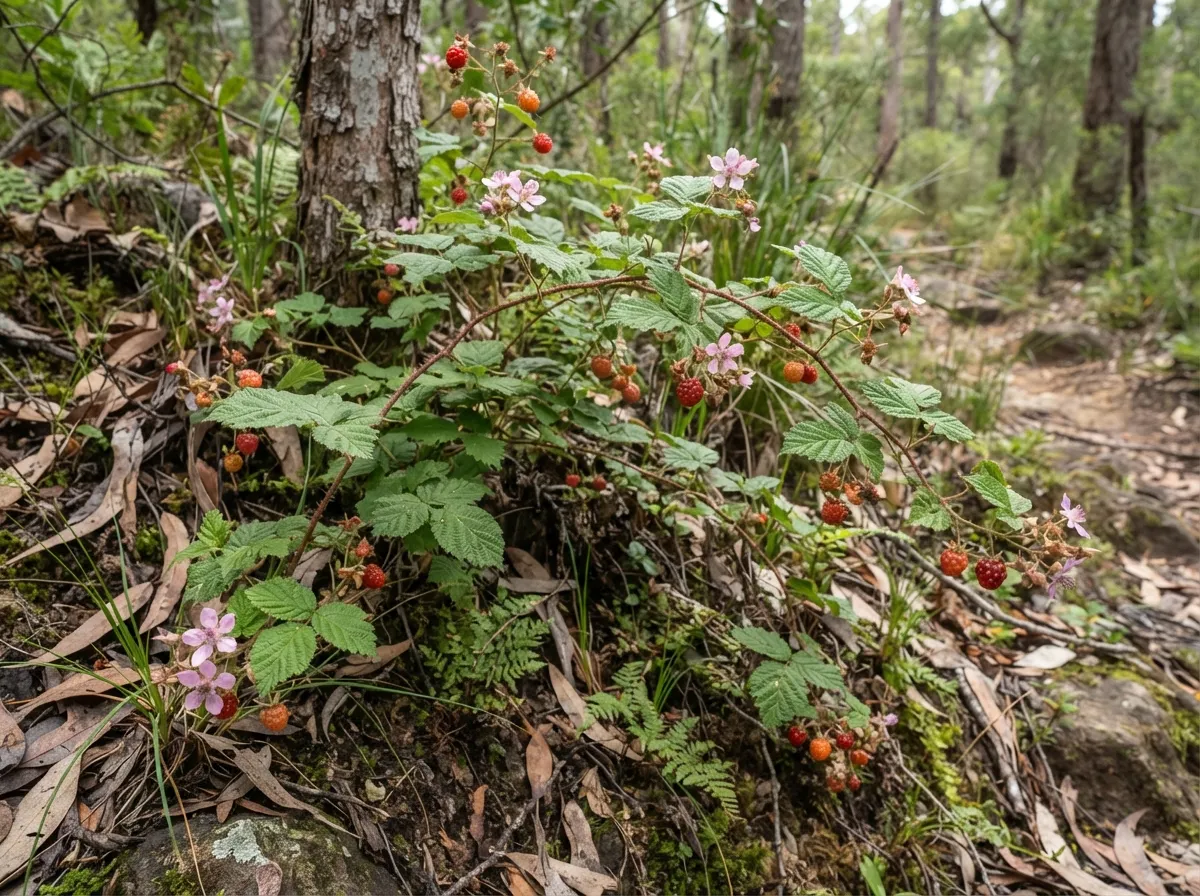
🔍 Identify it without mistakes
Low bramble 1-2 m tall with arching stems armed with hooked prickles. Compound leaves have 3 to 5 toothed leaflets, downy underneath. Pink to red flowers clustered at the stem tips yield red aggregate fruits about 1 cm across, made up of small drupelets.
- hooked prickles on 1-2 m arching stems
- compound leaves with 3-5 toothed leaflets
- pink to red flowers clustered at stem tips
- red aggregate fruit about 1 cm across, finely wrinkled drupelets
⚠️ Not to be confused with
To tell them apart: Rubus parvifolius has smaller, rounded leaflets (often only 3) and more slender stems arching close to the ground, whereas the red raspberry forms more upright canes with more elongated leaflets; both species are edible and safe from confusion
🍽️ Eating it
Preparation : eat them fresh, as is, or processed into sauces and jams just like common raspberries
💊 Healing with it
in traditional Chinese medicine, the dried fruit is used (documented traditional use, without detailed indication specifics in consulted sources)
Level of evidence : traditional use — Wikipedia — Rubus parvifolius
⚠️ no specific precautions known
No entry replaces a certain identification in the field, or medical advice. When in doubt: don't eat it. If ingestion is suspected: poison control or 112/911.