🍂 Common medlar
Mespilus germanica · Rosaceae
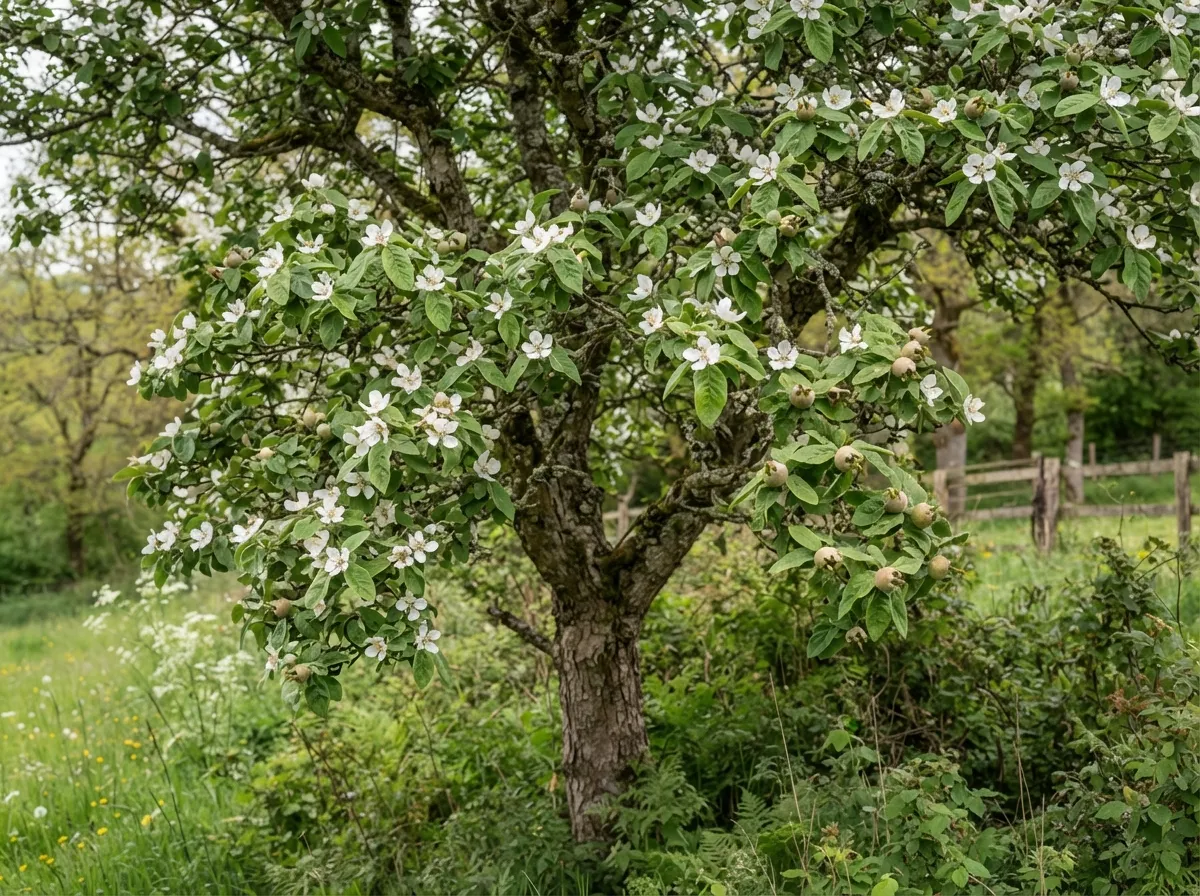
🔍 Identify it without mistakes
Small, gnarled tree, often stunted, now rare in the wild but still found in forest edges and ancient hedgerows. Its fruit, the medlar, is unique in our flora: a reddish-brown fruit with an open top, revealing 5 persistent sepals arranged in a star pattern around a central depression, like a small crown—impossible to confuse once you've seen it.
- large, solitary white flowers with 5 petals, blooming late (May-June, after most other Rosaceae)
- simple, elongated leaves, slightly downy underneath
- reddish-brown fruit (medlar), widely open top showing 5 sepals in a star shape around a small crown
- branches often thorny in the wild, gnarled
- small tree or large shrub, rarely over 6 m
⚠️ Not to be confused with
To tell them apart: the fruit with a widely open top showing five persistent sepals arranged in a star around a small crown is a unique structure among wild European fruits; no toxic plant mimics this characteristic "crown"
🍽️ Eating it
Preparation : the medlar is inedible, hard, and astringent when picked: you must let it "blet" (soften) after the first frosts or after several weeks of air storage, like loquats or wild serviceberries; once bletted, the brown flesh becomes soft, melting, and sweet, eaten raw with a spoon or made into jelly
🪓 Other bushcraft uses
- emblematic tree of the medieval orchard, cultivated in monastery gardens as early as the High Middle Ages for its fruits, which kept and ripened during the winter months when few other fresh fruits were available
No entry replaces a certain identification in the field, or medical advice. When in doubt: don't eat it. If ingestion is suspected: poison control or 112/911.