⚠️ Yellow Water-lily
Nuphar lutea · Nymphéacées
🔍 Identify it without mistakes
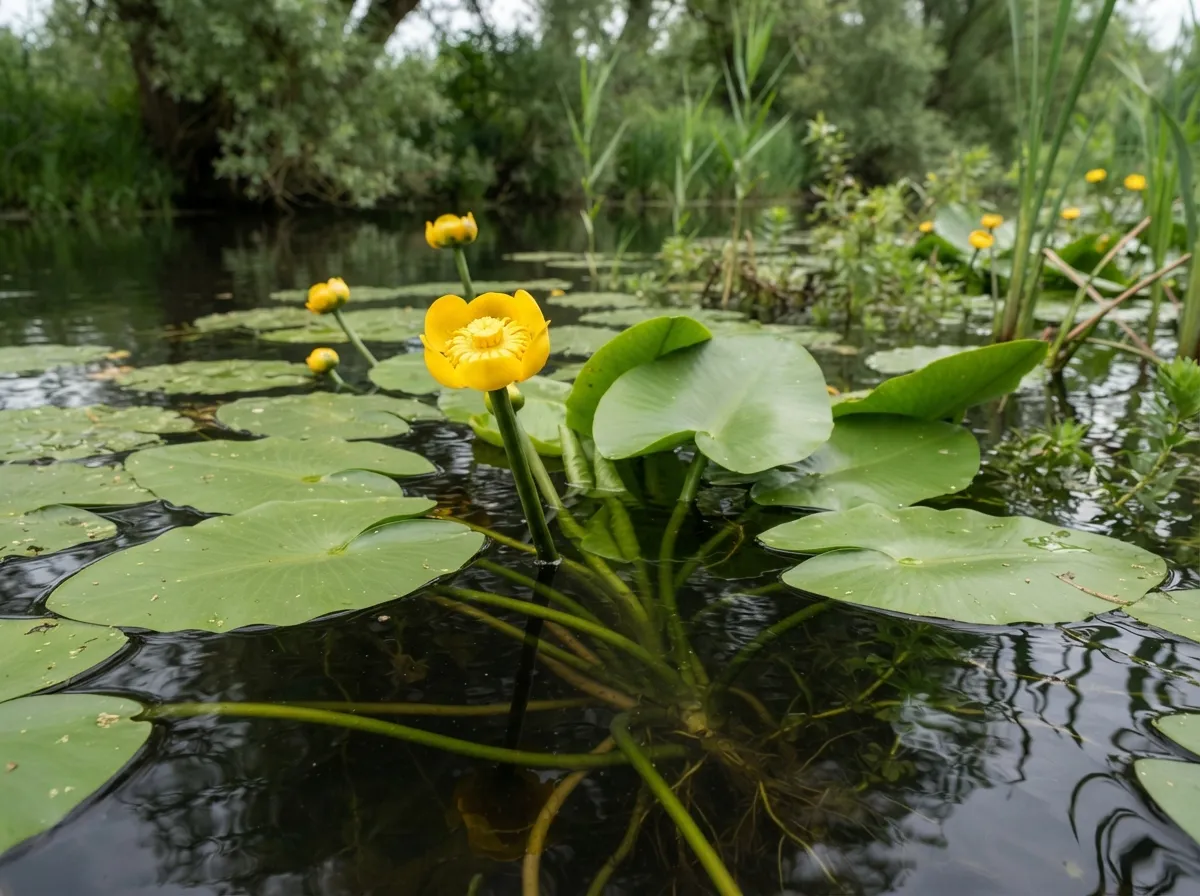
Floating aquatic plant with large, glossy, oval-rounded heart-notched leaves, and fleshy, globose yellow flowers emerging slightly above the water—much smaller and more rounded than those of a classic white water-lily. Thick, spongy rhizome creeping along the water bottom, with diamond-shaped leaf scars.
- fleshy, globose yellow flower, slightly open, barely emerging from the water
- glossy, oval floating leaves notched at the base like a heart
- thick spongy rhizome with diamond-shaped leaf scars
- faint alcoholic scent from the flower
- calm, deep water (ponds, slow-moving rivers)
⚠️ Not to be confused with
To tell them apart: the iris grows on emerged margins with sword-shaped leaves standing upright out of the water, never round floating leaves; the yellow water-lily has characteristic floating leaves and grows in open water
🍽️ Eating it
Preparation : rhizome is very bitter and slightly toxic raw (nupharine-type alkaloids); render it edible by boiling it several times, changing the water thoroughly between each boil. This is a traditional Northern European technique (Finland, Russia, Poland) where it served as a famine food, dried and ground into flour
💊 Healing with it
rarely used in modern European herbal medicine due to its relative toxicity; occasional historical folk uses for urinary disorders
Level of evidence : traditional use — Northern European ethnobotanical compilations (PFAF, Génial Végétal)
⚠️ caution advised plant: the raw rhizome contains alkaloids (nupharine, nupharidine) that irritate the digestive and nervous systems in significant doses; never consume without repeated boiling and water changes, and save this harvest for actual famine situations rather than casual foraging
🪓 Other bushcraft uses
- root historically used in tanning due to its tannin content
- indicator plant for water quality and depth, useful for improvised navigation on slow waterways
No entry replaces a certain identification in the field, or medical advice. When in doubt: don't eat it. If ingestion is suspected: poison control or 112/911.