🌳 African Locust Bean
Parkia biglobosa · Fabaceae
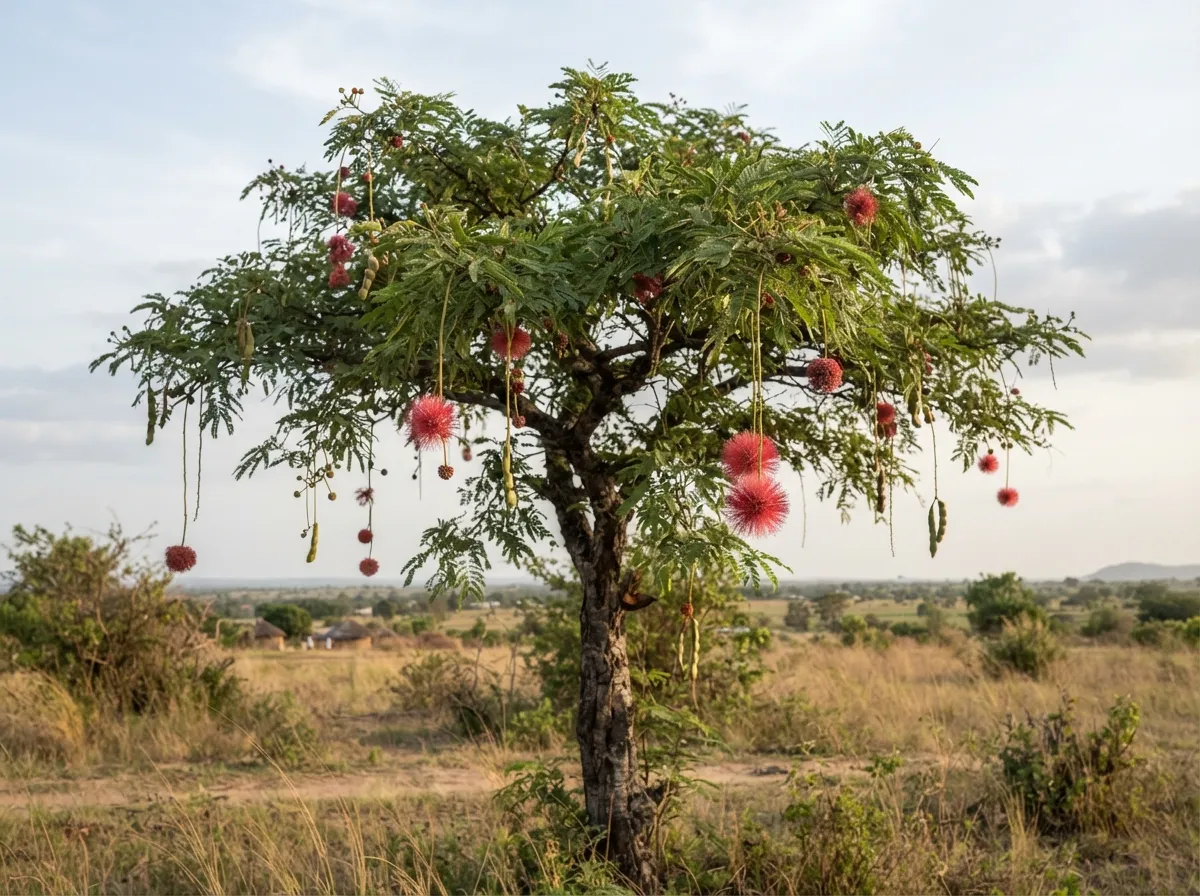
🔍 Identify it without mistakes
Large deciduous tree with a spreading umbrella-shaped canopy and bipinnately compound leaves. Long hanging pods (30-40 cm), pink turning dark brown at maturity, each containing around thirty seeds embedded in a powdery, sweet yellow pulp.
- umbrella-shaped silhouette typical of large West African savanna trees
- hanging dark brown pods, 30-40 cm long at maturity
- mealy yellow pulp coating the seeds inside the pod
⚠️ Not to be confused with
To tell them apart: the umbrella silhouette and the long hanging pods (30-40 cm) with powdery yellow pulp surrounding the seeds distinguish the African locust bean among the large trees of the West African savanna
🍽️ Eating it
Preparation : yellow pulp eaten directly or mixed with water as a sweet drink; seeds boiled for several hours then fermented for 2-4 days (traditionally wrapped in leaves) to yield a protein-rich condiment widely used in West Africa, known as soumbala (dawadawa)
fermented seeds (soumbala/dawadawa), approximate composition reported in agronomical literature, per 100 g of dry matter
💊 Healing with it
various parts of the tree (bark, leaves) are among the most frequently cited traditional remedies against malaria in West Africa; reported antibacterial properties comparable to certain antibiotics in laboratory tests
Level of evidence : limited studies — Wikipedia - Parkia biglobosa
⚠️ no known dietary toxicity for the pulp or the fermented condiment
🪓 Other bushcraft uses
- soumbala is a major source of income for rural West African women, who traditionally control its production and sale
- wood used locally for construction
Sources (1)
No entry replaces a certain identification in the field, or medical advice. When in doubt: don't eat it. If ingestion is suspected: poison control or 112/911.