🌰 Hazel
Corylus avellana · Betulaceae
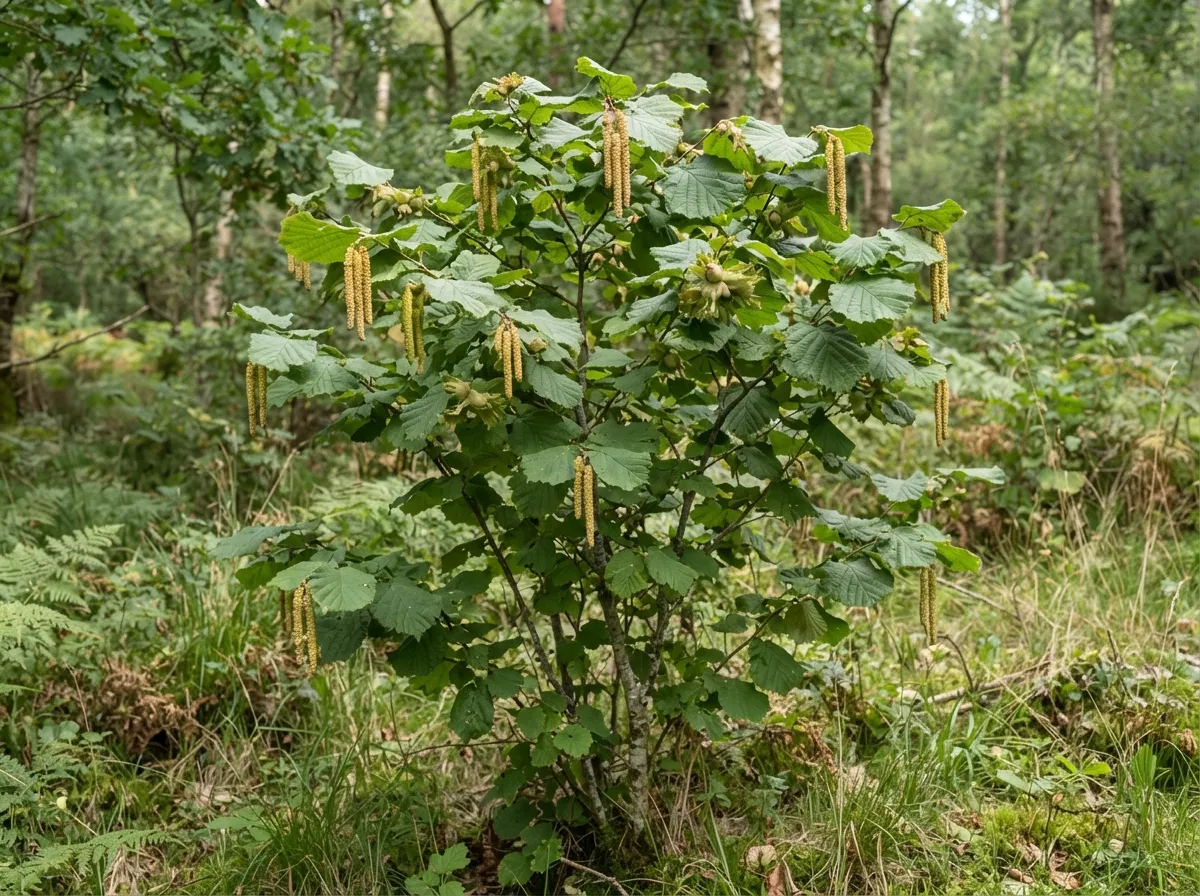
🔍 Identify it without mistakes
Large multi-stemmed shrub with rounded-oval leaves, doubly serrated, slightly downy, with a short point. Very visible, drooping yellowish male catkins appear as early as January-February, before the leaves; tiny female flowers appear in small bright red buds. Typical fruit: the hazelnut, wrapped in a leafy collar (involucre) cut into lobes.
- drooping male catkins from late winter, before leafing out
- rounded leaves, doubly serrated, downy
- fruit in a woody shell surrounded by a leafy involucre
- multi-stemmed bushy habit, often coppiced
- smooth grey-brown bark, peeling off in thin strips
⚠️ Not to be confused with
To tell them apart: the hazelnut hooded in its leafy involucre has no equivalent among European dry fruits
To tell them apart: alder bears woody fruits shaped like small persistent cones, absent on hazel; alder leaves are notched at the tip, hazel leaves are pointed
🍽️ Eating it
Preparation : raw once mature and dried, roasted, ground into flour or paste (praline, base for many confections)
USDA FoodData Central, raw hazelnut, per 100 g
💊 Healing with it
leaf traditionally used as herbal tea for venous insufficiency and heavy legs
Level of evidence : traditional use — ethnobotanical compilations (Fournier)
⚠️ hazelnut allergy is relatively common and sometimes severe (tree nut among major food allergens)
🪓 Other bushcraft uses
- hazel rods traditionally used in dowsing (empirical, non-scientific dowsing)
- flexible wood used for weaving baskets (basketry) and making walking sticks/tool handles
- garden stakes (the straight, flexible stems from coppicing)
No entry replaces a certain identification in the field, or medical advice. When in doubt: don't eat it. If ingestion is suspected: poison control or 112/911.